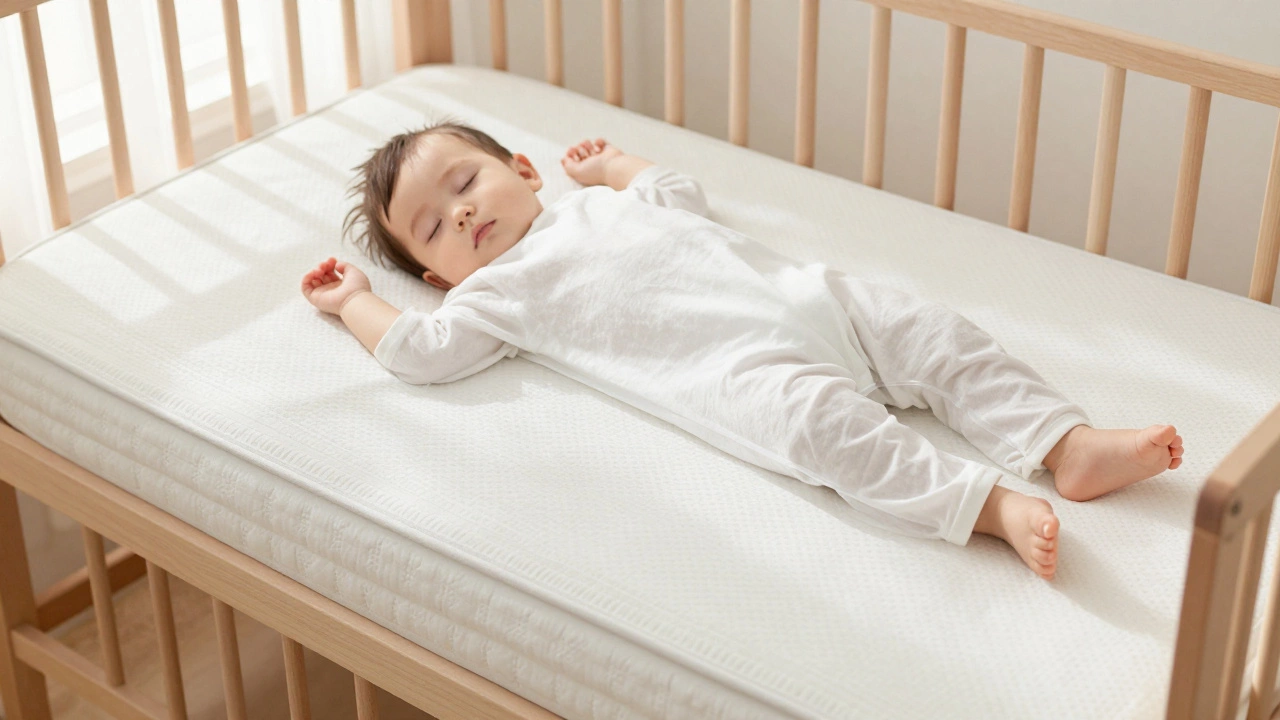
Parents often wonder if adding a mattress topper to their toddler’s bed will make sleep softer and more comfortable. But here’s the hard truth: most mattress toppers are not safe for toddlers under age 3. The American Academy of Pediatrics (AAP) has clear guidelines on infant and toddler sleep surfaces, and soft additions like memory foam toppers, feather pads, or plush quilted layers are strongly discouraged.
Why Soft Mattress Toppers Are a Risk
Toddlers don’t have the motor skills or strength to reposition themselves easily if they sink into soft bedding. A mattress topper that feels cozy to you might create a dangerous pocket where a child’s face can get pressed into the material. This increases the risk of suffocation - a leading cause of sleep-related infant and toddler deaths.In 2023, the Consumer Product Safety Commission (CPSC) reported 17 infant and toddler deaths linked to soft bedding in cribs and toddler beds. Of those, 6 involved memory foam pads or toppers added to improve comfort. These aren’t rare incidents. They’re preventable.
Even if your toddler seems to sleep fine on a topper today, their ability to move, roll, or lift their head changes daily. A topper that was fine last month could become a hazard tomorrow when they start rolling over more forcefully or sleeping on their stomach.
What Makes a Toddler Mattress Safe?
A safe toddler mattress isn’t soft - it’s firm. The AAP recommends a firm, flat sleep surface with no gaps between the mattress and the bed frame. This isn’t about comfort; it’s about safety. A firm mattress supports the child’s spine and prevents sinking.Look for mattresses labeled as meeting ASTM F2938-21, the current safety standard for toddler beds. These mattresses are tested for firmness, durability, and resistance to deformation. A mattress that bounces back quickly when you press on it is a good sign. If it holds an indentation for more than a second, it’s too soft.
Many parents assume that since their toddler is no longer a baby, they need more cushioning. But toddlers still need the same firm support as infants. Their bones are still developing, and their airways are small. A soft surface can compress around their face or neck without them being able to push back.
What About Waterproof Covers?
Waterproof mattress protectors are different from toppers. A thin, snug-fitting waterproof cover - the kind that stretches tightly over the mattress like a fitted sheet - is not only safe, it’s recommended. Toddlers have accidents. Spills, drool, and nighttime leaks happen. A breathable, waterproof cover protects the mattress without adding softness.Look for covers made from polyester or cotton with a polyurethane backing. Avoid thick, quilted, or padded protectors. Even if they’re labeled "toddler-safe," if they feel soft or add more than 1/4 inch of padding, they’re not safe.
Why Do People Think Toppers Are Helpful?
It’s understandable why parents want to soften their toddler’s bed. Many remember how hard crib mattresses felt. They think, "My child deserves comfort." Others notice their toddler waking up with sore spots or complaining about a "bumpy bed."But here’s what’s often missed: toddlers rarely wake up because their mattress is too firm. They wake up because they’re teething, going through a sleep regression, or need more routine. A topper doesn’t fix those issues - it just adds risk.
Some parents buy toppers because their toddler’s bed is old and the mattress has sagged. That’s a real problem. But the fix isn’t a topper. It’s a new mattress. A sagging mattress creates gaps, uneven surfaces, and hidden hazards. Replacing it is the only safe solution.
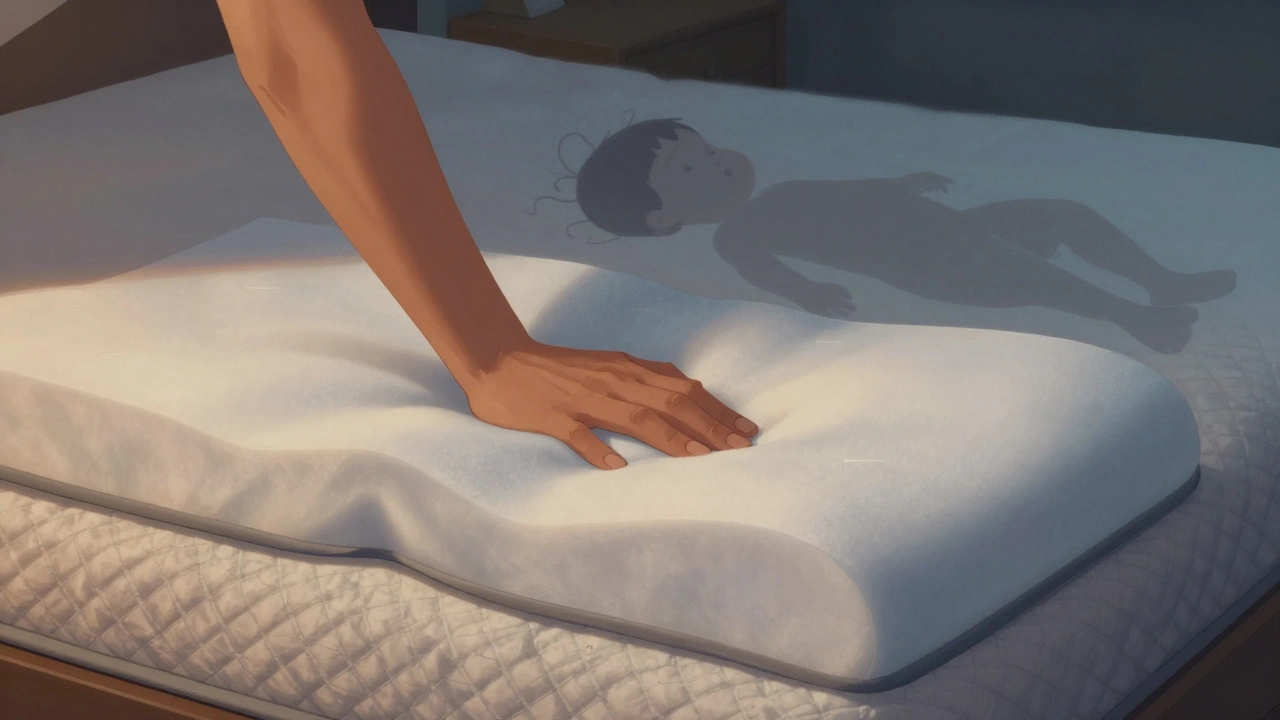
What About Memory Foam?
Memory foam is popular for adults because it contours to the body. But for toddlers, that contouring is dangerous. Memory foam reacts to body heat and pressure, slowly molding around the child’s face. If they roll onto their side or stomach, they may not be able to lift their head to breathe.Studies from the University of Melbourne’s Child Sleep Lab (2024) tracked 120 toddlers sleeping on memory foam toppers. Within three weeks, 17% showed signs of increased breathing resistance during sleep. None had been diagnosed with sleep apnea before. The toppers were the only variable changed.
Even "high-density" memory foam - marketed as "firmer" - still deforms under toddler weight. There’s no such thing as a toddler-safe memory foam topper. If it’s memory foam, it’s not safe.
What Can You Use Instead?
If your toddler’s mattress feels too hard, try these safe alternatives:- Use a high-quality, firm toddler mattress with a thin, breathable, waterproof cover.
- Layer a thin cotton sheet over the mattress - no extra padding.
- Ensure the bed frame fits the mattress snugly with no gaps larger than two fingers wide.
- Keep the room at a comfortable temperature (18-20°C) to reduce sweating and discomfort.
- Use a wearable blanket or sleep sack instead of loose blankets.
Some parents swear by fleece sheets for warmth. That’s fine - as long as they’re flat and don’t add cushioning. The goal is to keep the sleep surface firm and flat, not soft and plush.
When Is It Okay to Add a Toppers?
Most experts agree that once a child turns 3, the risk of suffocation drops significantly. By age 4, many children can safely use a thin, firm topper - but only if it meets these criteria:- Less than 1/2 inch thick
- No memory foam or latex
- Not quilted or padded
- Does not change the firmness of the mattress
- Has no loose fibers or removable layers
Even then, monitor your child. If they start sleeping on their stomach more often or seem to struggle to turn over, remove it. Safety doesn’t expire on a birthday - it depends on behavior and development.
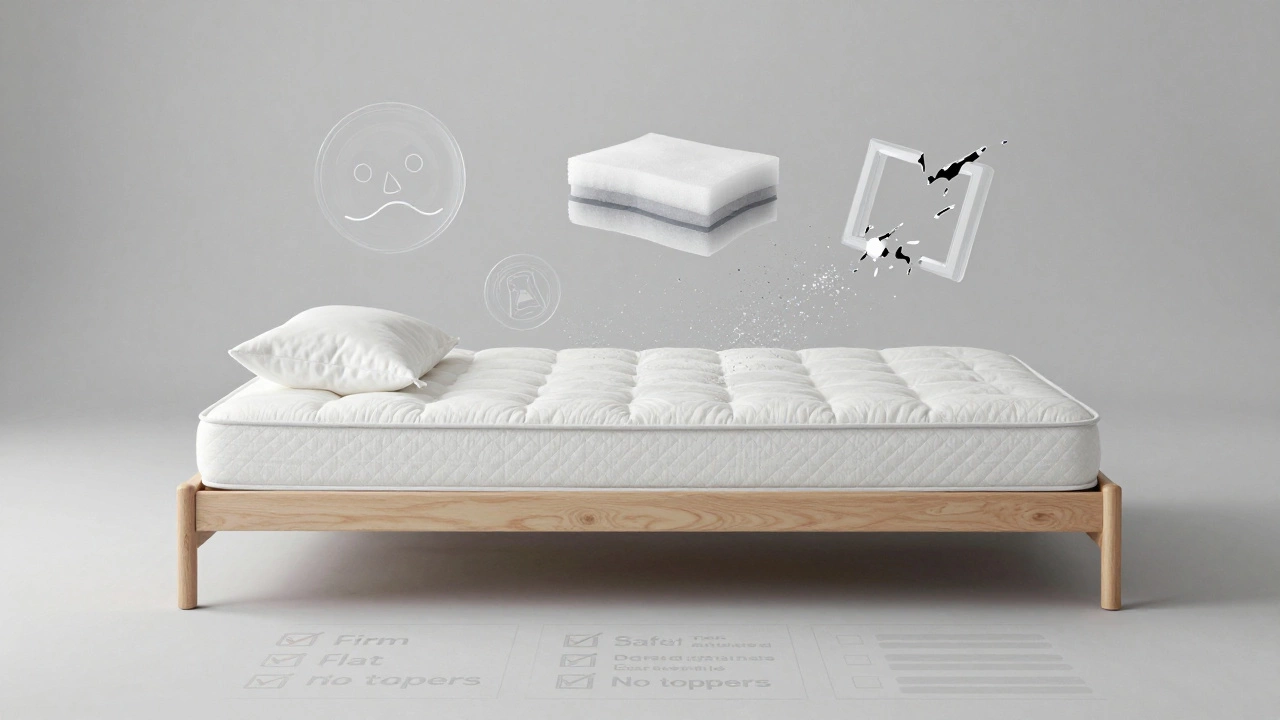
What About Travel Beds or Portable Cribs?
Travel beds often come with thin, foldable mattresses. Parents sometimes add a topper to make them more comfortable. Don’t. These beds already have the minimum firmness required for safety. Adding anything extra increases risk.If your toddler sleeps in a portable crib while traveling, bring a fitted sheet and a waterproof cover. That’s it. No extra layers. No pillows. No blankets. Same rules apply.
Signs Your Toddler’s Sleep Surface Might Be Unsafe
Watch for these red flags:- Your toddler wakes up frequently, especially after rolling over
- You notice indentations in the mattress that don’t bounce back
- Your child seems to be breathing harder during sleep
- You can press your hand into the mattress and it doesn’t resist
- Your toddler has a history of breathing issues or was born prematurely
If you see any of these, check your mattress and remove any toppers immediately. Contact your pediatrician if breathing issues persist.
Bottom Line
Toddlers don’t need soft mattresses. They need firm, flat, and uncluttered sleep surfaces. Mattress toppers - even the ones marketed as "gentle" or "hypoallergenic" - add risk without real benefit. The comfort you think you’re giving your child might be putting them in danger.Stick with a firm mattress, a snug-fitting waterproof cover, and nothing else. Your toddler’s safety isn’t about how soft their bed feels. It’s about how well they can breathe - and how easily they can move if something goes wrong.
Can I use a mattress topper if my toddler has allergies?
No. Allergy concerns don’t override safety risks. Instead of a topper, use a hypoallergenic, tightly fitted mattress protector made from breathable cotton or polyester. Wash sheets weekly in hot water. Keep the room dust-free. A topper won’t solve allergies - it just adds suffocation risk.
Is a gel topper safer than memory foam?
No. Gel-infused foam still deforms under pressure and retains heat. It may feel cooler to the touch, but it still creates a sinking surface. Toddlers can’t regulate their body temperature well, and a gel topper can trap heat around their face. Avoid all foam-based toppers.
What if my toddler’s bed is too big and the mattress shifts?
Use a bed rail designed for toddlers that attaches securely to the frame - not a topper. A shifting mattress creates gaps where a child can get trapped. Fix the fit with a correctly sized mattress or a non-padded bed rail. Never use pillows or rolled towels as barriers.
Are organic or natural fiber toppers safe?
No. "Organic" or "natural" doesn’t mean safe for toddlers. Wool, cotton batting, or latex toppers still add softness and can compress around a child’s face. The material doesn’t change the risk - the thickness and firmness do. Stick to firm, flat surfaces regardless of fiber type.
When should I replace my toddler’s mattress?
Replace it if it sags, feels uneven, or doesn’t bounce back when pressed. Most toddler mattresses last 3-5 years. If your child is 2 or older and the mattress is more than 3 years old, it’s time to check. A worn mattress is a safety hazard, even without a topper.