Not sure which leather fits your needs? Select your primary priority below to find the perfect match for your lifestyle.
Durability
Maximum Wear
Heavy duty, rain, work
Formal
Professional
Weddings, Office, Shine
Comfort
Soft & Supple
Loafers, Casual, Fit
Luxury
Statement Piece
High Status, Unique
Pro Tip:
Picking a pair of shoes based on the material can feel like a gamble if you don't know what you're looking at. You see tags like 'genuine leather' or 'top grain,' and suddenly you're wondering why one pair costs $80 while another is $400. The truth is, the 'best' leather isn't a single type-it depends entirely on whether you're walking through a rainy city, attending a wedding, or hiking a trail. If you buy the wrong one, you'll either end up with blisters or a pair of shoes that cracks after six months.
Quick Takeaways
Full Grain Cowhide: The gold standard for durability and longevity.
Calfskin: Best for formal dress shoes due to its fine grain and polish.
Goat & Sheep: Great for soft, flexible loafers and casual boots.
Exotics (Ostrich/Alligator): High status, high cost, and high maintenance.
Suede: Stylish and soft, but a nightmare in wet weather.
The Heavyweights: Cowhide and Calfskin
When people talk about leather, they're usually talking about Cowhide is
leather sourced from adult cattle, known for its thickness and high tensile strength.
It is the most common material for work boots and casual shoes. Because it's thick, it handles abrasion well, making it a go-to for people who put their shoes through a lot of wear and tear.
However, if you're looking for something more refined, Calfskin is
leather from young cattle, characterized by a tighter grain and smoother surface.
Since the hide is thinner and the pores are smaller, it doesn't develop the deep, rugged creases that adult cowhide does. This is why almost every high-end Oxford or Derby shoe is made from calfskin. It takes a shine much better and feels softer against the foot from day one.
The real secret to quality isn't just the animal, but the layer of the hide. Full grain leather is the top layer of the hide, left intact. It's the strongest part and develops a patina-that rich, aged look-over time. In contrast, "Genuine Leather" is often a marketing term for lower-grade splits that have been sanded down and painted to look like the real deal. If you want shoes that last a decade, always look for full grain.
Softness and Flexibility: Goat and Sheep
Not every shoe needs to be a tank. For slip-ons, luxury loafers, or lightweight summer shoes, Goat Leather (often called Chèvre) is
a durable yet supple leather with a distinctive pebbled grain.
It's surprisingly tough for its weight and resists scratches better than calfskin. If you've ever worn a pair of high-end gloves or a soft loafer, there's a good chance it was goat leather.
Then there's Sheepskin, which is
extremely soft and breathable leather used primarily for fashion footwear and linings.
While sheepskin is incredibly comfortable, it lacks the structural integrity of cowhide. You wouldn't want it for a hiking boot, but for a cozy winter boot lining or a soft dress slipper, it's unbeatable. The trade-off is that sheepskin wears out faster and can stretch too much if the shoe isn't well-constructed.
Comparison of Common Shoe Leathers
Leather Type
Durability
Flexibility
Best Use Case
Maintenance
Full Grain Cowhide
Very High
Low
Work Boots, Casual Boots
Moderate
Calfskin
High
Medium
Dress Shoes, Oxfords
High (Polishing)
Goat Leather
Medium
High
Loafers, Fashion Shoes
Low
Sheepskin
Low
Very High
Linings, Slippers
High
The Luxury Tier: Exotic Leathers
For those who want a statement piece, exotic leathers move the needle from functionality to art. Alligator Leather and its cousin, Crocodile Leather, are
luxury materials prized for their unique scale patterns and extreme durability.
These are incredibly dense and water-resistant, but they come with a massive price tag. More importantly, they require specialized care. You can't just rub a cheap sponge on these; they need specific conditioners to keep the scales from lifting or cracking.
On the other end of the exotic spectrum is Ostrich Leather, which is
recognized by its distinct quill bumps and surprising softness.
Ostrich is actually more breathable than cowhide and is remarkably durable. It doesn't crack as easily as other leathers, which makes it a great choice for high-end boots that you actually intend to wear frequently rather than just display on a shelf.
The Texture Game: Suede and Nubuck
Suede isn't a different animal, but a different way of processing the hide. Suede is
the underside of the animal skin, buffed to create a soft, napped finish.
It's a fantastic choice for a "smart-casual" look. A pair of suede Chelsea boots can bridge the gap between a suit and jeans perfectly. However, suede is like a sponge for water and oil. One rainstorm in a city like Melbourne or London can ruin a pair of untreated suede shoes in minutes.
If you love the look of suede but want something slightly more resilient, look at Nubuck. Unlike suede, nubuck is made from the outer side of the hide (the grain side) and is sanded down. This makes it tougher and more water-resistant than suede, though it still requires a protective spray to keep it from staining. It's commonly used in high-end sneakers and desert boots.
How to Choose Based on Your Lifestyle
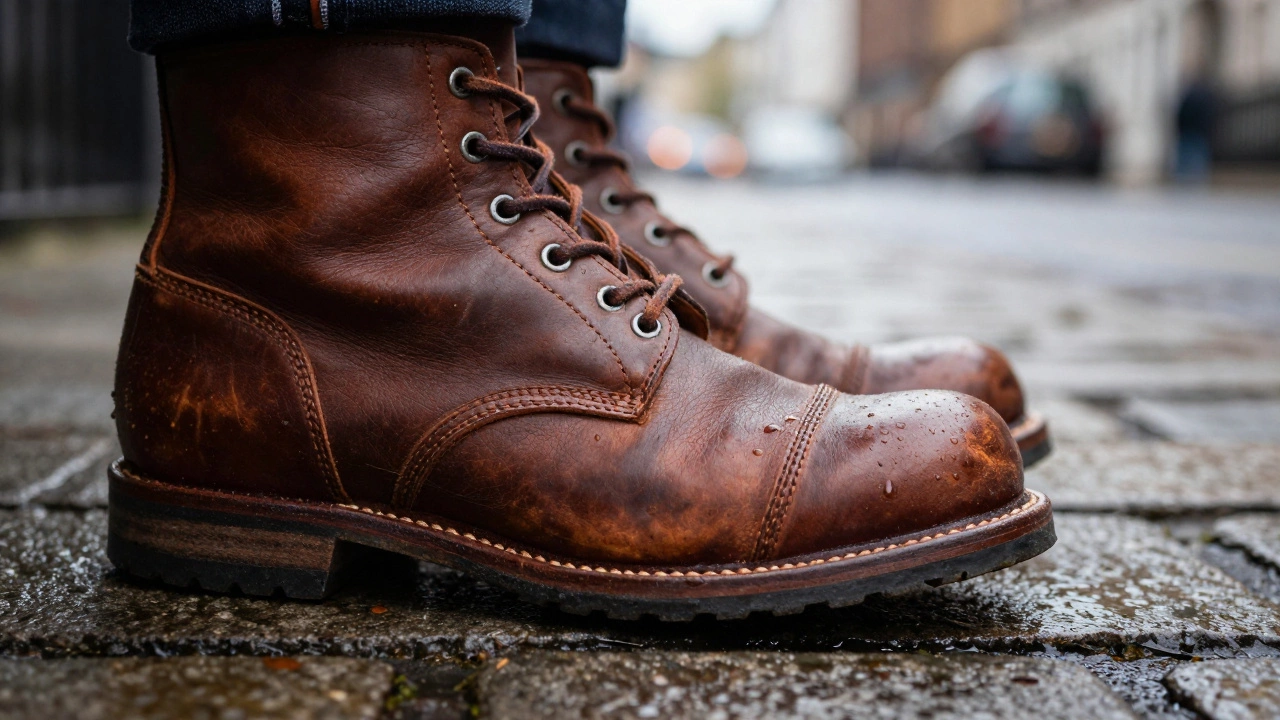
So, which one actually wins? It depends on your "job to be done." If your goal is to have one pair of boots that lasts ten years and can handle a muddy construction site or a rainy commute, go for full grain cowhide. The thickness protects your feet, and the leather only gets better as it ages.
If you're building a professional wardrobe for the corporate world, calfskin is your only real option. It provides that sharp, mirror-like shine that reflects a level of professionalism. Just be aware that calfskin is less breathable than goat or sheep leather, so you'll want to rotate your shoes-don't wear the same pair two days in a row, or the moisture from your feet will degrade the leather from the inside out.
For those who prioritize comfort and a "broken-in" feel immediately, goat leather or nubuck are the way to go. They mold to the shape of your foot much faster than heavy cowhide, meaning fewer blisters during the first month of wear. Just remember to invest in a good water-repellent spray if you choose these, as they are more porous and prone to staining.
Is 'Genuine Leather' a sign of quality?
Actually, no. In the leather industry, 'Genuine Leather' is often a grade of leather that is lower than full grain or top grain. It's usually made from the split layers of the hide, which are then embossed with a fake grain and painted. While it is real leather, it lacks the strength and longevity of full grain leather.
Which leather is the most waterproof?
Full grain cowhide, especially when treated with wax or oils (like pull-up leather), is the most naturally water-resistant. Exotic leathers like crocodile are also very dense and repel water well. Suede and sheepskin are the least waterproof and should be avoided in wet conditions.
Does calfskin really last longer than cowhide?
Not necessarily. Calfskin is more refined and looks better for dress shoes, but it is thinner. Heavy-duty cowhide is physically stronger and more resistant to tears and abrasions. If you're talking about a work boot, cowhide wins; for a dress shoe, calfskin is a better balance of durability and aesthetics.
How do I tell if leather is full grain?
Look closely at the surface. Full grain leather has slight imperfections, like pores or small scars, and the grain pattern is irregular. If the leather looks perfectly uniform and "plastic-y," it's likely corrected grain or genuine leather. Also, full grain leather usually feels denser and heavier.
Are exotic leathers worth the money?
From a purely functional standpoint, rarely. You pay a premium for the aesthetic and the status. However, ostrich leather is genuinely breathable and soft, and crocodile is incredibly tough. If you value the unique look and can afford the high maintenance, they are excellent products.
Next Steps for Shoe Care
Regardless of the leather you choose, a few simple habits will double the life of your shoes. First, always use cedar shoe trees. They soak up moisture and keep the leather from curling or cracking as it dries. Second, don't over-condition. Applying too much cream or wax can clog the pores of the leather, stopping it from breathing and actually making it more prone to cracking over time.
If you've bought suede or nubuck, your first priority should be a nanoprotector spray. Apply it before you even wear the shoes outside. This creates an invisible barrier that makes water bead off the surface, giving you a chance to wipe away dirt before it sinks into the fibers. For calfskin, a simple rotation schedule-wearing a pair for one day and letting them rest for another-is the most effective way to ensure they don't wear out prematurely.