Sleep Sack TOG Calculator
Find the right sleep sack warmth based on your room temperature and toddler's sleep preferences. Pediatricians recommend proper TOG ratings to prevent overheating and ensure safe sleep.
Recommended Sleep Sack
Enter temperature to see recommendation
Safety Tips
- Safety Ensure neck is not tight - should fit two fingers
- Safety Bottom of sack should end at ankles - never cover face
- Safety Always check for sweating or overheating
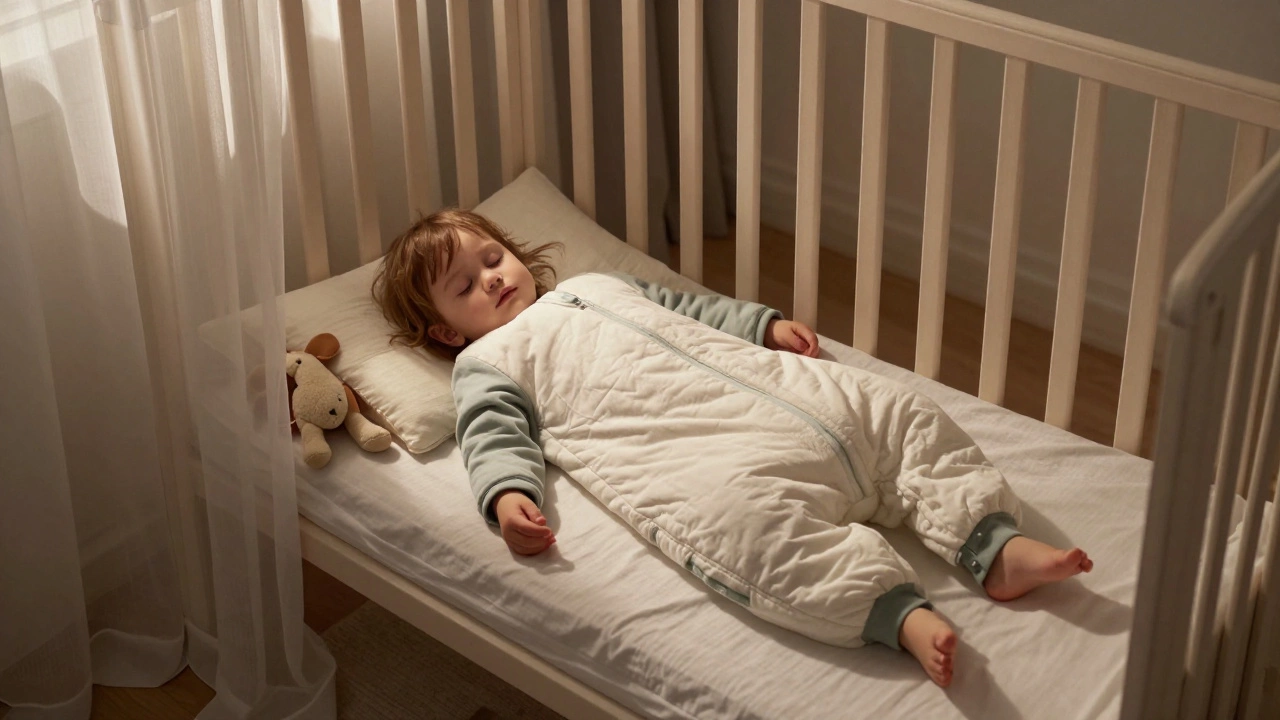
It’s 2 a.m. You’re half-asleep, staring at your 2-year-old squirming under the blanket, kicking it off every 10 minutes. You remember how easy it was when they were a baby-snug in their sleep sack, sleeping like a log. Now you wonder: Can a 2-year-old still wear a sleep sack? The answer isn’t a simple yes or no. It’s about safety, comfort, and your child’s development.
Why Sleep Sacks Work for Toddlers
Sleep sacks aren’t just for babies. They’re designed to keep toddlers warm without the risk of loose blankets. The American Academy of Pediatrics (AAP) says bedding safety is critical for children under 3. Loose sheets, quilts, and pillows can block a child’s airway. A well-fitted sleep sack removes that risk entirely.
At age two, most kids are still too young to reliably keep blankets on themselves. They roll, kick, and climb out of cribs-sometimes into the middle of the floor. A sleep sack keeps them cozy and contained. It also helps with sleep routines. When your toddler sees the sack go on, their brain starts to associate it with bedtime. That’s powerful.
When Do Kids Outgrow Sleep Sacks?
There’s no official cutoff age. But most pediatricians and child sleep consultants suggest transitioning out of sleep sacks between ages 2 and 3. Why? Because toddlers start developing motor skills that make sacks feel restrictive.
Some signs your child might be ready to move on:
- They’re climbing out of the crib and into a toddler bed
- Their arms keep getting stuck in the armholes
- They’re constantly pulling the sack off
- They’re sweating or seem overheated
- They’ve started sleeping with a lovey or stuffed animal
If your child is doing all of these things, it’s not that they’re too old for a sleep sack-it’s that their body and sleep habits are changing. That’s normal.
Safety First: What to Look for in a Sleep Sack for a 2-Year-Old
Not all sleep sacks are created equal. A poorly sized one can be dangerous. Here’s what to check:
- Fit: It should be snug around the neck and arms but loose enough to allow movement. If you can’t fit two fingers between the neck and the fabric, it’s too tight.
- Length: The bottom should end at the ankles or just above. A sack that’s too long can bunch up around the face.
- TOG rating: This measures warmth. For a room temperature of 18-21°C (65-70°F), choose a 1.0-2.0 TOG sack. Too warm? Your child will sweat. Too cold? They’ll wake up shivering.
- Zipper placement: Front zippers are easiest for nighttime changes. Back zippers are harder to manage but less likely to be pulled by curious hands.
Look for breathable fabrics like organic cotton or bamboo. Avoid fleece or synthetic blends that trap heat. And never use a sleep sack with a hood-no matter how cute it looks.
Transitioning from Sleep Sack to Blanket
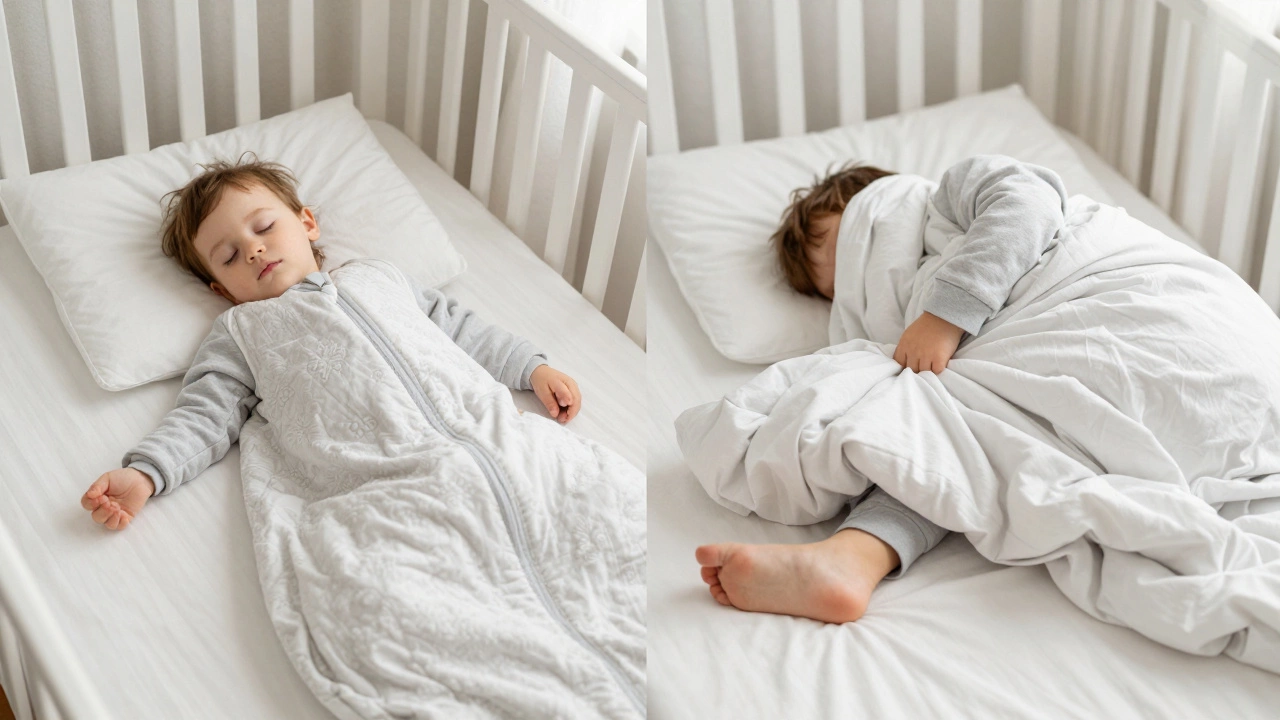
If you’re thinking about ditching the sack, don’t just swap it out for a blanket. That’s a recipe for midnight chaos. Instead, make a plan.
Start by using a sleep sack with arms open (a “transition sack”). These let your child move their arms freely while still keeping their torso warm. After a week or two, try a lightweight blanket tucked under the mattress on three sides. Leave one side open so they can’t pull it over their head.
Let your child pick out a small, thin blanket-something they can hold onto. This gives them control and makes the change feel less scary. You can also add a lovey they already sleep with, like a small stuffed animal or a soft blanket corner.
Expect some sleep disruptions. It’s normal for toddlers to take 7-14 days to adjust. Stick with it. Consistency matters more than perfection.
What About Sleep Sacks With Arms?
Many parents assume once a child turns two, they need arms out. Not true. Sleep sacks with long sleeves or armholes are perfectly safe-and often preferred-until age 3. The key is fit, not arm exposure.
Some toddlers sleep better with arms in. It mimics the feeling of being swaddled. Others need arms out to move, hug their lovey, or adjust their position. The best choice? Let your child’s behavior guide you. If they’re sleeping peacefully with arms in, leave it. If they’re constantly trying to pull their arms out, switch to a sleeveless or open-arm version.
Real-World Example: A Melbourne Family’s Experience
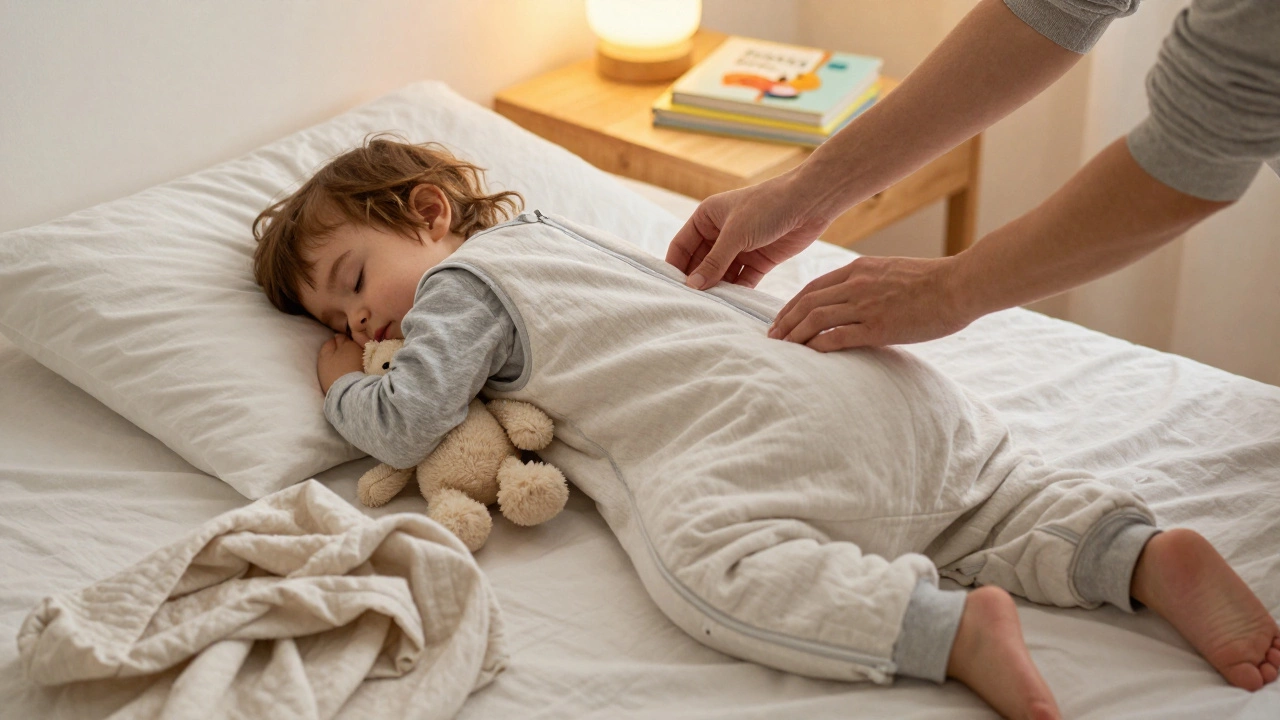
Last winter, a mom in Melbourne noticed her 22-month-old was waking up every night because the blanket kept slipping off. She bought a 1.5 TOG cotton sleep sack with open arms. Within three nights, her child started sleeping through the night. The sack didn’t just keep him warm-it gave him a consistent sleep cue. He still uses it at 2.5 years old, and his pediatrician approved it.
That’s the point: sleep sacks aren’t a phase you have to outgrow. They’re a tool. And tools stay useful as long as they work.
When to Stop Using a Sleep Sack
You don’t need to stop just because your child turned two. You stop when:
- The sack no longer fits (they’re outgrowing it)
- They’re consistently removing it or fighting it
- You’ve moved them to a bed and they’re sleeping safely with a thin blanket
- Your pediatrician advises it (rare, but sometimes needed for sensory or medical reasons)
Some kids use sleep sacks until age 4. Others stop at 18 months. Both are normal. There’s no rulebook. Your child’s comfort and safety are the only rules that matter.
Final Thought: Trust Your Gut
Parenting isn’t about following timelines. It’s about reading your child. If your 2-year-old is sleeping peacefully in a sleep sack, there’s zero reason to stop. If they’re wrestling with it every night, maybe it’s time to try something else.
The goal isn’t to stop using a sleep sack. The goal is to help your child sleep safely and soundly. If the sack still does that? Keep using it.
Can a 2-year-old still wear a sleep sack?
Yes, a 2-year-old can absolutely still wear a sleep sack. There’s no age cutoff. Pediatricians recommend sleep sacks for toddlers because they reduce the risk of suffocation from loose blankets. As long as the sack fits properly and your child is comfortable, there’s no reason to stop.
Is it safe for a 2-year-old to sleep with a blanket instead of a sleep sack?
It can be, but only if done safely. The American Academy of Pediatrics advises against loose bedding for children under 3 because of suffocation risks. If you switch to a blanket, use a thin, lightweight one tucked securely under the mattress on three sides. Never allow it to cover the child’s face. A sleep sack is still the safer option for most 2-year-olds.
How do I know if my 2-year-old is too big for a sleep sack?
Check the fit. If the neck is tight, the armholes are pulling, or the bottom of the sack is dragging on the floor, it’s too big. Also, if your child is climbing out of the crib or constantly removing the sack, they may be ready for a transition. Measure their height against the manufacturer’s size chart-most 2-year-olds fit in size 2T, but sizes vary by brand.
Should I use a sleep sack with arms or without arms for a 2-year-old?
It depends on your child. Some toddlers sleep better with arms in because it feels secure. Others need arms out to hug a lovey or adjust their position. Try both styles. If they’re not fighting the sack and sleeping well, stick with it. There’s no right or wrong-only what works for your child.
What TOG rating is best for a 2-year-old in a sleep sack?
For most homes with temperatures between 18-21°C (65-70°F), a 1.0-2.0 TOG sleep sack is ideal. If your home is cooler (under 16°C), go for 2.5 TOG. If it’s warmer (over 22°C), use 0.5-1.0 TOG. Always check your child’s neck-if it’s sweaty, it’s too warm. If it’s cold, they need more warmth.