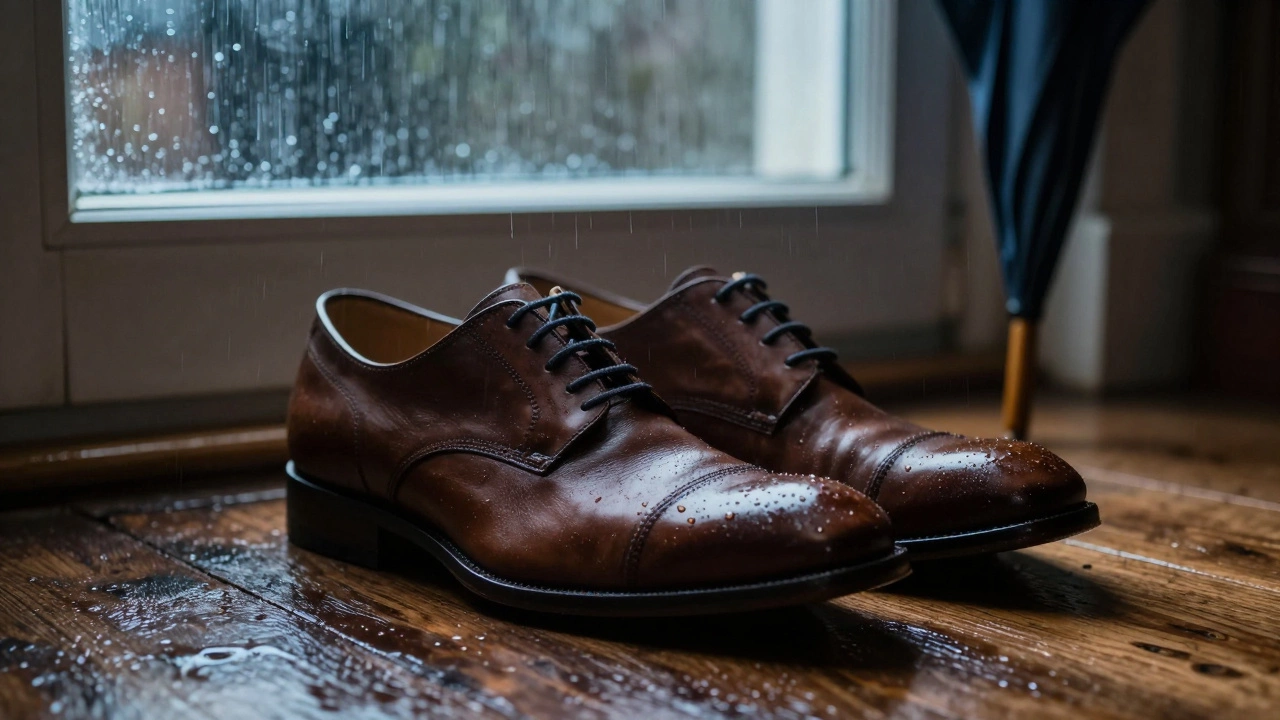
Leather Shoe Recovery Guide
Answer a few questions to get a personalized rescue plan for your footwear.
Key Takeaways for Saving Wet Leather
- Do not use a heater, radiator, or hairdryer to dry your shoes.
- Stuff them with newspaper or paper towels to absorb moisture and maintain shape.
- Always apply a leather conditioner once they are dry to prevent cracking.
- Wipe off salt or mud immediately to avoid permanent stains.
- Air drying at room temperature is the only safe way to go.
What actually happens when leather gets wet?
To understand why water is a problem, we have to look at what Leather is a durable material created from the tanned hides of animals, primarily cattle. During the tanning process, oils are added to the hide to keep it flexible and water-resistant. When your shoes get soaked, the water molecules push those natural oils out of the fibers.
The real danger isn't the water itself, but the drying process. As water evaporates, it takes those essential oils with it. If the leather dries too quickly-like when you put them next to a heater-the fibers shrink and tighten. This is where you get that "cardboard" feel, and eventually, the surface begins to crack. This is why wet leather shoes need a slow, controlled recovery process rather than a quick fix.
The immediate rescue: What to do right now
The moment you step inside, your goal is to stop the damage and start the moisture extraction. Don't just leave them in a heap by the door. Follow these steps to ensure the structure of the shoe remains intact.
- Wipe the surface: Use a clean, soft cloth to wipe away excess water, mud, or salt. If you leave salt from winter roads on the leather, it will leave white, crusty rings that can permanently etch the material.
- Remove the insoles: If the insoles are removable, take them out. This opens up the interior of the shoe, allowing air to circulate and the footbed to dry separately.
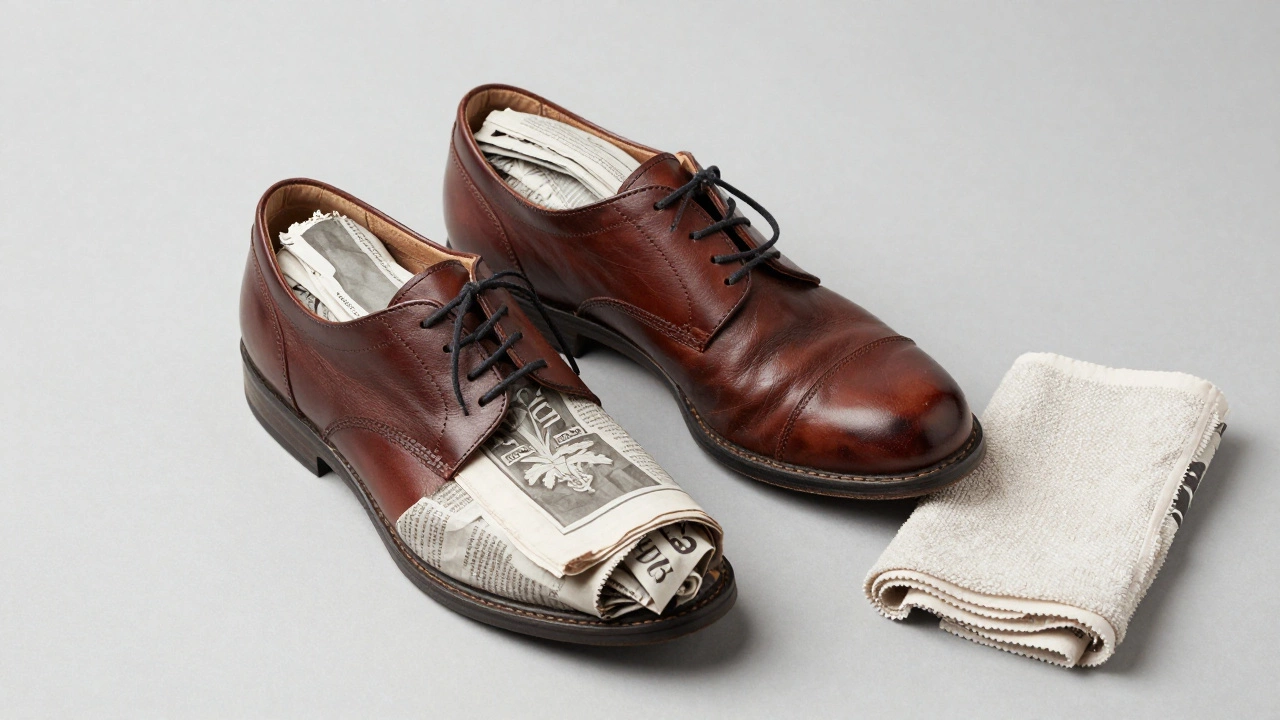
- Stuff them with paper: This is the most critical step. Grab some newspaper or plain brown packing paper. Crumple it up and stuff it firmly (but not too tightly) into the shoes. The paper does two things: it pulls moisture from the inside and acts as a mold to keep the shoe from shrinking or warping.
- Refresh the stuffing: After an hour or two, the paper will be damp. Replace it with fresh, dry paper. Keep doing this until the shoes are only slightly damp to the touch.
The "Never" List: Common mistakes that kill leather
When we're desperate, we tend to try shortcuts. In the world of leather care, shortcuts usually lead to the bin. Avoid these three common traps at all costs.
First, keep your shoes far away from any direct heat source. This includes radiators, space heaters, and the dreaded hairdryer. High heat causes the leather to contract rapidly, which leads to deep creases and brittle surfaces. I've seen pairs of high-end Oxfords ruined in a single night because someone tried to "speed dry" them with a blow-dryer.
Second, don't leave them in the direct sun. While a little sunlight is fine, baking them on a porch for eight hours will strip the remaining oils and bleach the color of the leather, leaving you with uneven patches of fade.
Third, don't ignore them. Some people think that if they just leave the shoes alone, they'll fix themselves. While air drying is good, leaving soaked leather without stuffing or ventilation can lead to mold and mildew growth inside the lining, which creates a smell that is almost impossible to remove.
Restoring the balance: Conditioning and Polishing
Once your shoes are dry, they aren't "fixed" yet. They are currently in a vulnerable state because they've lost their lubricity. This is where Leather Conditioner is a cream or oil-based product designed to penetrate the leather and replace lost moisture and fats comes into play.
Applying a conditioner is like moisturizing your skin after a long day in the sun. It softens the fibers and restores the elasticity. Use a soft cloth to rub a small amount of conditioner into the leather in circular motions. Let it sit for 15 to 30 minutes, then buff away any excess. If you skip this step, your shoes might look fine today, but they will likely develop cracks across the toe box within a few weeks.
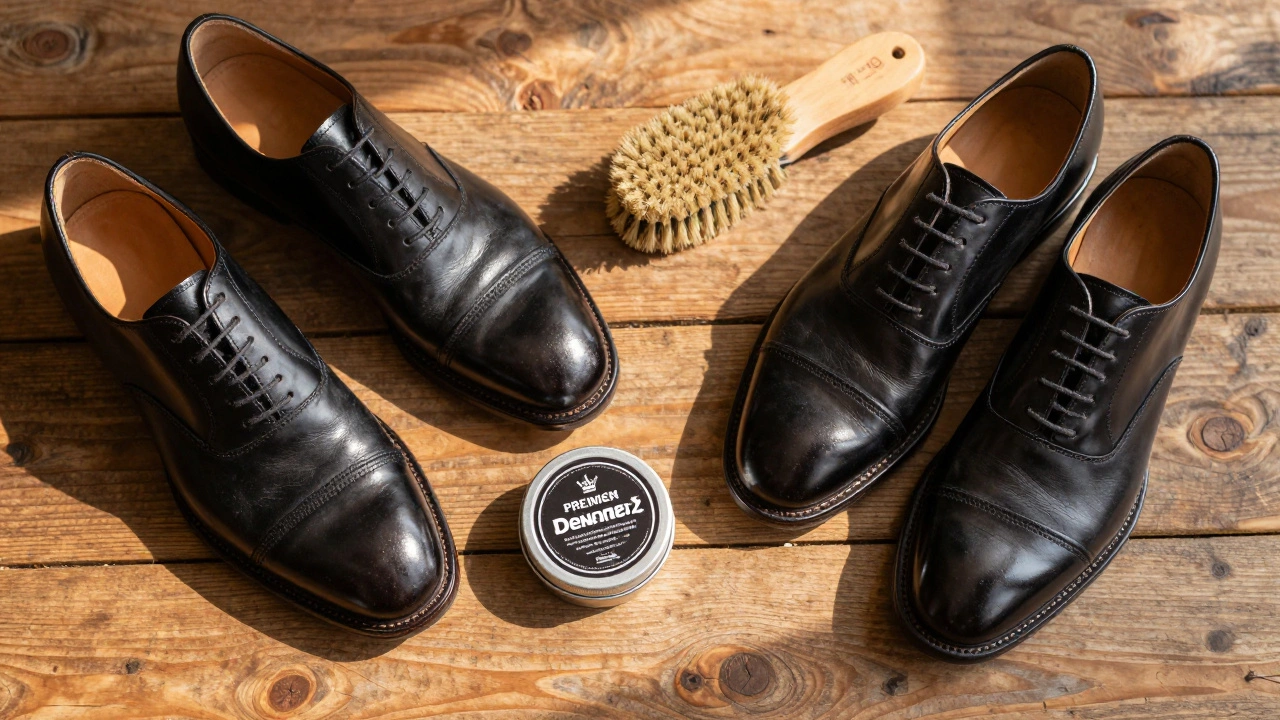
After conditioning, you can bring back the shine. Use a Shoe Polish is a wax or pigment-based compound used to color and protect the surface of footwear that matches the color of your shoes. Polishing doesn't just make them look new; it adds a thin protective layer that helps repel water the next time you're caught in the rain.
| Method | Speed | Risk Level | Outcome |
|---|---|---|---|
| Paper Stuffing + Air Dry | Slow | Very Low | Preserves shape and texture |
| Hairdryer / Radiator | Fast | Very High | Cracked, brittle leather |
| Direct Sunlight | Medium | Medium | Color fading and stiffening |
| Professional Cobbler | Slow | Zero | Full restoration |
Different types of leather: Not all shoes react the same
It is important to realize that the "rescue" process depends on the type of leather you own. A pair of rugged boots requires different care than a pair of delicate dress shoes.
Full-Grain Leather is the highest quality leather made from the top layer of the hide, retaining the natural grain is generally the most durable and water-resistant. It handles moisture well as long as it's conditioned properly. If you have these, the paper-stuffing method works perfectly.
On the other hand, Suede is a type of leather with a napped finish, created by sanding the underside of the hide is a different beast entirely. Water can leave permanent "tide marks" on suede. If suede gets soaked, don't use conditioner. Instead, let it dry naturally and then use a Suede Brush is a specialized tool with brass or nylon bristles used to lift the nap of the leather to gently brush the fibers back up. If the stains persist, a professional cleaner is your best bet.
Then there is Nubuck is leather that has been buffed to give a velvet-like surface, similar to suede but more durable. Nubuck is more water-resistant than suede but still prone to staining. Treat it similarly to suede, avoiding heavy creams that might flatten the nap.
Prevention: How to avoid the "Soaked Shoe" panic
The best way to deal with wet leather is to make sure it never happens in the first place. You don't have to carry an umbrella everywhere, but you can treat your shoes to be more resilient.
Consider applying a water-proofing spray. These sprays create a hydrophobic barrier that causes water to bead off the surface rather than soaking in. However, be careful-some cheap sprays can clog the pores of the leather, preventing it from breathing. Look for "nano-protectors" or high-quality fluorocarbon sprays that maintain breathability.
Another pro tip is to rotate your shoes. Never wear the same pair of leather shoes two days in a row. Leather needs time to breathe and release the moisture it absorbs from your feet. By rotating your footwear, you ensure that the leather is always in its most stable state, making it less likely to be damaged by an unexpected rainstorm.
Can I put my leather shoes in the washing machine?
Absolutely not. The washing machine is the fastest way to destroy leather. The combination of excessive water, harsh detergents, and the mechanical agitation will strip all oils from the leather and likely warp the shape of the shoe permanently. Always clean leather by hand with a damp cloth and specialized leather soap.
How long does it take for leather shoes to dry naturally?
Depending on the thickness of the leather and the humidity in your home, it usually takes 24 to 48 hours. Do not rush this process. If you put them on while they are still slightly damp, you risk stretching the leather and creating permanent deformities in the fit.
Will water leave stains on my black leather shoes?
Pure water usually doesn't leave stains on high-quality black leather, but the minerals and pollutants in rainwater (or salt on the road) do. This is why wiping them down immediately is so important. If a stain appears after drying, a leather cleaner followed by a fresh coat of polish usually fixes it.
Can I use a hair dryer on a low setting?
Even on a low setting, a hair dryer applies concentrated heat to a small area. This causes uneven drying, which can lead to warping or localized cracking. It is far safer to use a fan to move room-temperature air around the shoes.
What should I do if the inside of the shoe smells after getting wet?
The smell is usually caused by bacteria or mildew thriving in the damp environment. Once the shoes are completely dry, you can sprinkle a bit of baking soda inside and let it sit overnight, then shake it out. For stronger odors, use a dedicated shoe deodorizer spray or cedar shoe trees, which naturally absorb moisture and smell fresh.
Next Steps for Your Shoes
If you've followed the drying and conditioning steps and your shoes still look "off," it might be time to visit a professional. A cobbler has access to industrial drying equipment and professional-grade dyes that can fix deep water stains or structural warping that home remedies can't touch.
For those of you living in rainy climates, consider investing in a pair of cedar shoe trees. Not only do they help maintain the shape of the shoe while drying, but the natural oils in cedar help repel insects and keep the leather healthy from the inside out. Moving forward, a quick monthly application of conditioner will keep your leather supple and much more resilient to the elements.