
Swaddling Safety Checker
Check if your swaddling technique is safe and healthy for your newborn. This tool helps you evaluate key safety factors based on AAP recommendations.
Swaddling Safety Assessment
Fill out the form to check your swaddling safety
Swaddling a newborn isn’t a requirement-it’s a choice. But if you’ve ever held a squirming, startle-prone baby at 3 a.m., you know why so many parents reach for a blanket right away. The question isn’t whether swaddling works; it’s whether it’s right for your baby-and how to do it safely.
Why Swaddling Feels Necessary
Newborns come out of the womb used to being cramped. Inside, they’re curled up, with arms tucked, surrounded by warmth and pressure. Outside, everything feels too big, too loud, too open. That’s why the Moro reflex-the sudden flinging of arms and legs when startled-hits so hard. It’s not fear. It’s a neurological reflex, and it wakes babies up faster than a door slamming shut.Swaddling mimics the womb. It holds the arms close, reduces sudden movements, and creates a snug, secure feeling. Many parents swear by it: babies sleep longer, cry less, and settle easier. A 2021 study in the journal Pediatrics found that swaddled infants slept an average of 45 minutes longer per sleep cycle compared to those left unswaddled.
But here’s the catch: not every baby likes it. Some squirm, some cry harder, and some roll over before you can finish tying the blanket. That’s normal. Swaddling isn’t magic. It’s just one tool.
When Swaddling Can Be Risky
Swaddling isn’t risk-free. The biggest danger? Hip dysplasia. If you wrap the baby’s legs too tightly and straight down, you’re putting pressure on the hip joints. Newborn hips are made of soft cartilage and need room to move. Proper swaddling lets the legs bend up and out-like a frog’s position.Another risk? Overheating. Babies can’t regulate temperature well. A swaddled baby in a warm room, wearing a onesie and a thick blanket, can overheat fast. The American Academy of Pediatrics warns that overheating is linked to SIDS. Keep the room between 68-72°F. Check your baby’s neck-if it’s sweaty or hot, they’re too bundled.
And then there’s the roll-over factor. Once your baby starts showing signs of rolling-maybe they push up on their arms, or turn their head side to side with more force-it’s time to stop swaddling. Swaddling a baby who can roll onto their stomach increases suffocation risk. That usually happens between 2 and 4 months, but some babies roll earlier.
How to Swaddle Correctly
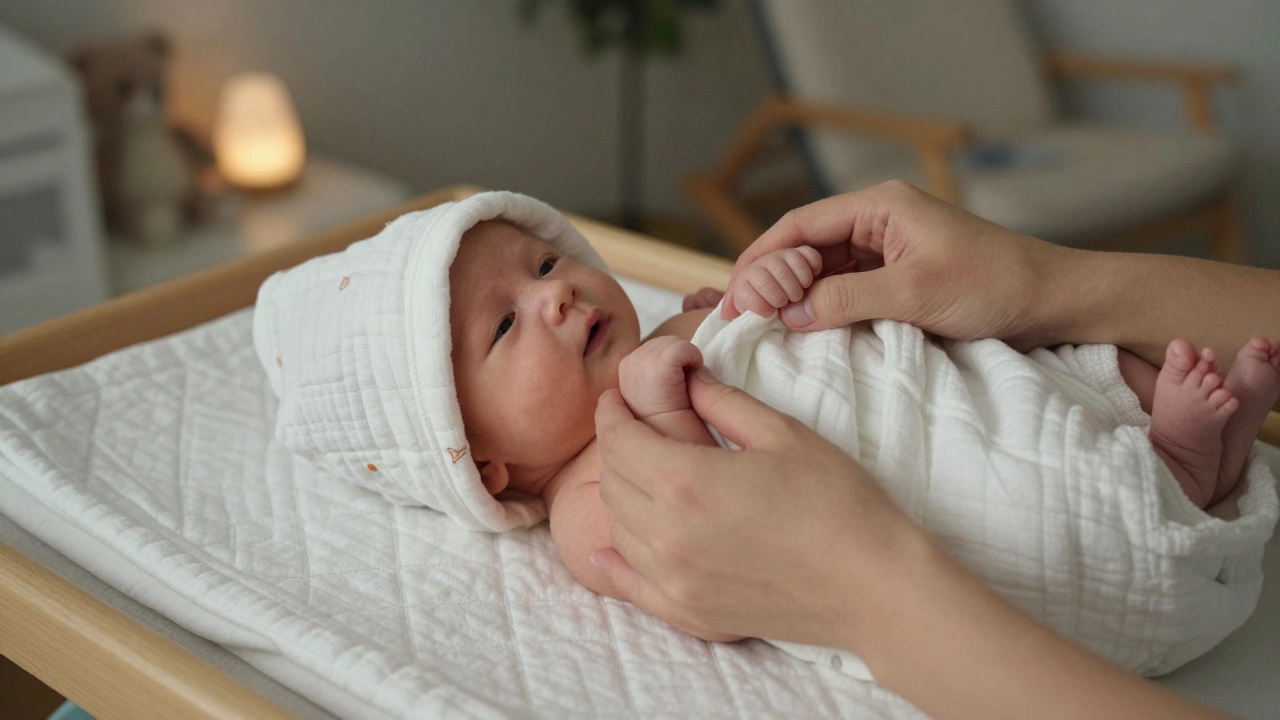
You don’t need a fancy swaddle blanket or a magic trick. A 44x44 inch cotton muslin square works fine. Here’s how to do it right:- Place the blanket on a flat surface in a diamond shape. Fold down the top corner about 6 inches.
- Lay your baby on their back, shoulders just below the folded edge.
- Take the left corner, pull it snugly across the chest, and tuck it under the right side. Keep the arm on that side gently bent, not straight.
- Bring the bottom corner up over the feet, tuck it loosely under the left shoulder. Let the legs bend up and out.
- Take the right corner, pull it across the chest, and tuck it under the left side. The wrap should be firm around the chest but loose around the hips.
Test the fit: Slide two fingers between the blanket and your baby’s chest. If you can’t fit them, it’s too tight. Your baby should be able to move their hips and knees freely.
Alternatives to Traditional Swaddling
If your baby hates being wrapped, or you’re worried about safety, there are other options:- Swaddle sacks with zippered arms-these let you transition from arms-in to arms-out slowly.
- Wearable blankets or sleep sacks with armholes. They keep the torso warm without restricting movement.
- Lightweight muslin wraps used only for naps, not all-night swaddling.
- White noise and gentle rocking can help calm the startle reflex without any wrapping at all.
Some parents skip swaddling entirely and use a firm mattress, a pacifier, and a dark room. It works. One 2023 survey of 1,200 new parents found that 38% never swaddled-and their babies slept just as well as those who did.
When to Stop Swaddling
Don’t wait for your pediatrician to tell you. Watch your baby. Signs it’s time to stop:- They’re breaking out of the swaddle consistently
- They’re rolling from back to side
- They’re fighting the swaddle harder than ever
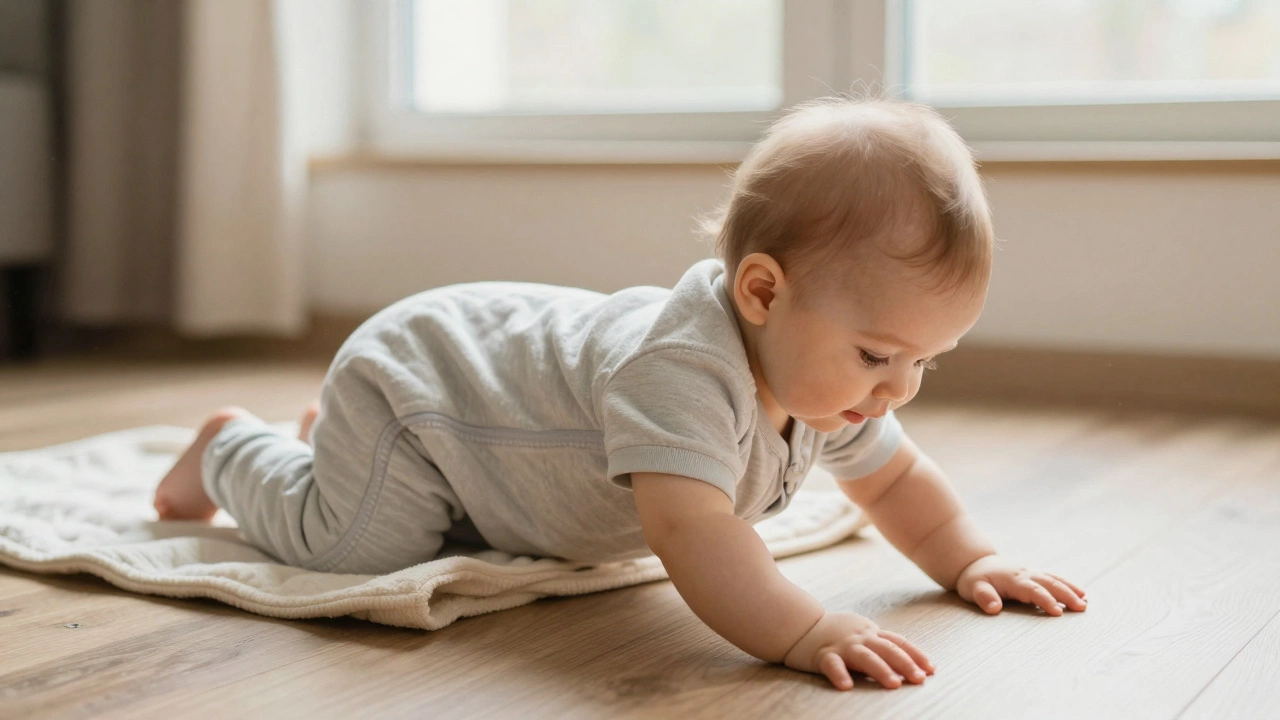
- They’re starting to push up on their arms during tummy time
When you stop, don’t go cold turkey. Start by swaddling with one arm out. Then both arms out. Then switch to a sleep sack. The transition can take a few nights. Expect some fussiness-it’s a change in their comfort zone.
What Works for One Baby Might Not Work for Another
There’s no universal rule. One baby might sleep 8 hours straight swaddled. Another might cry until you unwrap them. Neither is wrong. Your job isn’t to follow advice-it’s to read your baby’s cues.Some babies love the pressure. Others feel trapped. Some need swaddling for the first week and never again. Others rely on it until they’re 5 months old. There’s no timeline. No checklist. Just observation.
Swaddling is a tool. Not a test. Not a parenting win. Not a failure if you don’t use it. It’s a way to make the world feel a little smaller for a baby who just got tossed into it. And when it stops working? That’s not a sign you’re doing something wrong. It’s a sign your baby is growing.
What to Do If Your Baby Won’t Sleep Without Swaddling
If you’ve tried everything and your baby still screams when unswaddled, try this:- Use a swaddle sack with Velcro or zippers so you can open the arms gradually.
- Hold your baby upright for 10 minutes after feeding-this reduces gas and helps them settle.
- Use a firm, flat mattress. Soft bedding increases suffocation risk.
- Play low, rhythmic white noise (like a hairdryer or vacuum sound) at 65-70 decibels.
- Put your baby down drowsy but awake. If they always fall asleep in your arms, they won’t learn to self-soothe.
And remember: sleep training isn’t about letting your baby cry it out. It’s about helping them learn to fall asleep without always needing you to rock, feed, or swaddle them. That takes time. And patience.
Final Thought: It’s Okay to Say No
You don’t have to swaddle. You don’t have to feel guilty if you don’t. You don’t have to explain yourself to strangers on the internet or well-meaning relatives who say, “Back in my day, we just held them.”Your baby’s safety and comfort come first. If swaddling helps, use it. If it doesn’t, skip it. There’s no right way to raise a newborn-just ways that work for your family.
Is it safe to swaddle a newborn all night?
Yes, but only if done correctly. Use a breathable fabric, avoid overheating, and never swaddle if your baby can roll over. Always place them on their back. Stop swaddling once they show signs of rolling or breaking free.
Can swaddling cause hip problems?
Yes, if the legs are wrapped too tightly and straight. Always allow the hips to bend up and out naturally. Use a swaddle that lets the legs move freely. Hip-healthy swaddling is key to preventing developmental dysplasia.
When should I stop swaddling my baby?
Stop swaddling as soon as your baby shows signs of rolling, even if it’s just turning their head side to side with more force. This usually happens between 2 and 4 months. Never swaddle a baby who can roll onto their stomach.
Do all babies like being swaddled?
No. Some babies find swaddling comforting. Others feel trapped or restricted. It’s normal for a baby to cry when swaddled. Try different techniques, or skip it entirely. There’s no rule that says every newborn needs to be swaddled.
What’s the best fabric for swaddling?
Lightweight, breathable cotton muslin is best. It’s soft, allows airflow, and doesn’t trap heat. Avoid thick fleece, polyester, or quilted blankets. These can cause overheating. Look for swaddles labeled "breathable" or "hip-healthy."