
Nursery Schedule Calculator
How many days is right for your child?
Answer these questions about your child's behavior to see if your current nursery schedule matches their developmental needs.
Positive Signs
Signs of Overwhelm
When your child turns two, you start wondering: how many days a week should they be at nursery? It’s not just about getting them used to being away from you-it’s about what actually helps them grow. Some parents send their kids five days a week. Others wait until three. And some don’t send them at all. There’s no single right answer, but there are clear signs that tell you what’s working-and what’s not.
What Does a 2-Year-Old Really Need at Nursery?
A two-year-old isn’t learning math or reading yet. They’re learning how to share a toy, how to ask for help, how to sit still for five minutes, and how to cope when things don’t go their way. These aren’t academic skills-they’re social and emotional building blocks. Nursery gives them a safe space to practice these things with other kids and trained adults who know how to guide them.
But it’s not just about what happens at nursery. It’s about what happens before and after. If your child comes home exhausted, cranky, or overly clingy, they might be getting too much too soon. If they’re bored, restless, or constantly asking to go back, they might need more time there.
How Many Days Is Too Many? Too Few?
Most experts agree that two to three days a week is the sweet spot for a two-year-old. That’s enough to build routine without burning them out. A full five-day schedule can work-but only if the nursery has a calm, low-stress environment, small group sizes, and staff trained in toddler development. Many centers designed for older preschoolers push too hard, too fast.
Look at the daily schedule. Does it include plenty of free play? Quiet time? Outdoor movement? Or is it packed with structured activities from 8 a.m. to 4 p.m.? Toddlers need space to explore on their own. They need to nap. They need to just sit and stare at a leaf. If the day feels like a factory line, it’s too much.
On the other end of the spectrum, one day a week isn’t enough to build real connections. Your child might enjoy it, but they won’t develop the rhythm or confidence that comes from consistent exposure. Think of it like learning a language-you don’t get fluent from one hour a week.
Signs Your Child Is Ready for More Days
- They greet the nursery staff with a smile, not a scream.
- They talk about their day without crying.
- They’ve started sharing toys or taking turns without constant supervision.
- They nap well at nursery, even if they resist at home.
- They ask to go back after a weekend off.
These aren’t just good behaviors-they’re signs of emotional security. When a child feels safe and understood, they start to engage. That’s when you can consider adding a fourth day.
Signs They’re Overwhelmed
- They wake up crying on nursery days.
- They throw tantrums after pickup, even if they seemed fine at drop-off.
- They’ve stopped eating or sleeping normally at home.
- They cling to you for hours after coming home.
- They’ve stopped using words they used to say-like ‘mama’ or ‘ball’-and seem withdrawn.
These aren’t just ‘bad days.’ They’re signals your child’s nervous system is overloaded. Toddlers don’t have the tools to say, ‘I’m too tired.’ They cry, freeze, or act out instead. If you see this pattern for more than a week, cut back. Two days is still plenty.

What About Full-Time Nursery?
Some families need it. Single parents, dual-income households, financial pressures-it’s real. If full-time is your only option, make sure the center meets these standards:
- Staff-to-child ratio is no higher than 1:4 for two-year-olds.
- Naps are honored, not rushed. At least two hours of quiet time daily.
- Meals are home-style, not processed snacks.
- There’s outdoor play every day, rain or shine.
- Teachers talk to kids, not at them. They ask questions. They listen.
Also, build in recovery time at home. No extra activities. No screen time. Just cuddles, walks, and quiet. Your child needs to decompress. They’re working hard at nursery. Don’t ask them to work harder at home.
How to Test the Right Schedule
Start with two days. Pick two that are close together-like Tuesday and Thursday. Keep the same routine for three weeks. Then, observe:
- Does your child have a better mood on non-nursery days?
- Do they seem more confident around other kids?
- Are they sleeping better at night?
- Do you feel less guilty or stressed about dropping them off?
If the answer is yes to most of these, try adding a third day. If not, stick with two. There’s no rush. Your child’s development doesn’t depend on hitting a calendar target.
What If They Don’t Like Nursery?
Some kids just don’t click with group care. That doesn’t mean they’re behind. It means they need a different kind of structure. Maybe a playgroup once a week. Maybe a parent-and-toddler class. Maybe a nanny who takes them to the park daily. There’s no rule that says nursery is the only path.
What matters is that they’re learning to be around others, in a way that feels safe. If that happens at home with a caregiver, or in a small group, that’s just as valid. Don’t let guilt push you into a schedule that doesn’t fit.
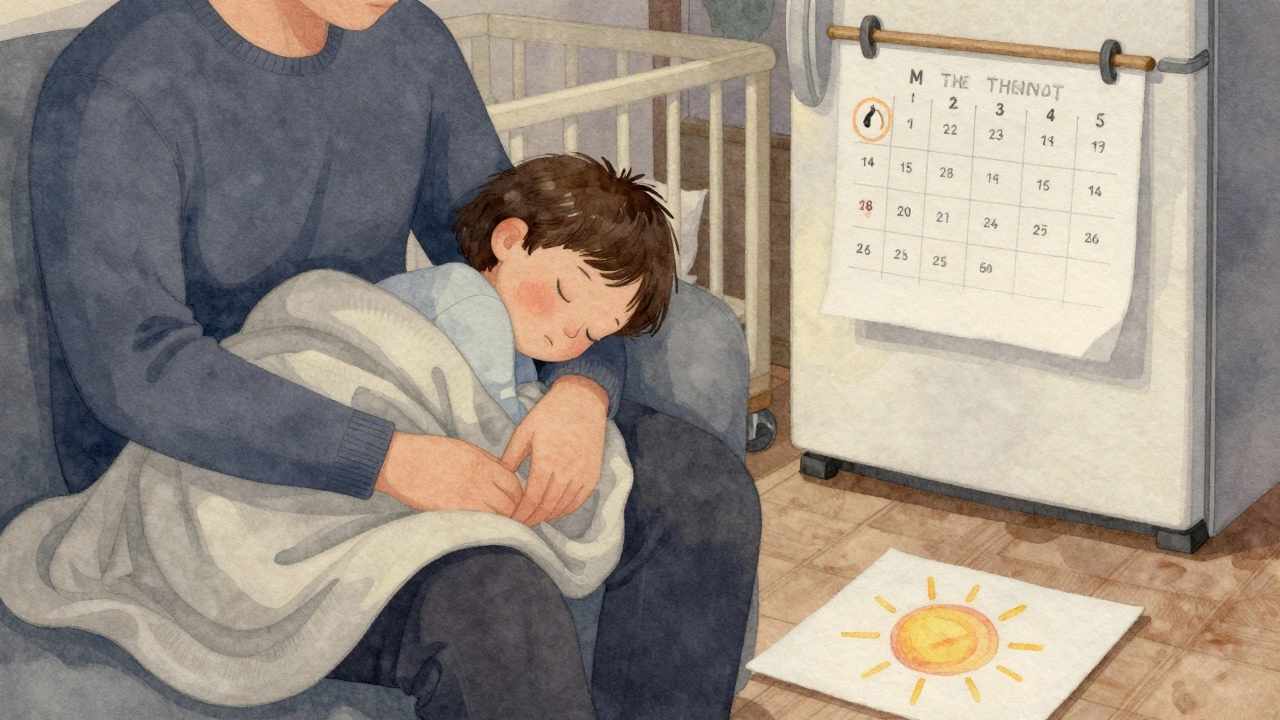
Seasonal Changes Matter Too
Don’t forget: seasons affect toddlers. Summer days are long. Winter mornings are dark. Illnesses spike in autumn. Your child might handle three days in spring but only two in winter. Adjust as needed. Flexibility isn’t failure-it’s parenting.
Also, watch for big life changes. A new sibling, moving house, a parent traveling for work-these can make nursery harder, even if things were going well. Pause. Go back to two days. Wait. Try again later.
What Do Experts Say?
The Australian Early Development Census (AEDC) tracks thousands of children across the country. Their data shows that toddlers who attend nursery two to three days a week show the strongest gains in social skills, language, and emotional regulation by age three. Those who attend five days a week show similar results-but only if the quality is high. Low-quality full-time care shows no benefit over staying at home.
And here’s something surprising: children who stay home with a consistent caregiver-whether it’s a parent, grandparent, or nanny-do just as well as those in nursery, as long as they get daily social interaction. That means playdates, library story time, or even walks in the park with other families.
It’s not about the place. It’s about the quality of connection.
Final Thought: Trust Your Gut
You know your child better than any guidebook. If they’re happy, healthy, and growing-even with just two days a week-you’re doing it right. If they’re struggling, it’s okay to slow down. Nursery isn’t a race. It’s a stepping stone. And every child steps at their own pace.
There’s no prize for sending your two-year-old to nursery five days a week. There’s no award for being the first to start. There’s only one thing that matters: whether your child feels safe, seen, and supported-wherever they are.
Is it normal for my 2-year-old to cry every time I drop them off?
Yes, it’s very common-especially in the first few weeks. Most toddlers go through a separation anxiety phase between 18 months and 3 years. The key is consistency. If you stick to the same routine, say a quick goodbye, and trust the staff, the crying usually fades within two to four weeks. If it lasts longer than a month and your child is withdrawn or refuses to eat or sleep, talk to the nursery about adjusting the transition.
Can my child catch too many colds at nursery?
It’s normal for toddlers in group care to get 6-8 colds a year. That’s how their immune system learns. It’s not a sign the nursery is dirty-it’s a sign they’re building defenses. After age three, most kids get sick far less often. If your child has fevers over 39°C, ear infections, or rashes more than once a month, check with your pediatrician. But occasional sniffles? That’s just part of growing up.
Should I wait until my child is 3 to start nursery?
You don’t have to wait. Many two-year-olds benefit from nursery, especially if they’re social, curious, and have a consistent routine at home. Waiting until three means missing out on early social learning. But if your child is very shy, has special needs, or you’re able to provide rich social interaction at home, waiting is fine too. There’s no deadline.
What if I can’t afford full-time nursery?
You’re not alone. Many families in Australia rely on part-time care, family help, or community programs. Look into the Child Care Subsidy (CCS) through Services Australia-it can cover up to 85% of fees based on your income. Also, check local councils for free or low-cost playgroups. Even one or two days a week makes a difference. Quality matters more than quantity.
Does nursery help with speech development?
Yes, but not because they’re doing worksheets. It’s because they’re surrounded by language. Other kids talk, sing, argue, laugh, and ask questions. Your child hears how words are used in real life-not just from you, but from peers and teachers. Studies show toddlers in group settings develop vocabulary faster, especially if caregivers respond to their attempts to communicate. If your child is behind on speech, nursery can help-but only if the staff are trained to support language development, not just supervise.