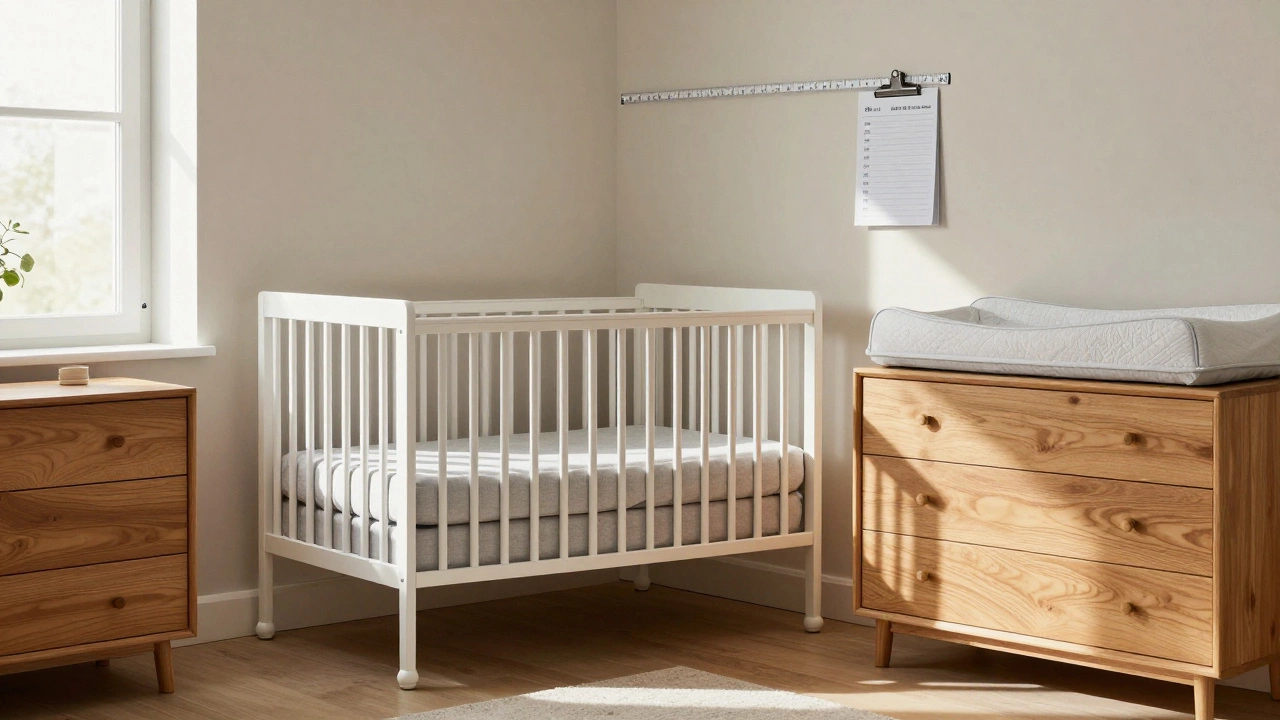
There’s a quiet pressure that comes with pregnancy - the urge to prepare, to protect, to build a nest before the tiny human even arrives. But how soon is too soon to start buying baby stuff? And more importantly, when should you actually start buying nursery furniture?
Some people start shopping right after the due date is set. Others wait until the 20-week ultrasound. A few even wait until the baby’s first cry. There’s no universal rule, but there are smart patterns - especially when it comes to big-ticket items like cribs, dressers, and changing tables.
Why Timing Matters for Nursery Furniture
Buying nursery furniture too early can backfire. You might pick out a crib based on a gender reveal that turns out wrong. Or you might fall in love with a vintage wooden dresser that doesn’t fit through your apartment door. Or worse - you buy something that doesn’t meet current safety standards.
The American Academy of Pediatrics updated its safe sleep guidelines in 2022. They now recommend that cribs should have slats no more than 2 3/8 inches apart, no drop-side rails (which were banned in 2011 but still show up in secondhand listings), and no decorative cutouts that could trap a baby’s head. If you bought a crib in 2020 without checking these details, you could be risking safety.
And let’s talk about space. A lot of people assume they’ll have room for a full-sized crib, a changing table, a rocking chair, and a toy shelf. But in reality, once you move the bed out of the nursery and start measuring doorways and window placements, you realize your 8x10 room barely fits two pieces. Timing your purchases around your home layout saves stress later.
When to Start Shopping: A Realistic Timeline
Here’s what works for most families - not based on tradition, but on real-world logistics.
- Week 16-20: Start researching. Look at reviews, watch YouTube videos of people assembling cribs, check return policies. This is not the time to buy - it’s the time to learn.
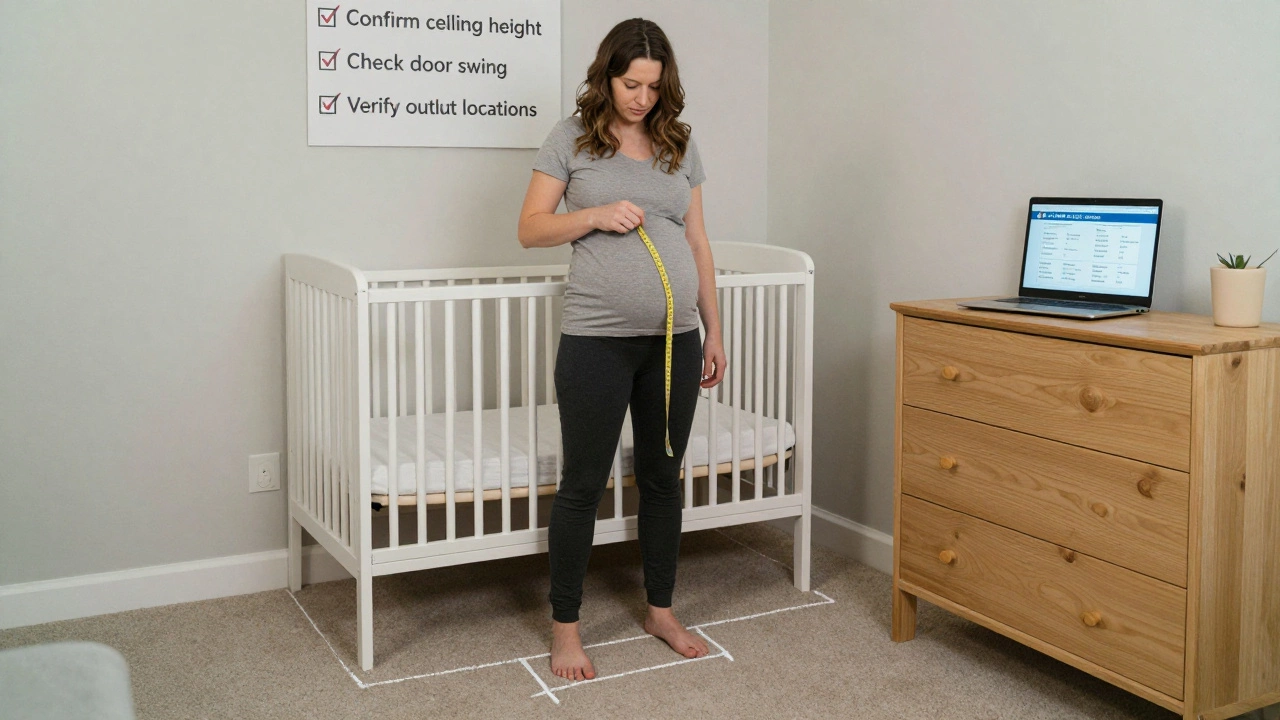
- Week 20-24: Confirm your baby’s size. If you’re having twins, you’ll need a different crib setup. If you’re doing co-sleeping or a bassinet-to-crib transition, your needs change. This is also when you should measure your room. Write down exact dimensions: ceiling height, window width, door swing, outlet locations.
- Week 24-28: Start buying. This is the sweet spot. You’re past the riskiest part of pregnancy (most miscarriages happen before week 12). You’ve likely had your anatomy scan. You know if you’re having one baby or more. You’ve seen your space. You can order with confidence. Most major retailers (like IKEA, Target, Wayfair) ship nursery furniture in 7-14 days. If you order now, it arrives before week 36 - giving you time to assemble it, air it out, and test the mattress fit.
- Week 32+: Only buy essentials. By now, you’re probably exhausted. Stick to the bare minimum: a crib, a mattress, one changing pad, and a storage bin for diapers. Everything else can wait until after birth.
Why not wait until after the baby arrives? Because delivery times are unpredictable. In 2024, a Consumer Reports survey found that 43% of new parents who waited until after birth had to use temporary solutions - like a laundry basket as a bassinet or a folding table as a changing station - for weeks. That’s not just inconvenient. It’s stressful when you’re sleep-deprived.
What to Buy First (and What to Skip)
Not all nursery furniture is created equal. Some items are worth buying early. Others are better rented, borrowed, or skipped entirely.
Buy early:
- Crib: The standard full-size crib (60” x 26”) is the most versatile. It lasts until age 2-3. Look for one with a convertible option - you can turn it into a toddler bed later. Brands like DaVinci, Graco, and Babyletto have solid safety records and easy assembly.
- Mattress: This is non-negotiable. Buy a firm, waterproof, non-toxic mattress that fits snugly (no gaps larger than two fingers). The Colgate Eco Classica III is a top pick for low VOC emissions and durability. Don’t buy used - old mattresses can harbor dust mites and mold.
- Dresser: Use it as a changing table with a removable pad. It’s cheaper than buying a dedicated changing table, and you can keep using it for years. Make sure it’s anchored to the wall - tip-overs are a leading cause of nursery injuries.
Wait or skip:
- Rocking chair: You can borrow one from a friend or use a regular armchair. Most parents don’t use rocking chairs as much as they think.
- Decorative wall art: Save this for after birth. You’ll have a better sense of your baby’s vibe - and you’ll be less likely to regret a $200 print that doesn’t match the room.
- Mobiles and fancy night lights: Babies under 3 months don’t focus on visuals. Skip the high-tech ones. A simple, dimmable lamp on a timer works better.
The Hidden Cost of Waiting Too Long
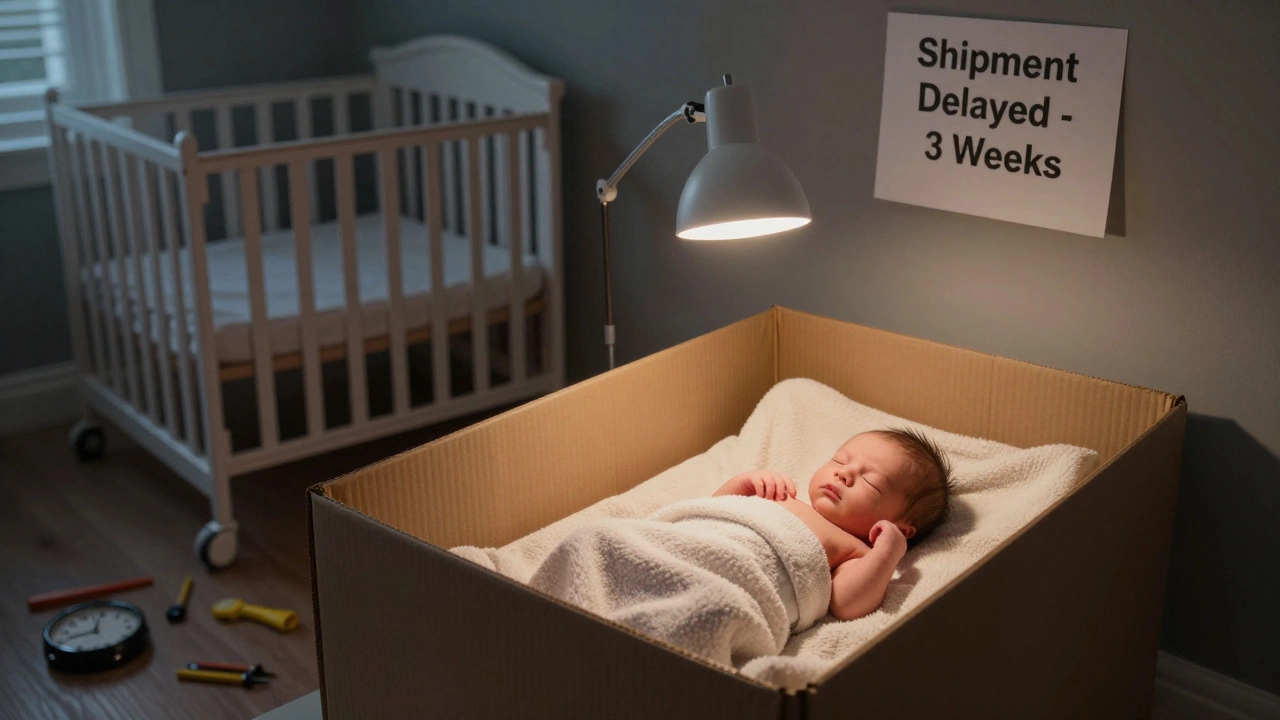
There’s a myth that waiting until the last minute is more “authentic” or “minimalist.” But in practice, it often leads to panic buying. One mom in Ohio told Parents Magazine in late 2024 that she waited until week 38 to order a crib. The one she wanted was out of stock. The next one shipped in 3 weeks. Her baby arrived 10 days early. She ended up using a cardboard box lined with towels for three nights.
Shipping delays aren’t rare. In 2025, Amazon’s nursery furniture category still had 7-10 day delays during peak months. And if you wait until after birth? You’re competing with every other new parent in your city trying to assemble a crib at 2 a.m. while nursing.
Also, consider returns. Most furniture stores don’t accept returns on assembled items. If you buy a crib that doesn’t fit your space, you’re stuck with it. That’s why measuring early - and ordering with free delivery and setup - is a game-changer.
What About Gender-Neutral and Secondhand?
More families are choosing gender-neutral nurseries. That means you can buy furniture without worrying about pink or blue. It’s also a great way to avoid last-minute changes. A white crib, a wooden dresser, and gray linens work for any baby.
Secondhand furniture? It’s tempting. But not all pieces are safe. Avoid anything with chipped paint (lead risk), missing hardware, or signs of repair. The CPSC (Consumer Product Safety Commission) recalls about 12 crib models a year. If you’re buying used, check the recall list at cpsc.gov before you bring it home.
Some parents use rental services like BabyQuip or local Facebook groups to borrow cribs and changing tables for the first few months. That’s smart. It lets you test what works before committing.
The Bottom Line
How soon is too soon? If you’re asking this question, you’re already thinking ahead - and that’s good. The answer isn’t about being early. It’s about being prepared.
Start researching at 16 weeks. Measure your space at 20 weeks. Order your crib and mattress between 24 and 28 weeks. That gives you breathing room. It lets you avoid last-minute chaos. And most importantly, it gives you time to breathe before your baby arrives.
You don’t need to have every toy, every outfit, every decorative pillow. But you do need a safe, solid, and simple place for your baby to sleep. That’s what matters. And that’s what you can - and should - plan for.
Is it okay to buy baby furniture before knowing the baby’s gender?
Yes, absolutely. In fact, it’s recommended. Gender-neutral furniture like white cribs, wooden dressers, and gray bedding works for any baby and avoids last-minute changes. Most modern nursery collections are designed to be gender-neutral, so you’re not missing out on style.
Can I use a secondhand crib?
Only if it meets current safety standards. Check the CPSC recall list at cpsc.gov. Avoid cribs with drop-side rails, decorative cutouts, or chipped paint. Cribs older than 10 years often don’t meet today’s safety rules. If you’re unsure, buy new - a safe crib is worth the investment.
What’s the most important piece of nursery furniture?
The crib and mattress. Everything else - changing tables, rockers, shelves - can be improvised. But your baby needs a firm, safe, and properly fitted sleeping surface. The crib is non-negotiable. Prioritize this above all else.
Should I assemble the crib before the baby arrives?
Yes. Assembling it early lets you test for wobbly parts, missing screws, or fit issues. It also lets the materials air out - new wood and fabric can have strong odors from glue or finishes. Set it up 2-3 weeks before your due date, then let it sit. You’ll thank yourself when you’re exhausted at 3 a.m.
How long does nursery furniture last?
A quality crib lasts until age 2-3. A dresser can last through childhood - many parents repurpose it as a TV stand or desk later. Look for convertible furniture. A crib that turns into a toddler bed or a dresser that doubles as a changing table gives you more years of use and better value.