Suit Quality Checker
Check Your Suit's Quality
Answer these 9 questions based on the article's criteria to see if your suit is high-quality.
Fabric: Is the fabric 100% wool (90s-110s)?
Construction: Is it half-canvassed or fully canvassed?
Lapels: Do lapels roll naturally without glue?
Buttons: Are buttons real horn or mother-of-pearl?
Sleeves: Are sleeve buttons functional?
Lining: Is the lining made of Bemberg or cupro?
Stitching: Are seams even and tight?
Shoulders: Do shoulders fit perfectly?
Pants: Is there a subtle break in the pant leg?
Your Suit Assessment
Please answer all questions to see your result.
Buying a suit shouldn’t feel like guessing. You walk into a store, try on three different ones, and leave wondering if you paid for style-or just a label. The truth? A high-quality suit doesn’t shout. It whispers. And once you know what to look for, you’ll spot the difference in seconds.
Start with the Fabric
The fabric is the foundation. A cheap suit often uses synthetic blends-polyester, rayon, or nylon-that look shiny under lights and feel stiff or plasticky. A good suit? It’s made from wool. Not just any wool, but wool with a high thread count, usually between 80s and 120s. The higher the number, the finer the yarn. But don’t chase the highest. A 130s or 150s wool is delicate and better for formal events. For everyday wear, stick with 90s to 110s. It’s durable, breathable, and holds its shape.
Touch the fabric. Does it feel soft but substantial? Does it spring back when you pinch it? If it stays crushed, it’s low quality. Real wool has natural elasticity. Brands like Super 100s from Italy or Australia’s Australian Merino wool are industry standards. You won’t see these labels on the tag, but you’ll feel them.
Check the Construction
There are three main types of suit construction: fused, half-canvassed, and fully canvassed. Most off-the-rack suits use fused construction-where the lapel and chest are glued together with a layer of synthetic interfacing. It’s cheap, fast, and falls apart after a few dry cleans. You’ll notice it when the lapel starts to bubble or peel.
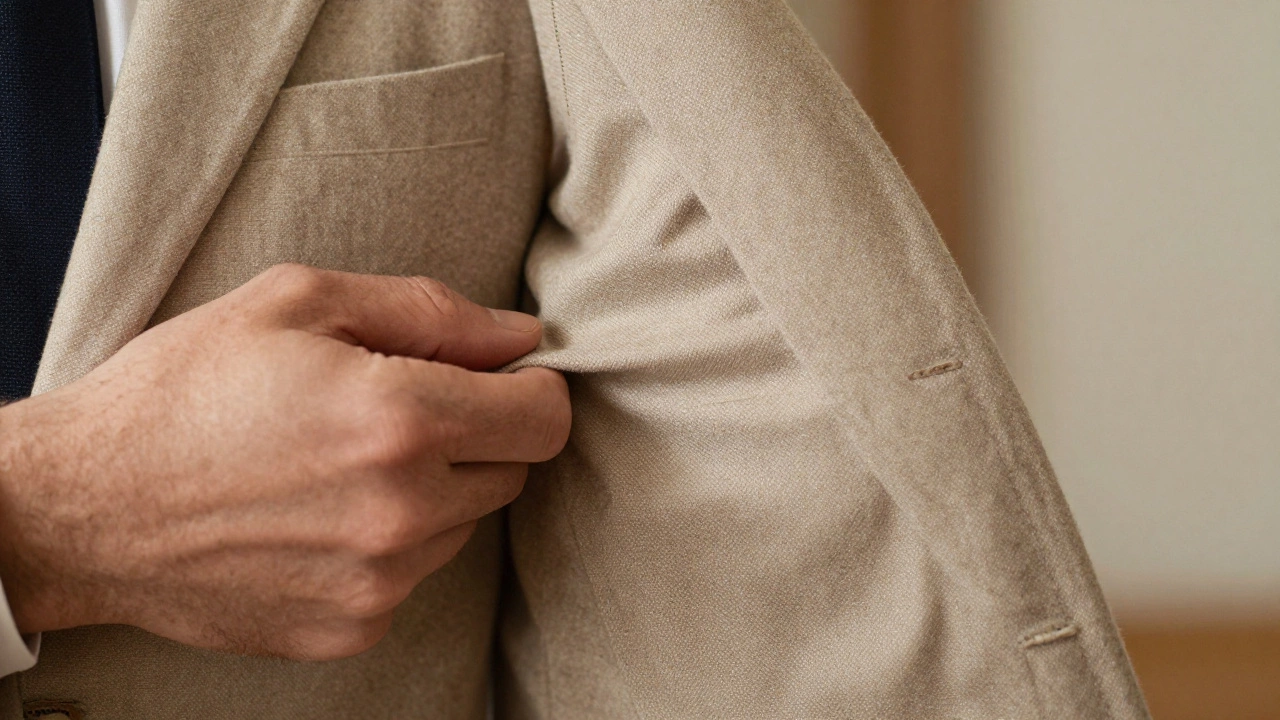
A half-canvassed suit has a layer of horsehair and wool stitched between the outer fabric and the lining, covering about two-thirds of the chest. It’s the sweet spot for most guys. It drapes naturally, holds shape, and lasts years. Fully canvassed suits-the gold standard-have this layer covering the entire chest and lapel. They’re more expensive, but if you wear a suit weekly, it’s worth it. You can test this by pinching the lapel. If you feel three distinct layers, it’s canvassed. If it feels like one stiff sheet, it’s fused.
Lapels and Buttons Tell the Story
The lapel width should match your build. A narrow peak lapel on a broad-shouldered guy looks off. A notch lapel is the most versatile. On a high-quality suit, the lapel roll-the curve where the lapel meets the jacket-is smooth and natural. If it looks like it’s been glued into place, it’s not well-made.
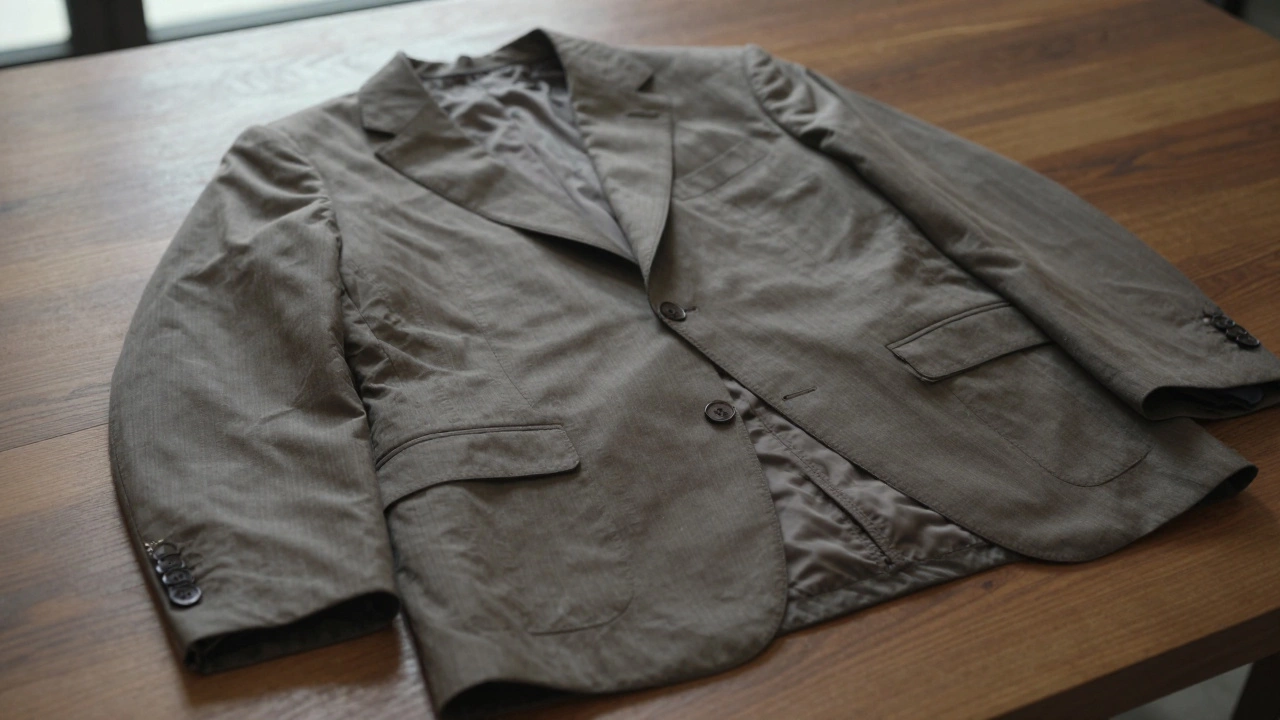
Look at the buttons. A good suit has real horn or mother-of-pearl buttons. They’re slightly irregular, warm to the touch, and have a subtle sheen. Plastic buttons are shiny, uniform, and feel cold. Also, check how many buttons are sewn on. Three buttons? The top one is functional. Two? Only the top one works. A high-quality suit will have functional buttonholes on the sleeves. If the buttons on the cuffs are stitched shut, it’s a sign of mass production. Cut them open. You’ll thank yourself later.
Stitching and Lining
Examine the stitching. On a quality suit, the seams are tight, even, and consistent. Look at the inside of the jacket. If you see loose threads, uneven stitching, or glue spots, walk away. A good suit uses a basting stitch-a temporary thread that holds the fabric in place during construction. It’s not meant to last forever, but it should be neat.
The lining matters too. Cheap suits use polyester lining that traps heat and slips around when you move. A good suit uses Bemberg rayon or cupro, which are breathable and smooth against the shirt. Run your hand along the lining. If it catches on your shirt, it’s low quality. Also, check the pocket bags. They should be lined, not just raw fabric. If you see a patch of mismatched material inside the breast pocket, that’s a red flag.
Fit Is Everything
No matter how expensive the fabric, a suit that doesn’t fit well is a waste. The shoulders should sit exactly at the edge of your natural shoulder-not too far out, not too far in. If the jacket pulls across the back when you raise your arms, it’s too tight. The sleeves should end where your wrist bone meets your hand. About a quarter inch of shirt cuff should show.
For the pants, the break-the fold at the bottom-should be subtle. A slight break is modern. Too much fabric pooling at the ankle? Too long. No break at all? Too short. A good tailor can fix this in minutes. But if the suit’s too narrow in the chest or too tight in the arms, no tailor can fix bad proportions.

Price Isn’t the Only Clue
You don’t need to spend $2,000 on a suit to get quality. A well-made half-canvassed suit from a reputable brand like Suitsupply, Indochino, or even a local tailor can cost between $600 and $1,200. Brands that sell suits for under $300 are almost always fused, synthetic, and built to be replaced. That’s not a suit-it’s a rental.
Look for brands that list their fabric origin. If it says "100% wool, imported from Italy," that’s a good sign. If it just says "polyester blend," skip it. Also, check the country of manufacture. Italy, England, and Portugal are still leaders in tailoring. But don’t rule out well-made suits from Bangladesh or Vietnam if the construction is right. It’s not where it’s made-it’s how it’s made.
How Long Should a Suit Last?
A cheap suit might last one season. A high-quality suit, worn twice a month, should last 7 to 10 years. You’ll notice the difference in how it hangs, how it resists wrinkles, and how it feels after a long day. I’ve seen suits from 2018 still looking sharp because the fabric didn’t pill, the stitching held, and the lining didn’t shift.
One guy I know bought a $900 suit in 2020. He wore it to weddings, job interviews, and even a funeral. He had it cleaned twice. Last month, he took it to a tailor to adjust the waist. It still looked new. That’s the power of quality.
Final Checklist
- Is the fabric 100% wool (90s-110s)?
- Is the construction half-canvassed or fully canvassed?
- Do the lapels roll naturally?
- Are the buttons real horn or mother-of-pearl?
- Are the sleeve buttons functional?
- Is the lining made of Bemberg or cupro?
- Do the seams look even and tight?
- Do the shoulders fit perfectly?
- Is there a slight break in the pant leg?
If you answered yes to at least seven of these, you’ve got a suit that’ll outlast your trends.