T-Shirt Quality Checker
Evaluate Your T-Shirt Quality
Answer these 7 questions to determine your t-shirt's quality score. Each factor contributes to overall durability, comfort, and longevity.
Quality Assessment
Not all t-shirts are created equal. You’ve probably bought a few that looked fine in the store, only to shrink, fade, or turn see-through after a couple of washes. A cheap t-shirt might cost $5, but a good one lasts years-and feels like it’s made just for you. So how do you spot the difference before you buy? It’s not about the brand name. It’s about what’s inside the fabric, how it’s stitched, and how it holds up under real use.
Feel the Fabric
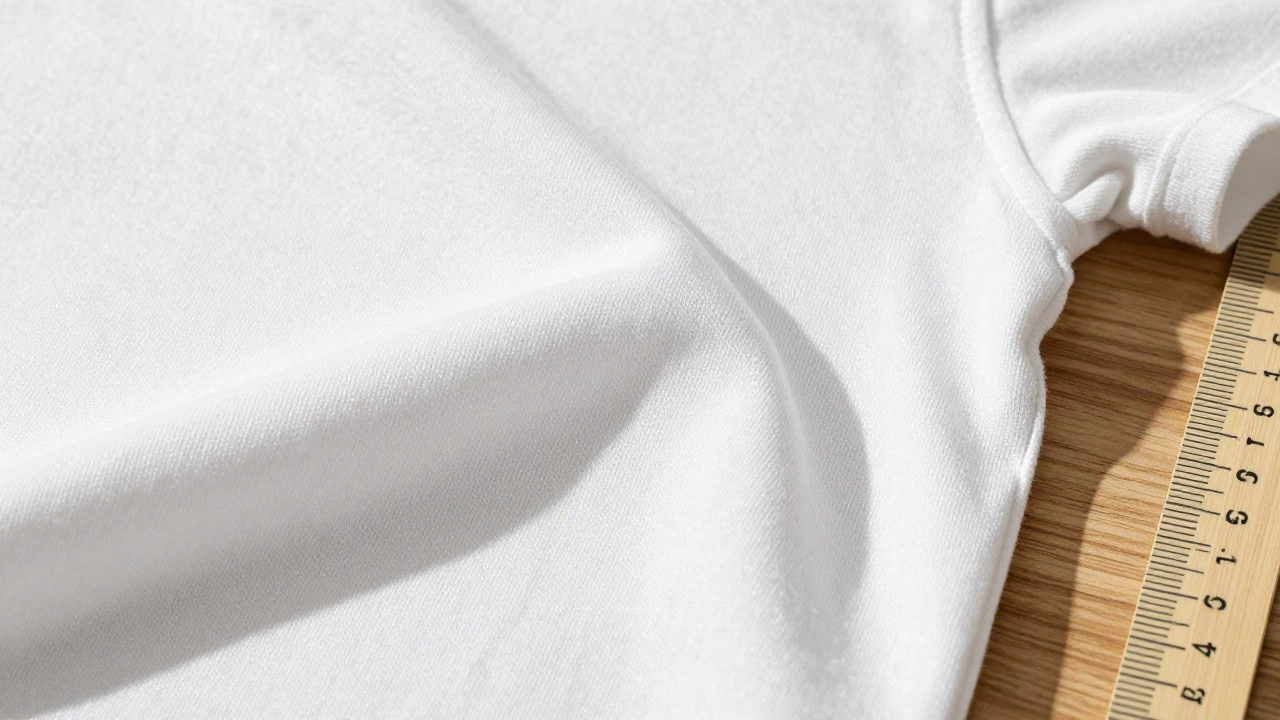
The first thing you should do is touch it. A high-quality t-shirt feels soft, but not flimsy. It has a slight weight to it, like it’s built to last. Most premium t-shirts use long-staple cotton-like Egyptian, Pima, or Supima. These fibers are longer than regular cotton, which means they spin into smoother, stronger threads. You won’t see tiny pills forming after a few washes. Regular cotton? It’s short-staple. It frays, pills, and loses shape fast.
Hold the fabric up to the light. If you can see through it easily, it’s too thin. A good t-shirt should be opaque without being heavy. The ideal weight? Between 4.5 and 6.5 ounces per square yard. Anything under 4 ounces is likely to be see-through or tear easily. Anything over 7 ounces might feel stiff, unless you’re looking for a heavyweight tee for layering.
Check the Stitching
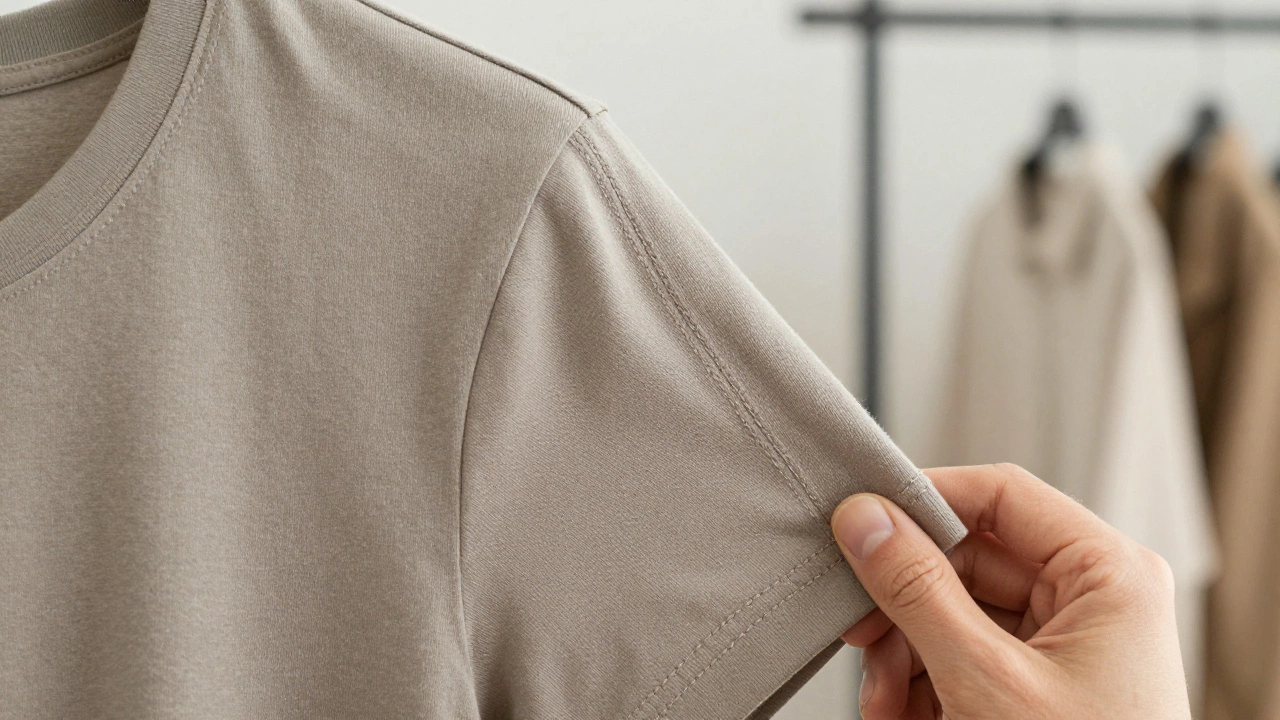
Look at the seams. A high-quality t-shirt uses double or even triple stitching on the shoulders, side seams, and hem. These aren’t just decorative-they prevent the shirt from stretching out or tearing when you move. Run your fingers along the seams. If they feel loose or bumpy, the machine wasn’t calibrated right. A well-made shirt has even, tight stitches that lie flat against the fabric.
Pay attention to the neckline. A cheap t-shirt often has a narrow, flimsy ribbing that stretches out after one wear. A good one uses a thicker, more elastic ribbing, usually made from a cotton-polyester blend. It should snap back into place after you pull it over your head. If it looks crooked or uneven, that’s a red flag.
Look at the Cut and Fit
A high-quality t-shirt doesn’t just fit-it fits right. The shoulders should sit exactly where your natural shoulder line ends. If the seams slope too far down your arm, it’s a sign the pattern was cut poorly. The sleeves should be long enough to cover your biceps without being baggy. The hem should hit just below your waistband, not above or below.
Some brands use a contoured cut, shaped to follow the body without being tight. This isn’t just about looks-it’s about durability. A shirt that’s cut too boxy will sag. One that’s too tight will pull at the seams. A well-cut t-shirt moves with you, not against you.
Examine the Label and Brand Transparency
Brands that care about quality list their materials clearly. Look for “100% Supima cotton” or “Pima cotton” on the tag. Avoid vague terms like “premium cotton” or “soft cotton”-those are marketing fluff. If the label says “Made in USA,” “Made in Italy,” or “Ethically Produced,” that’s a good sign. These countries and brands tend to have stricter labor and material standards.
Some brands even list the thread count or fiber length. That’s rare, but when you see it, it’s a strong indicator of transparency. Brands like Uniqlo’s U series, Everlane, and Patagonia often include this info. If the label is missing or says “Made in China” with no other details, that doesn’t automatically mean it’s bad-but it means you need to look closer.
Do the Stretch Test
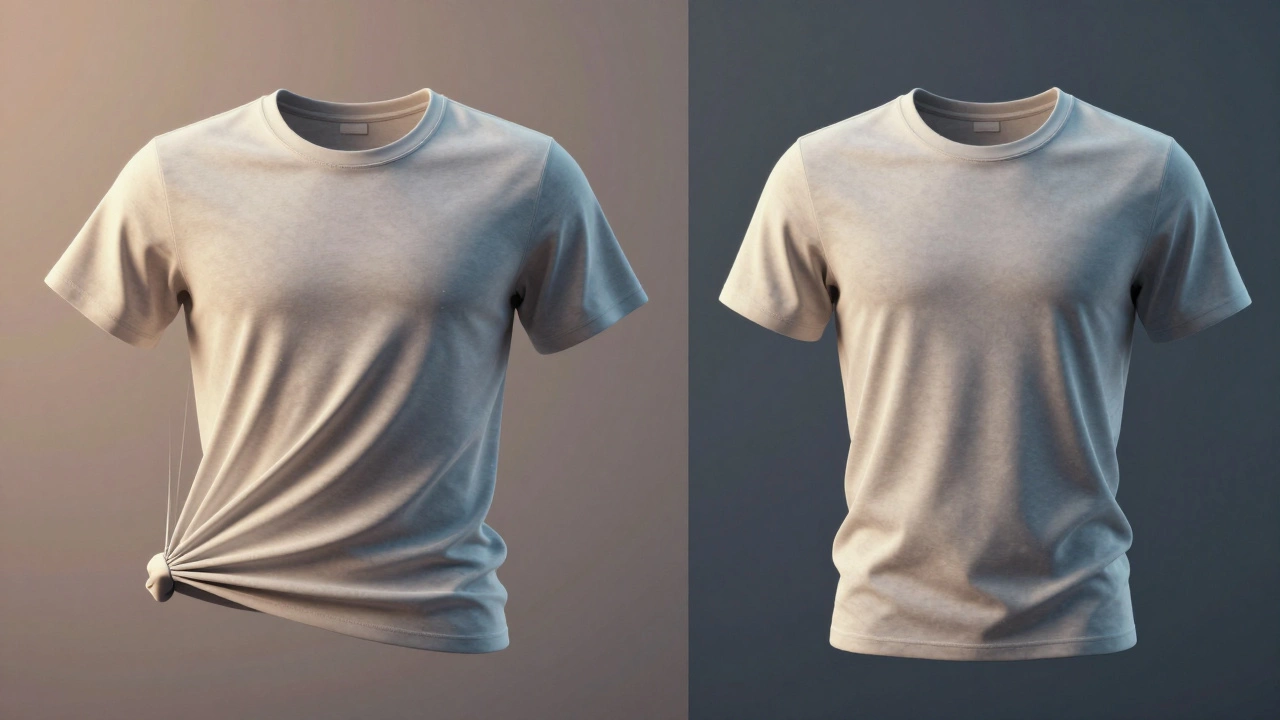
Grab the bottom hem of the t-shirt and pull it sideways. A low-quality shirt will stretch out like taffy and never snap back. A high-quality one will stretch a little, then return to its original shape. This is because the fibers are stronger and the fabric is woven tighter.
Do the same test on the sleeves. If they stretch too far or feel loose, the knit is poor. You want a consistent, even knit across the whole shirt. No loose threads. No uneven texture. If you see any fuzziness or thin patches, walk away.
Wash It (Before You Buy)
Most stores won’t let you wash a shirt before buying-but if you’re shopping online, check the return policy. A high-quality t-shirt should hold up to at least 20 washes without fading, shrinking, or losing its shape. Look for brands that test their garments for shrinkage. The best ones guarantee less than 3% shrinkage after 10 washes. If the product description doesn’t mention this, assume the worst.
Some brands, like Bella+Canvas and Next Level Apparel, publish their test results. They show how their tees behave after industrial washing. That’s the kind of detail you want to see. If a company’s proud of their product, they’ll tell you how it performs over time.
Price Isn’t Everything, But It’s a Clue
A $5 t-shirt from a discount store isn’t going to outlast a $35 one. But a $100 t-shirt isn’t always better, either. The sweet spot for a truly high-quality cotton tee is $25-$45. That’s where you get the right blend of material, construction, and craftsmanship. At this price, you’re paying for better cotton, better stitching, and better quality control.
Compare the cost per wear. A $30 t-shirt that lasts five years costs less than 2 cents per wear. A $10 tee that falls apart after six months? That’s 17 cents per wear. Quality pays for itself.
And remember: you don’t need 20 t-shirts. You need five that you love. One that feels like armor on a bad day. One that doesn’t cling when you sweat. One that still looks crisp after a dozen washes. That’s the power of a high-quality t-shirt.
What fabric is best for a high-quality t-shirt?
The best fabric for a high-quality t-shirt is long-staple cotton-like Supima, Pima, or Egyptian cotton. These fibers are longer and stronger than regular cotton, which means the fabric resists pilling, holds its shape better, and feels softer over time. Avoid blends with more than 10% polyester unless you need moisture-wicking for athletic use.
Does thread count matter for t-shirts?
Thread count isn’t as important for t-shirts as it is for bedsheets. T-shirts are knitted, not woven, so thread count doesn’t apply the same way. Instead, focus on fabric weight (4.5-6.5 oz/yd²) and fiber length. A heavier, denser knit usually means better durability, not more threads.
Why do some t-shirts shrink after washing?
Shrinkage happens when cotton fibers haven’t been pre-washed or stabilized before cutting and sewing. High-quality brands pre-shrink their fabric in industrial washers so it won’t shrink again at home. If the tag doesn’t mention pre-shrunk or has no care instructions, expect some shrinkage-especially with 100% cotton.
Are expensive t-shirts always better?
Not always. Some expensive t-shirts charge for branding, not quality. But if a $40 tee uses Supima cotton, double-stitched seams, and pre-shrunk fabric, it’s worth it. Compare materials and construction-not just the price tag. A $25 tee from a transparent brand can outperform a $60 one from a name you recognize.
Can I tell quality by the tag alone?
The tag is a starting point, not the whole story. Look for specific fiber names (Supima, Pima), country of origin, and care instructions. Avoid tags that say “premium” or “soft” without details. If the tag lists fabric content as “cotton” with no further info, you’ll need to judge by feel, weight, and stitching.