Toddler Safety Alternative Finder
Recommended Solutions
Always test security by pulling with force equal to your child's weight.
Select your preferences and click "Find Best Solution" to see recommendations tailored to your home.
Picture this: you’re trying to finish a quick task in the kitchen, and your curious eighteen-month-old is suddenly sprinting toward the stove. Your instinct screams for a baby gate, but maybe yours broke, or perhaps it just looks terrible in your open-concept living room. You aren’t alone. Many parents hit a wall with traditional gates-they can be bulky, unsightly, or simply fail to keep up with a determined toddler.
The good news? You don’t have to live with a flimsy plastic barrier or drill holes into your beautiful doorframes. There are plenty of creative, effective, and often more stylish ways to keep your little ones safe without relying on standard pressure-mounted hardware. Let’s explore the best options that actually work in real homes.
Why Parents Are Ditching Traditional Gates
Before we look at what to buy instead, let’s talk about why you might want to switch. Standard baby gates fall into two main categories: pressure-mounted and hardware-mounted. Pressure gates rely on friction against the wall. They are easy to install, but they can slip if pushed hard enough by a strong toddler. Hardware gates require drilling screws into the wall or doorframe. They are secure, but they leave marks and permanent holes.
Additionally, many modern homes feature irregular spaces-wide archways, sliding doors, or staircases with unusual angles-that make standard gates difficult to fit. If you’ve struggled with a gate that won’t stay tight or looks like an eyesore, exploring alternatives is a smart move for both safety and sanity.
The Versatile Playard (Playpen)
| Pros | Cons |
|---|---|
| Creates a contained safe zone | Takes up significant floor space |
| No installation required | Can feel restrictive for older toddlers |
| Portable and foldable | Not suitable for blocking hallways |
| Soft padding reduces injury risk | Higher cost than basic gates |
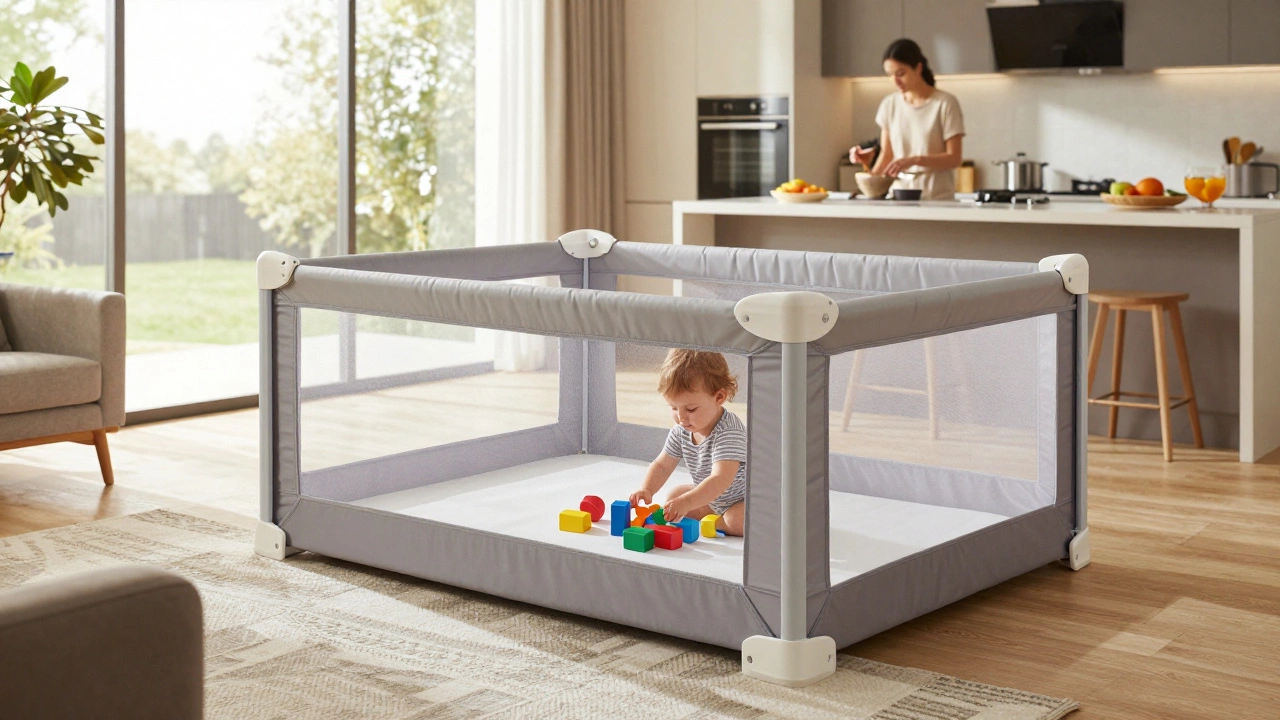
A playard is a portable enclosure used to create a safe play area for infants and toddlers is one of the most effective replacements for a hallway gate. Instead of blocking a single doorway, a playard creates a dedicated "safe room" where your child can roam freely without supervision. This is perfect for when you need to cook, shower, or take a call.
Modern playards are not the flimsy mesh boxes of the past. Brands like Skip Hop and Graco offer models with soft padded floors, toy bars, and even changing stations built-in. The key here is containment rather than exclusion. By giving your child a large, safe space to explore, you remove the need to block every exit. Just ensure the playard is placed away from windows, cords, and heavy furniture that could tip over.
Room Locks and Door Knob Covers
If your goal is simply to keep your child out of specific rooms-like the office, bathroom, or stairs-room locks are a sleeker alternative. These devices attach to the inside of the door handle or knob, preventing the door from being opened from the outside.
Door knob covers are protective caps that fit over doorknobs to prevent young children from turning them are inexpensive and easy to install. However, they only work if your child cannot reach the knob. For taller toddlers, you’ll need a slide lock or a latch guard that requires a specific motion to open, which is harder for small hands to master.
This method is ideal for bedrooms or bathrooms where you don’t need constant visual contact but want to prevent wandering. It preserves the aesthetic of your home since there are no vertical bars or wide frames obstructing your view.
Magnetic Window and Cabinet Locks
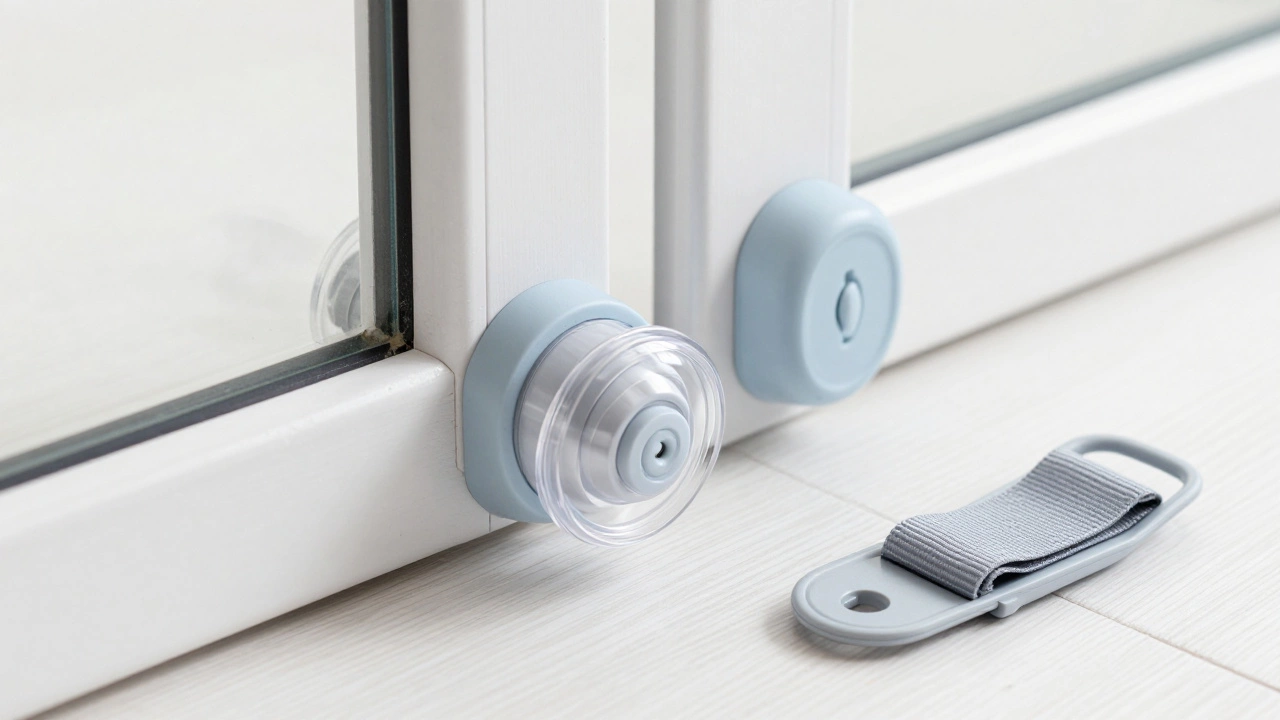
While primarily used for cabinets, magnetic locking systems can be adapted for other areas. Some companies now offer magnetic locks for patio doors and French doors. These locks are hidden from view, triggered by a magnetic key held against the wood or glass.
This is particularly useful for back doors leading to a pool or garden. Unlike a gate that sits in the middle of the doorway, a magnetic lock allows the door to function normally while remaining securely closed to your child. It’s a clean, invisible solution that doesn’t compromise your home’s design.
Furniture Anchors and Strategic Layout
Sometimes, the best alternative to a gate is rearranging your furniture. Creating natural barriers using bookshelves, sofas, or dining tables can channel your child’s movement. For example, placing a sturdy bookshelf across a hallway entrance can act as a visual and physical deterrent.
However, this comes with a major caveat: any furniture used as a barrier must be securely anchored to the wall. A tipping bookshelf is far more dangerous than an open door. Use furniture anchors are devices that secure heavy furniture to walls to prevent tipping to ensure stability. This approach works well for temporary boundaries but should never replace a secure lock for high-risk areas like stairs.
Smart Home Sensors and Alerts
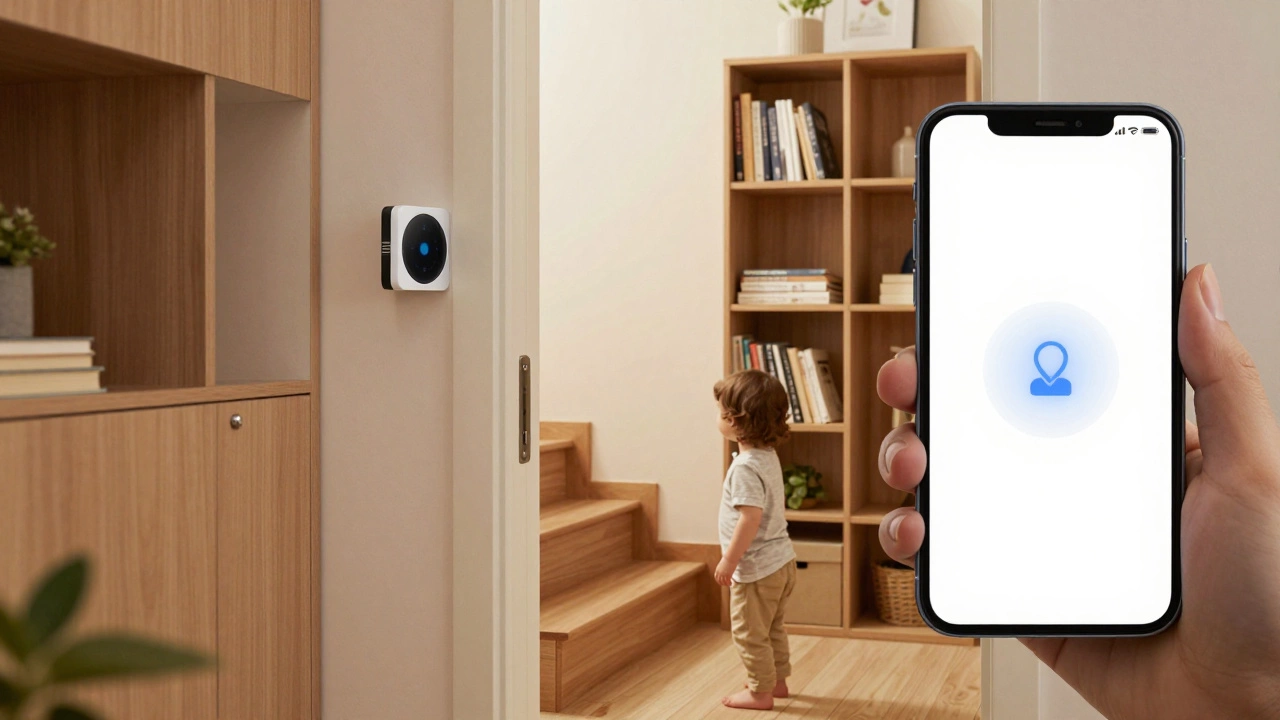
Technology offers another layer of protection. Smart sensors can be attached to doors and drawers to send alerts to your phone when they are opened. While this doesn’t physically stop your child, it provides immediate awareness.
Combine this with a verbal cue system. Teach your toddler the word "stop" or "no" consistently. When paired with a sensor alert, you can respond quickly before they get into trouble. This method builds independence and communication skills, reducing reliance on physical barriers over time.
Stair Safety Without Gates
Stairs are the trickiest area to gate-free. If you refuse to use a traditional gate, consider these options:
- Door locks: If the staircase is behind a door, use a high-placed lock or knob cover.
- Rugs and traction: Ensure stairs have non-slip surfaces to prevent falls, though this doesn’t stop access.
- Supervision zones: Keep the stair door closed and locked when not in use. Treat it like a hazardous area that requires adult presence.
Note: Never rely solely on rugs or loose furniture to block stairs. The risk of falling is too high. If you choose not to use a gate, you must commit to constant vigilance.
Choosing the Right Alternative for Your Home
Your choice depends on your child’s age, mobility, and your home’s layout. For infants who crawl, a playard is excellent for creating a safe haven. For active toddlers who climb, room locks and strategic furniture placement are better for controlling access to specific rooms.
Always prioritize safety over aesthetics. Test each alternative by getting down on your child’s level. Can they reach the lock? Can they pull the furniture over? If the answer is yes, it’s not ready.
Are playards safer than baby gates?
Playards are safer for containment because they create a fully enclosed space, whereas gates only block a single entry point. However, playards require more floor space and are not suitable for blocking staircases.
Can I use a room lock on a sliding glass door?
Standard room locks do not work on sliding doors. Instead, use a specialized sliding door lock or a magnetic lock designed for glass doors to prevent accidental opening.
Do door knob covers work for toddlers?
They work best for younger toddlers who cannot reach the knob. For taller children, use a slide lock or latch guard that requires a complex motion to open, which is harder for small hands to manipulate.
Is it safe to use furniture as a barrier?
Only if the furniture is securely anchored to the wall with furniture anchors. Unanchored furniture poses a severe tipping hazard and should never be used as a primary safety barrier.
What is the best alternative for blocking stairs?
The safest alternative to a stair gate is a door with a high-placed lock or knob cover. If there is no door, constant supervision is required, as no other alternative provides adequate protection against falls.