T-Shirt Fit Calculator
Find your perfect t-shirt fit with this quick calculator. Based on your measurements and body type, we'll show you which fit style works best for you.
Ever bought a t-shirt that looked great on the hanger, only to find it looks like a tent when you put it on? Or worse - one that feels like a second skin and leaves you wishing you’d picked a size up? The question isn’t just about comfort. It’s about how you present yourself, how you move through your day, and whether your clothes work for you - not against you.
There’s no one-size-fits-all answer
There’s no universal rule that says t-shirts should always be tight or always be loose. The right fit depends on your body type, what you’re wearing it with, where you’re going, and even the season. A t-shirt that looks sharp under a blazer might look sloppy on its own. A baggy tee that’s perfect for lounging at home could look unkempt in a job interview.
Let’s cut through the noise. The goal isn’t to chase trends or follow what influencers wear. It’s to find a fit that flatters your shape, lets you breathe, and feels like you - not like you’re wearing someone else’s idea of style.
What does a well-fitted t-shirt actually look like?
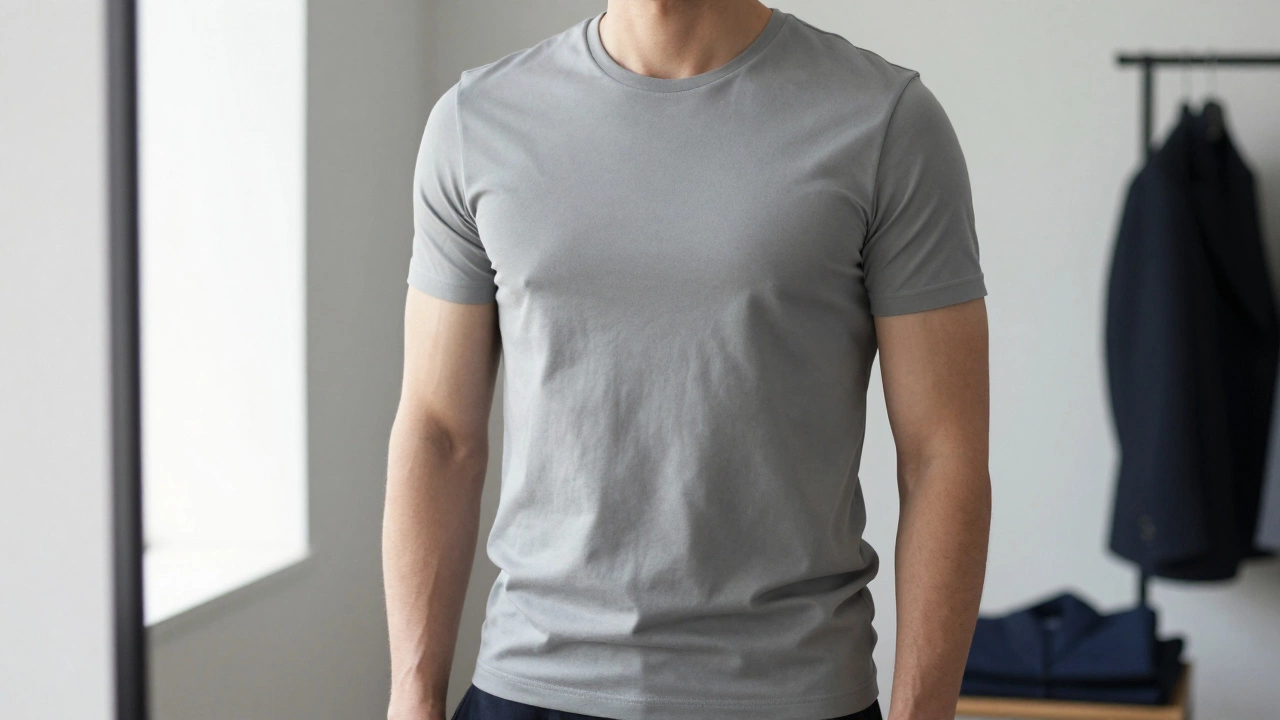
A fitted t-shirt isn’t skin-tight. It’s not meant to hug every curve like a compression shirt. A good fit means:
- The shoulder seams sit right where your shoulders end - not hanging down your arms or digging into your neck.
- The chest area has just enough room so you can pinch about 1-2 inches of fabric on either side without it pulling.
- The length ends at the top of your hip bone - not so short it rides up when you raise your arms, and not so long it looks like a tunic.
- The sleeves hit halfway between your armpit and elbow - not too tight, not too baggy.
Try this simple test: Put on the t-shirt, raise your arms above your head. If the hem pulls up past your belly button, it’s too short. If you can’t comfortably reach for your coffee cup without feeling restricted, it’s too tight.
When to choose a loose t-shirt
Loose t-shirts aren’t lazy fashion choices. They’re intentional. A relaxed fit works best in these situations:
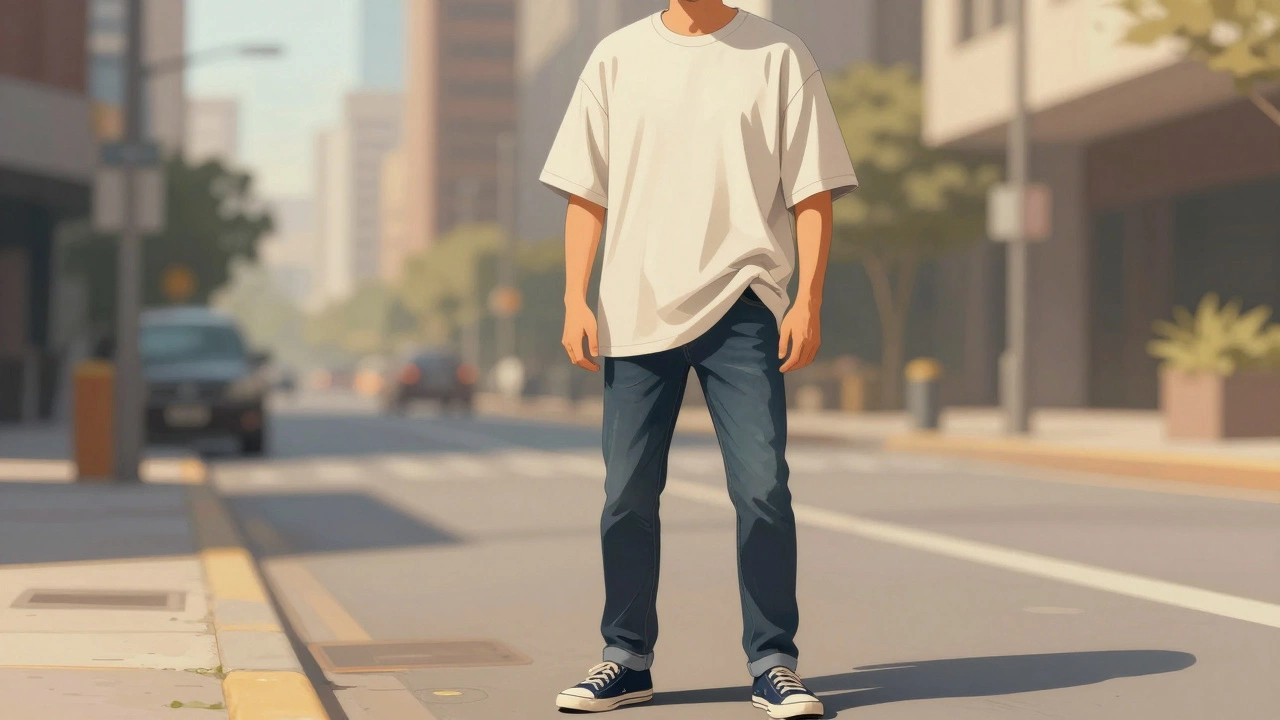
- You’re wearing it as an overshirt - tucked partially into jeans or layered over a long-sleeve tee.
- You’re going for a streetwear or casual vibe - think oversized tees with cargo pants or chunky sneakers.
- You’re in a warm climate - airflow matters, and a looser cut helps with ventilation.
- You have a broader build or carry weight in your midsection - a looser fit avoids the ‘stretched fabric’ look.
But here’s the catch: a loose t-shirt shouldn’t look like you grabbed the first one off the clearance rack. The key is intentional looseness. The sleeves should still have structure. The neckline shouldn’t gape. The hem should hang evenly. A too-loose t-shirt turns into a shapeless blob. A well-styled loose tee has balance.
When to avoid loose t-shirts
Loose fits don’t work for everyone in every setting. Avoid them if:
- You’re wearing a tucked-in shirt underneath - a baggy outer layer defeats the purpose.
- You’re in a professional or semi-formal environment - even casual offices expect a clean silhouette.
- You’re short or petite - an oversized tee can swallow your frame and make you look smaller.
- You’re pairing it with slim-fit pants - the mismatch creates visual imbalance.
There’s a reason why brands like Uniqlo and Everlane offer both regular and relaxed fits. They know the difference matters.
The body type guide
Not all bodies are built the same. Your fit should reflect your shape, not a generic model’s.
- Slender or athletic builds: You can pull off a fitted or slightly tailored tee. It highlights your frame without looking tight. Avoid anything too loose - it’ll drown you.
- Broader shoulders or muscular frame: Go for a regular or relaxed fit. Too-tight tees stretch out quickly and look strained. Look for tees with a bit more room in the chest and arms.
- Curvier or fuller midsection: A slightly looser fit (not baggy) is your friend. It avoids the unflattering bulge that happens when fabric pulls across the stomach. Look for tees with a curved hem - they’re designed to drape better.
- Shorter stature: Avoid extra-long or extra-wide tees. They cut you off visually. Stick to classic or slim fits that end at your hip. Tucking it slightly helps create a longer line.
- Taller builds: You have more flexibility. A relaxed fit can work, but make sure the length still hits at the right spot. Too short = awkward. Too long = sloppy.
Fabric and construction matter more than you think
A $5 cotton tee from a discount store and a $30 organic cotton tee from a brand like Patagonia or Lululemon aren’t just different in price. They’re different in how they behave.
- Thin, cheap cotton stretches out after one wash and clings in all the wrong places.
- Heavier cotton (180-220 GSM) holds its shape. It doesn’t go see-through. It doesn’t shrink into a child’s size.
- Blends with a little spandex (2-5%) add stretch without losing structure.
- Ring-spun cotton feels softer and lasts longer.
Check the tag. If it says 100% cotton but doesn’t mention weight or spinning method, it’s likely low quality. Good fabric doesn’t just feel better - it looks better, even when it’s loose.
How to find your perfect size
Size labels are meaningless across brands. A medium in H&M might be a large in American Apparel. Here’s how to cut through the confusion:
- Measure a t-shirt you already love. Lay it flat. Measure across the chest (armpit to armpit) and from shoulder to hem.
- Compare those numbers to the brand’s size chart - not the S/M/L labels.
- For fitted: choose a size that’s 1-2 inches narrower in the chest than your actual measurement.
- For relaxed: choose a size that’s 3-5 inches wider than your chest measurement.
Don’t guess. Measure. It saves money, time, and frustration.

Styling tips for both fits
How you wear your t-shirt changes everything.
- Fitted tee: Tuck it in slightly for a sharper look. Pair with chinos, tailored shorts, or dark jeans. Add a lightweight jacket or vest to elevate it.
- Loose tee: Try a front tuck - just pull one side into your pants. It adds shape without looking formal. Layer with a denim or utility jacket. Roll the sleeves for a relaxed vibe.
- Always match your bottom silhouette. Loose top? Try slim or straight-leg pants. Fitted top? You can go wider on the bottom - cargo pants, wide-leg jeans.
- Color matters. Darker tees look slimmer. Lighter ones can add volume. Stick to neutral tones (black, white, grey, navy) for maximum versatility.
What to avoid
These are the most common t-shirt mistakes:
- Wearing tees with stretched-out necklines - they look worn out, not trendy.
- Choosing tees with graphics that are too big or poorly placed - they throw off balance.
- Buying tees just because they’re cheap - they’ll warp, fade, and lose shape fast.
- Ignoring the sleeve length - sleeves that end mid-bicep look like you’re wearing a crop top.
- Wearing tees that are too long - they look like pajamas.
One more thing: if you’ve had the same t-shirt for five years and it still fits, it’s probably not the right fit for your body anymore. Bodies change. Clothes should adapt.
Final rule: Comfort isn’t optional - it’s the foundation
You can look good in a t-shirt, but if you’re constantly adjusting it, pulling it down, or wishing you’d worn something else - you’ve already lost. The best t-shirt is the one you forget you’re wearing. It moves with you. It doesn’t cling. It doesn’t ride up. It doesn’t make you feel self-conscious.
That’s not about being tight or loose. It’s about being right.
Should t-shirts be tight or loose for men?
It depends on your body and the occasion. For most men, a fitted t-shirt that’s not tight - with shoulder seams ending at the natural shoulder and a chest fit that allows a slight pinch of fabric - works best for everyday wear. Loose fits are great for casual, layered looks or if you have a broader build, but avoid anything that looks shapeless or overly baggy.
Can a loose t-shirt look stylish?
Absolutely - if it’s intentional. A well-cut, slightly oversized tee with clean lines, good fabric, and balanced proportions looks modern and effortless. Think of it as a relaxed silhouette, not a sloppy one. Pair it with fitted pants or roll the sleeves and tuck one side for structure.
Do t-shirts shrink after washing?
Yes, especially cheap 100% cotton tees. To prevent shrinkage, wash in cold water and air dry. Avoid high heat in the dryer. Higher-quality tees with ring-spun cotton or blends (like 95% cotton, 5% spandex) hold their shape better over time.
How do I know if my t-shirt is too tight?
If you can’t raise your arms fully without the fabric pulling, if you see your chest or stomach outline clearly through the fabric, or if the seams strain at the shoulders - it’s too tight. A good fit lets you move freely without showing every curve.
What’s the ideal t-shirt length?
The hem should end at the top of your hip bone - just enough to stay tucked in when you sit or reach up. If it hits mid-hip or lower, it looks like a shirt, not a t-shirt. If it’s above your waistline, it’s too short and will ride up.