History of School Uniforms: Origins, Changes, and Why They Still Matter
When you think of school uniforms, a standardized set of clothing worn by students in educational institutions. Also known as school dress code, it has been a part of formal education for centuries, not just as a rule—but as a reflection of social values, discipline, and identity. The earliest known use of school uniforms dates back to 16th century England, where Christ’s Hospital School in London required students to wear long blue coats and yellow socks. It wasn’t about fashion. It was about visibility, equality, and control. Wealthy and poor kids alike wore the same thing, so no one could tell who had money and who didn’t. That idea—leveling the playing field—still echoes in today’s debates.
Over time, uniform policies, formal rules dictating what students must wear to school. Also known as dress code regulations, it began spreading beyond elite schools. By the 1800s, British public schools had locked in uniforms as a sign of loyalty and order. In the U.S., public schools didn’t adopt them widely until the 1980s and 90s, when rising crime rates and concerns about distractions led administrators to see uniforms as a solution. But it wasn’t just about safety. It was about reducing peer pressure, cutting down on brand competition, and making mornings simpler for families. Today, over 20% of U.S. public schools require uniforms, and the numbers keep growing in places like the UK, Australia, and Japan, where uniforms are tied to tradition and school pride.
What’s often forgotten is how much education attire, the clothing worn by students as part of institutional requirements. Also known as student clothing, it has changed with the times. Early uniforms were stiff, woolen, and uncomfortable. Modern ones use breathable cotton blends, stretch fabrics, and gender-neutral cuts. Some schools now let kids choose between skirts and pants. Others let them pick colors within a set palette. The shift isn’t just about comfort—it’s about inclusion. Uniforms used to silence individuality. Now, many schools use them to protect it, by removing the pressure to keep up with trends.
And yet, the debate never ends. Do uniforms improve grades? Reduce bullying? Save parents money? Studies show mixed results, but one thing’s clear: uniforms work best when students and families feel heard in the design. A uniform forced on kids feels like control. One shaped with their input feels like belonging. That’s why the best schools today don’t just hand out a dress code—they ask students what they need.
What you’ll find in the posts below isn’t a history textbook. It’s real, practical stories about how clothing choices in schools connect to safety, identity, and everyday life. From how uniforms affect behavior to why some parents fight to keep them—and others fight to get rid of them—you’ll see the full picture.
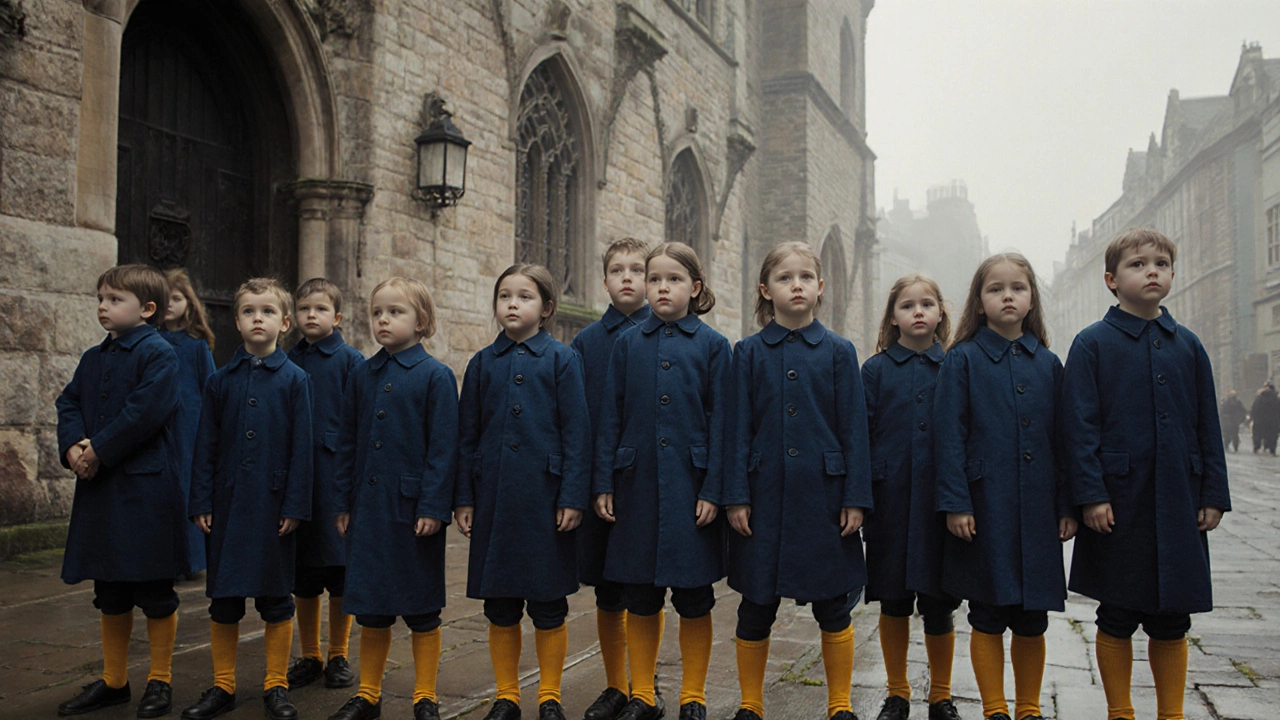
Who Created School Uniforms? The Real History Behind the Look
School uniforms didn’t start with a law or a trend-they began in 1552 with orphans in London. Discover how a simple blue coat evolved into a global system of dress, from elite British schools to urban U.S. classrooms.
Read more