
The Goal: Avoiding Nipple Confusion
The biggest fear for many new parents is "nipple confusion." This happens when a baby gets used to the fast, easy flow of a synthetic nipple and decides they don't like the hard work required to get milk from the breast. To stop this, hospitals use slow flow nipples. These are usually labeled as "Level 0" or "Preemie" flow. Since newborns have a very slow suck reflex, a fast-flowing nipple can overwhelm them, leading to gas, spitting up, or even aspiration.
When a nurse gives a bottle in the NICU or a standard maternity ward, they aren't trying to promote a brand. They are trying to ensure the baby doesn't associate feeding with a "firehose" of milk. If the flow is too fast, the baby might stop trying to latch during breastfeeding because the bottle is just easier. By using the slowest possible setting, the hospital keeps the effort level similar for both methods.
Common Brands Seen in Maternity Wards
While there is no universal standard, you'll often see a few recurring names. Many hospitals stock Medela or Philips Avent because these brands are widely available and offer a range of flow rates. In some specialized units, you might see NUK or Dr. Brown's, which are praised for their anti-colic features.
It is important to realize that the hospital's choice is often based on what the facility has in bulk or what the nursing staff finds easiest to sanitize. The actual material is almost always medical-grade silicone, which is chosen because it's hypoallergenic and doesn't leach chemicals into the milk. Some older facilities might still use latex, but that's rare these days due to allergy concerns.
| Attribute | Standard Hospital Choice | Reasoning |
|---|---|---|
| Material | Silicone | BPA-free and hypoallergenic |
| Flow Rate | Level 0 / Slow | Prevents choking and mimics breast |
| Shape | Natural/Round | Encourages natural sucking reflex |
| Ventilation | Anti-colic valves | Reduces air intake and gas |
Paced Bottle Feeding: The Secret Technique
If you watch a nurse feed a baby, you'll notice they don't just tilt the bottle straight up. They use a method called Paced Bottle Feeding. This is actually more important than the brand of the nipple. In this method, the bottle is held horizontally, almost parallel to the floor. This forces the baby to actively suck to get the milk, rather than letting gravity do the work.
Why does this matter? If the milk just pours in, the baby stops using those important jaw muscles and may become a "lazy" eater. Paced feeding, combined with slow flow nipples, makes the transition between a bottle and a breast much smoother. It gives the baby a break between swallows, allowing them to signal when they are full-which is exactly how it works during breastfeeding.

What Happens in the NICU?
In the Neonatal Intensive Care Unit, things get a bit more technical. Babies born prematurely may not have a fully developed suck-swallow-breathe coordination. In these cases, nurses might use oral motor therapy tools or very specific preemie nipples that have an even smaller hole than standard slow-flow versions.
Some NICU babies start with a feeding tube (like a gavage tube) to ensure they get calories without the exhaustion of sucking. When they transition to a bottle, the staff will carefully monitor the baby's breathing. If the baby is coughing or turning blue (cyanosis), they'll switch to an even slower nipple or a different shape to help the baby manage the fluid.
Choosing Your Own Nipples for Home
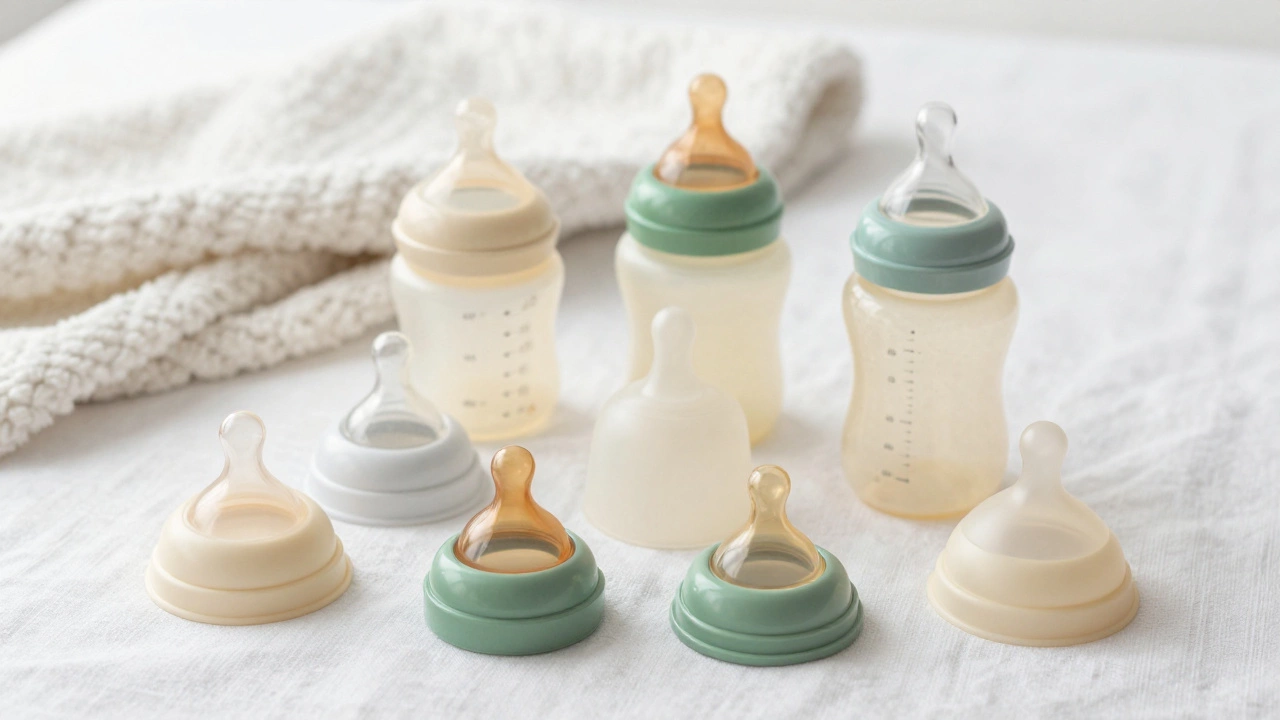
Once you leave the hospital, you have to make your own choices. It's a mistake to jump straight to a "medium" flow nipple just because the baby seems hungry. If your baby is gulping air or coughing, go back to the slowest flow available. You can tell the flow is too fast if milk is leaking from the corners of the baby's mouth or if they seem stressed during the feed.
Consider the shape of the nipple. Some are flat (orthodontic), while others are rounded. A natural shape nipple is generally better for those who are mixing breast and bottle. If you're exclusively formula feeding, you might find that the baby adapts to different shapes more quickly, but starting slow is still the golden rule for the first few weeks.
Common Pitfalls to Avoid
A big mistake parents make is switching nipple brands too often. While it's tempting to try every "best" bottle on the market, babies can get frustrated by the different textures and flow rates. Pick one high-quality, slow-flow silicone nipple and stick with it for at least a week to see how the baby handles it.
Another issue is ignoring the replacement schedule. Silicone breaks down over time. Even if it looks fine, small tears can develop that increase the flow rate or become breeding grounds for bacteria. Most manufacturers recommend replacing nipples every 2 to 3 months, or sooner if you notice the silicone becoming tacky or cloudy.
Do hospitals provide free bottles and nipples?
Usually, no. Hospitals use their own clinical supplies for feeding during your stay, but they expect parents to bring their own bottles and nipples for the trip home. If you are in the NICU, the hospital provides the specialized equipment needed for medical feeding.
Can I use a fast-flow nipple if my baby is impatient?
It's not recommended. If a baby is impatient, they might be hungry, but a fast-flow nipple can lead to overfeeding and gas. Instead, try a different feeding position or use the paced feeding technique to help them manage the flow better.
What is the difference between silicone and latex nipples?
Silicone is the modern standard; it's firmer, more durable, and doesn't cause allergic reactions. Latex is softer and more flexible but can degrade faster and is a common allergen for some infants.
How do I know if my baby has nipple confusion?
Signs include refusing the breast, fighting the latch, or becoming excessively fussy during breastfeeding while happily taking a bottle. This usually happens when the bottle flow is significantly faster than the breast flow.
Are orthodontic nipples better than round ones?
Orthodontic nipples are flatter and designed to be gentler on the palate. While some believe they help with dental alignment, most pediatricians agree that for newborns, the flow rate is far more important than the specific shape.
Next Steps for New Parents
If you're still in the hospital, ask your nurse to show you exactly which flow level they are using. Take a photo of the package so you can buy the same one at the store. If you're already home and struggling with feeding, try a "Level 0" nipple and practice paced feeding for three days to see if the baby's fussiness decreases.
For those using a combination of breast and bottle, remember that the baby's needs change. Around 3 to 6 months, you'll likely need to move up to a medium flow, but only do so when you notice the baby is taking much longer to finish a bottle or is showing signs of frustration with the slow drip.