
Summer Dress Heat Absorption Calculator
How Much Heat Will Your Dress Absorb?
Select a dress color to see how much heat it absorbs in summer temperatures
Results
At 35°C, this color will absorb significantly more heat than recommended for comfort.
Dark colors absorb up to 95% of visible light, converting it to heat. Light colors reflect over 70% of sunlight, keeping you cooler.
When the sun is blazing and the temperature hits 35°C, what you wear isn’t just about style-it’s about survival. Choosing the right colors for summer dresses can mean the difference between feeling cool and feeling like you’re trapped in a sauna. You’ve probably heard the advice to wear light colors in summer, but why does it actually work? And more importantly, which colors should you avoid at all costs?
Why Color Matters in Heat
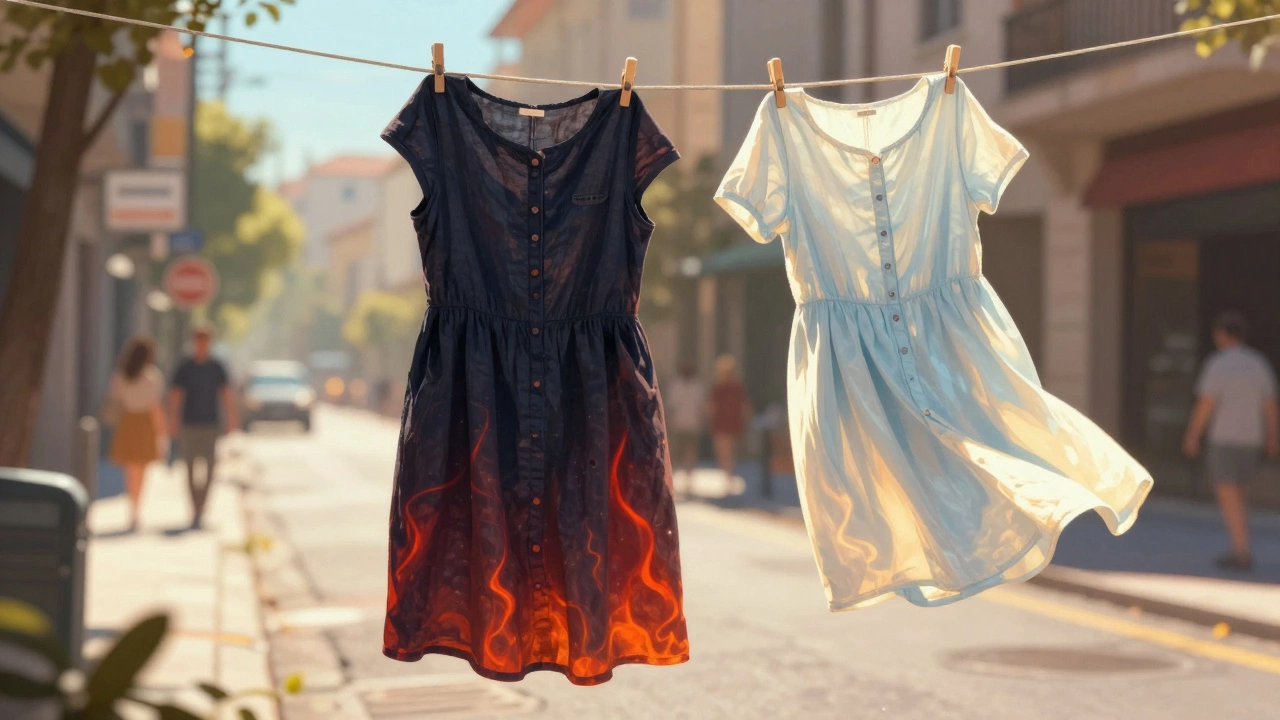
It’s not just about fashion. Color affects how much heat your clothes absorb. Dark colors like black, navy, and deep brown soak up sunlight like a sponge. They convert light energy into heat, which then transfers to your skin. Light colors, on the other hand, reflect sunlight. That’s why white, pastels, and soft neutrals keep you cooler. It’s physics, not opinion.
A study from the University of California, Berkeley found that black fabric can be up to 12°C hotter than white fabric under direct sunlight. That’s not just uncomfortable-it’s dangerous if you’re outside for long periods. If you’re wearing a dark dress and your skin temperature rises too much, your body struggles to cool itself. Sweating becomes less effective. You might feel dizzy, tired, or even nauseous.
Colors to Avoid in Hot Weather
Here are the top five colors you should skip when it’s hot:
- Black - The ultimate heat trap. Even a thin black dress can feel like a heat blanket. It’s fine for evening events, but never for midday walks, markets, or beach trips.
- Deep Navy - Looks elegant, but it’s almost as bad as black. It absorbs 90% of visible light. If you love navy, save it for cooler mornings or air-conditioned spaces.
- Dark Brown - Often overlooked, but it’s a silent heat thief. Think chocolate, espresso, or charcoal brown. These shades look rich, but they trap heat just like black.
- Forest Green - Deep, earthy greens might seem natural and calming, but they absorb heat like dark colors. Save them for autumn.
- Charcoal Gray - Not quite black, but close enough. It’s a popular neutral, but in summer, it’s a bad trade-off. You lose the cooling benefits of light colors without gaining any style advantage.
These colors aren’t banned forever. They’re just not practical when the mercury climbs. If you’re going to wear them, make sure you’re indoors, under shade, or moving quickly between AC zones.
What to Wear Instead
Swap those dark shades for colors that reflect sunlight:
- White - The gold standard. It reflects almost all visible light. A crisp white dress stays cool, looks fresh, and never goes out of style.
- Pale Pink - Soft, feminine, and surprisingly cool. It reflects more than 70% of sunlight, even better than light gray.
- Light Blue - Think sky blue or baby blue. It’s calming, refreshing, and mirrors the sky. Perfect for beach days.
- Soft Yellow - Not neon. Think lemon chiffon or buttercream. It reflects heat and lifts your mood.
- Beige and Cream - Subtle neutrals that work with everything. They’re not as reflective as white, but they’re miles better than dark tones.
Pro tip: The lighter the fabric, the better. A loose cotton sundress in pale blue will keep you cooler than a tight polyester dress in white. Fabric matters as much as color.
Fabric Matters More Than You Think
Color isn’t the whole story. A thick, synthetic black dress won’t save you-even if it’s in a light color. You need breathable fabrics:
- Cotton - Absorbs sweat and lets air flow. Ideal for hot, dry climates like Melbourne’s summer.
- Linen - Lightweight, airy, and naturally moisture-wicking. Wrinkles? Yes. Overheating? No.
- Rayon (Viscose) - Drapes beautifully and breathes well. Look for 100% rayon, not blends.
- Chambray - A lighter version of denim. Perfect for casual summer dresses.
Avoid polyester, nylon, and acetate. They trap heat and moisture. Even if the color is white, a polyester dress can make you feel sticky and uncomfortable. You’re better off in a simple cotton tee and shorts.
Real-Life Examples from Melbourne Summers
Last summer, a local fashion blogger in Melbourne wore a black linen dress to a midday farmers market. She lasted 20 minutes before heading inside, drenched in sweat. The next day, she switched to a cream cotton dress with a loose fit. She stayed out for three hours, sipping iced tea under a canopy, and didn’t feel overheated once.
Another example: a group of high school students wore dark purple uniforms to a heatwave outdoor event. Two students passed out. The school later changed the uniform policy to allow light-colored options. Color wasn’t just about aesthetics-it was a health issue.
Myth Busting: “Dark Colors Are Better for Sun Protection”
You’ve probably heard that dark clothes protect you from UV rays. That’s partially true-but it’s not worth the trade-off. UV protection depends more on fabric weave and UPF rating than color. A tightly woven white cotton dress with UPF 50+ will block more UV than a thin black polyester dress.
And if you’re worried about sunburn, wear a wide-brimmed hat and sunscreen. You don’t need to sacrifice comfort for protection. In fact, overheating makes your skin more sensitive to sun damage.

What About Patterns?
Patterns can help. A dress with light-colored flowers on a white background? Perfect. A black dress with small white dots? Still a bad idea. The base color dominates how much heat is absorbed. A pattern doesn’t cancel out a dark foundation.
Stick to light backgrounds with light accents. Think floral prints in pastels, stripes in cream and pale blue, or geometric designs in soft gray and white. Avoid dark backgrounds with bright accents-it’s visually loud and thermally risky.
When You Have to Wear Dark Colors
Sometimes, you just can’t avoid it. Maybe it’s a wedding, a job requirement, or your only dress. Here’s how to survive:
- Wear it for short periods only.
- Stay in the shade whenever possible.
- Carry a portable fan or misting spray.
- Choose a looser cut so air can circulate.
- Wear moisture-wicking undergarments.
- Drink water before, during, and after.
And if you’re going to be outside for more than 30 minutes? Just change into something lighter. No one will notice.
Final Rule of Thumb
If you can’t see your skin through the fabric in daylight, don’t wear it in heat. That’s the quick test. If the dress looks opaque under the sun, it’s trapping heat. If it’s see-through or semi-sheer in a light color? You’re golden.
Summer dressing isn’t about following trends. It’s about listening to your body. Your skin knows when it’s overheating. Choose colors and fabrics that let you breathe. Stay cool. Stay comfortable. And don’t let fashion make you suffer.
Is it really bad to wear black in the sun?
Yes, especially in direct sunlight. Black absorbs up to 95% of visible light and converts it into heat. Under a summer sun, a black dress can be over 10°C hotter than a white one. That heat transfers to your skin, making you sweat more and feel exhausted faster. It’s not just uncomfortable-it can raise your core temperature dangerously.
What’s the best color for a summer dress?
White is the most effective at reflecting sunlight and staying cool. But if you want color, go for pale pink, light blue, soft yellow, or cream. These reflect 70% or more of sunlight. They’re also calming to look at and pair well with natural surroundings like gardens, beaches, or parks.
Does fabric type matter more than color?
Both matter, but fabric can override color. A loose linen dress in navy will still be cooler than a tight polyester dress in white. Breathable fabrics like cotton, linen, and rayon let air flow and wick sweat away. Synthetic fabrics trap heat no matter the color. Always check the label-natural fibers win in heat.
Can I wear dark colors at night?
Absolutely. Once the sun sets, the heat source is gone. Dark colors look elegant and sophisticated in evening light. A black dress at a rooftop dinner or a navy gown at a summer party is perfectly fine. The problem isn’t the color-it’s the sun. At night, you’re safe.
Are there any cultural exceptions to this rule?
In some hot, dry regions like parts of the Middle East or North Africa, traditional clothing often includes dark colors. But these garments are usually loose, made of breathable linen or cotton, and designed to create shade and airflow. The key isn’t the color-it’s the cut and fabric. If you’re wearing something tight or synthetic, even in light colors, you’ll still overheat.