Montessori Toy Checker
Check if Your Toy is Montessori-Approved
Answer these simple questions about your toy to determine if it aligns with Montessori principles. This tool will help you identify toys that support self-directed learning, sensory development, and focus.
Assessment Questions
Answer the following questions to determine if your toy meets Montessori standards. Each "No" answer contributes positively to the score.
Montessori isn’t just a teaching method-it’s a whole way of thinking about how children learn. At its core, it’s about respecting the child’s natural curiosity, giving them space to explore, and removing anything that gets in the way of real, self-directed learning. But not everything labeled "educational" fits into a Montessori setting. In fact, some of the most popular toys on the market are completely against everything Montessori stands for.
Electronic Toys Are Out
If it beeps, lights up, or plays music on its own, it doesn’t belong in a Montessori environment. This includes talking dolls, interactive tablets, musical toys, and anything that requires batteries. The problem isn’t that screens or sound are evil-it’s that these toys do the thinking for the child. A child doesn’t learn language by hearing a doll say "I love you." They learn it by hearing real people speak, by trying to mimic sounds, by making mistakes and trying again. Montessori believes in active participation, not passive reception. A battery-powered toy gives instant gratification without effort. That kills concentration, reduces problem-solving, and replaces real skill-building with distraction.Plastic Toys With No Real Purpose
Not all plastic is bad-but plastic toys designed purely for entertainment are. Think of those brightly colored stacking rings that make a clinking noise but don’t teach anything beyond shape recognition. Or those cheap, flimsy toy cars with wheels that fall off after two uses. Montessori favors natural materials: wood, metal, glass, fabric, stone. Why? Because they give real sensory feedback. A wooden block feels heavier than a plastic one. A glass pitcher is fragile, so the child learns to move carefully. A metal spoon cools faster than plastic, teaching temperature awareness. These materials aren’t just safer-they’re more honest. They show children how things really work in the real world, not a cartoon version of it.Toy Sets With Only One Right Way to Play
Puzzles with only one correct solution? Alphabet blocks that only spell words when arranged in a specific order? These are red flags. Montessori toys are open-ended. A set of wooden cylinders isn’t meant to be sorted by size in one exact sequence-it’s meant to help the child discover size differences through trial and error. A shape sorter with five shapes? Fine. A shape sorter where each shape fits only one hole and the child must match it perfectly to get a reward? That’s not learning-it’s testing. Real learning happens when the child is free to experiment, fail, and try again without being told they’re wrong. The goal isn’t to get the right answer. It’s to build focus, patience, and inner motivation.Excessive or Overstimulating Toys
A room full of toys isn’t a Montessori classroom. It’s chaos. Montessori environments are carefully curated. Only a few toys are available at a time. Why? Because too many choices overwhelm the child’s developing brain. Studies show that children given fewer toys play longer, deeper, and more creatively. A child surrounded by 20 stuffed animals won’t form a meaningful attachment to any one. But with one wooden horse, they might imagine it galloping across mountains, caring for it, talking to it. The space itself is calm. Colors are muted. Light is natural. Everything has its place. This order helps the child feel secure enough to focus. When everything is loud, colorful, and moving, the child’s nervous system stays on high alert. That’s the opposite of what Montessori wants.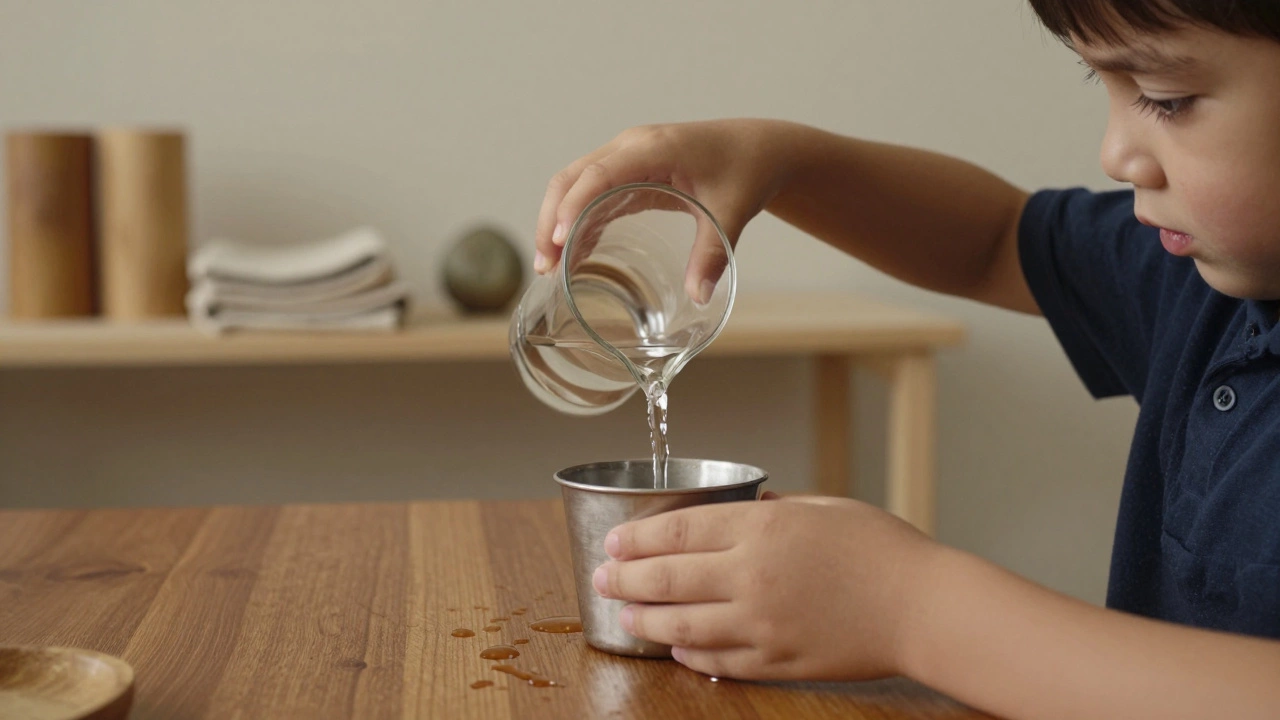
Imaginative Play That’s Prescribed
Dollhouses with pre-set furniture. Play kitchens with fake food that only fits one way. Action figures with assigned roles and backstories. These toys tell the child how to play. Montessori doesn’t ban imagination-it nurtures it. But it wants the child’s imagination to lead, not follow. A simple wooden block can be a car, a phone, a house, a mountain. A cloth can be a cape, a blanket, a river. When you give a child a toy that already has a story, you’re limiting their creativity. Real imaginative play comes from within. It’s messy, unpredictable, and deeply personal. That’s why Montessori classrooms often have plain fabrics, natural objects, and open-ended materials. They don’t tell the child what to imagine-they give them the tools to create it themselves.Prizes, Rewards, and External Motivation
Sticker charts. Gold stars. Treats for finishing a task. These are common in traditional classrooms-but they have no place in Montessori. Why? Because they teach children to work for approval, not for the joy of learning. A child who cleans up because they’ll get a sticker isn’t learning responsibility. They’re learning to perform for rewards. In a Montessori setting, the satisfaction comes from the work itself. A child who pours water carefully, spills a little, tries again, and finally does it right feels proud-not because someone clapped, but because they mastered something on their own. That internal drive is what lasts. External rewards kill it. They turn learning into a game, not a meaningful experience.Commercial Branding and Characters
Toys with cartoon characters, licensed logos, or branded packaging are discouraged. A toy with Elsa from Frozen isn’t about the child’s imagination-it’s about marketing. These toys pull the child’s attention away from their own thoughts and into a pre-made world. Montessori wants children to build their own inner world, not live inside someone else’s. Even if the toy is "educational," if it’s tied to a TV show or movie, it’s not Montessori. The same goes for branded educational apps. They may claim to teach math or reading, but they’re still selling a character, not a learning experience.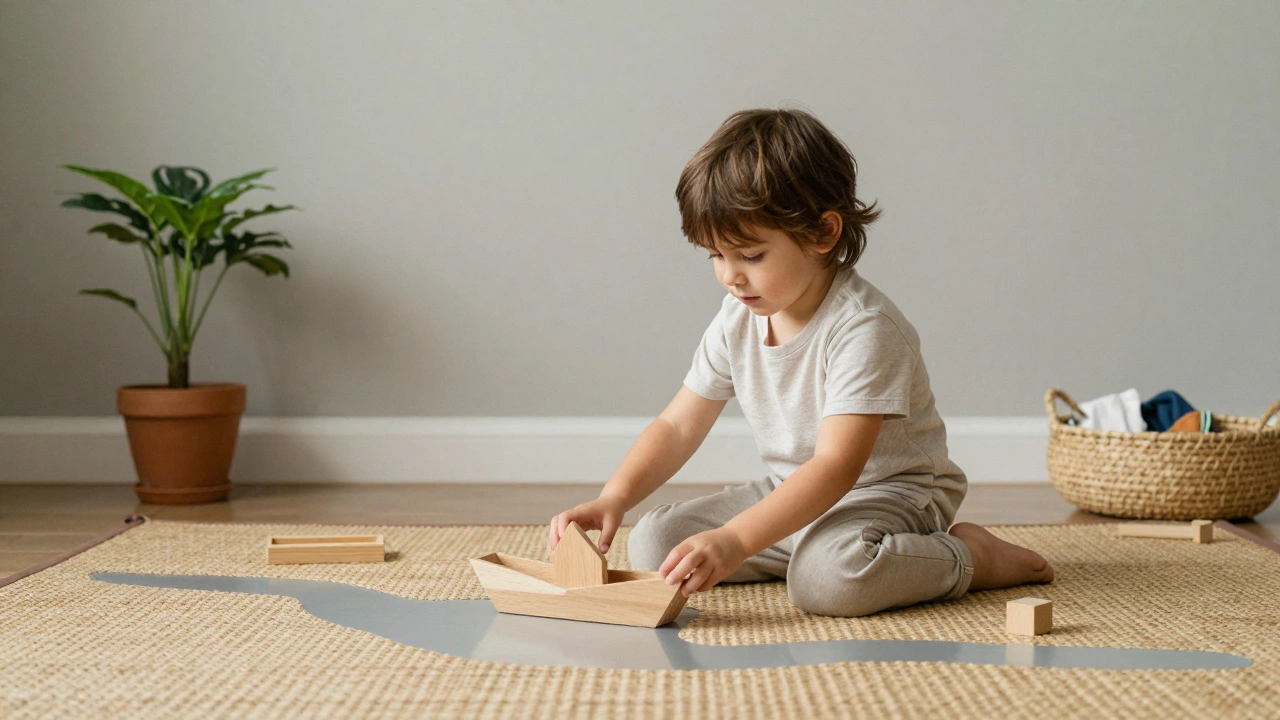
Too Many Toys, Too Fast
Montessori doesn’t believe in giving children everything they want, when they want it. Materials are introduced slowly, based on the child’s developmental stage. A 2-year-old doesn’t need a 100-piece puzzle. A 4-year-old doesn’t need advanced science kits. The environment is built to match the child’s current abilities-not to push them ahead. Giving a child advanced tools before they’re ready doesn’t make them smarter. It makes them frustrated. It teaches them they’re not good enough. Montessori teachers observe closely. They wait. They introduce one new material at a time. That patience is what allows real mastery to happen.What Replaces the Forbidden?
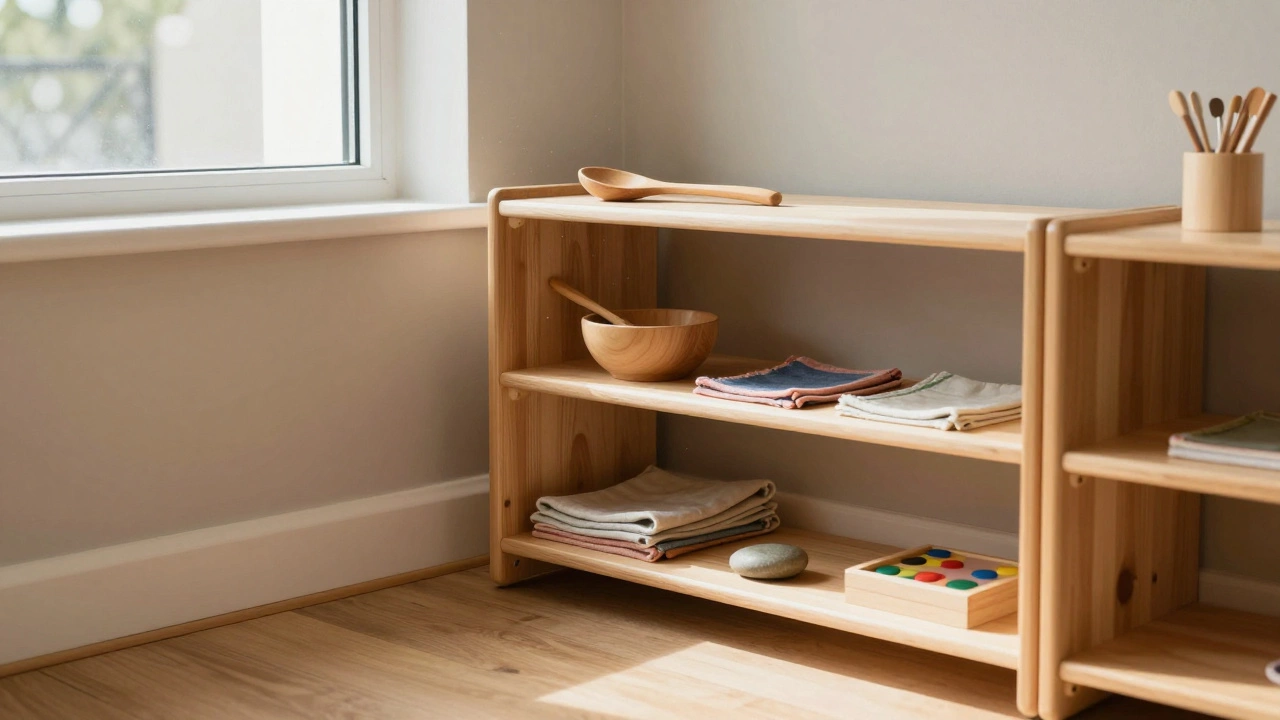
So what does a Montessori toy look like? Simple. Real. Purposeful. A child might use:- A wooden spoon and bowl to practice pouring water
- A set of fabric swatches to match textures
- Real kitchen tools to peel carrots or slice bananas
- A balance scale to compare weights of stones
- A puzzle made of natural wood with hand-carved shapes
Why These Rules Matter
It’s easy to think, "It’s just a toy. What’s the harm?" But every object in a child’s environment sends a message. A battery-powered toy says: "You don’t need to think-you just need to press a button." A plastic, flashy toy says: "Your attention is for sale." A toy with a character says: "Your imagination isn’t enough-you need someone else’s story." Montessori says the opposite. It says: "You are capable. You are enough. You can figure this out on your own." Children raised in true Montessori environments don’t just learn to read or count. They learn to focus. To persevere. To respect materials. To care for their space. To trust themselves. That’s not magic. That’s the result of removing the things that distract, overwhelm, and control-and replacing them with simplicity, honesty, and freedom.Are electronic books allowed in Montessori?
Traditional printed books are preferred. Electronic books, even without ads or sound, still involve screens and passive interaction. Montessori encourages tactile engagement with real pages, turning them, feeling the texture, and focusing on the words without digital distractions. Real books build attention span and visual memory in ways screens cannot.
Can I use LEGO in a Montessori setting?
LEGO is not traditionally Montessori because it’s highly structured and comes with instruction manuals. The pieces are standardized, which limits open-ended exploration. However, some Montessori families use plain wooden blocks or loose parts instead. If you do use LEGO, avoid kits with predefined models. Let the child build freely without instructions.
What about sensory bins filled with rice or beans?
Sensory bins are not part of traditional Montessori. While they offer tactile input, they’re often chaotic, messy, and lack a clear purpose. Montessori prefers activities with defined goals: pouring, transferring, sorting, or matching. These teach fine motor control, concentration, and order-not just stimulation.
Is it okay to have stuffed animals in a Montessori room?
One or two simple, non-anthropomorphic stuffed animals are acceptable if they’re well-loved and kept in a quiet corner. But they shouldn’t dominate the space. Montessori focuses on real-world experiences, so natural materials and practical life activities take priority. Too many plush toys can shift focus from learning to fantasy.
Can I use coloring books and crayons?
Coloring books with outlines are discouraged because they limit creativity and impose boundaries. Instead, Montessori offers blank paper, natural pigments, and real brushes. Children draw freely, exploring lines, pressure, and color mixing without being told what to create. This builds fine motor skills and self-expression without restriction.
What’s the difference between Montessori toys and Waldorf toys?
Both value natural materials and open-ended play, but Montessori toys are designed for specific developmental purposes-like refining grip or understanding size. Waldorf toys are more artistic and symbolic, often representing nature or fantasy. Montessori avoids fantasy; Waldorf embraces it. Both reject electronics, but for slightly different reasons.
Do Montessori schools allow outdoor toys like balls and slides?
Yes, but they’re chosen carefully. Balls, ropes, climbing structures, and digging tools are common because they support physical development, coordination, and risk assessment. The key is that they’re real, functional, and not designed to entertain. Children move freely, test their limits, and learn through movement-not through programmed games or screens.