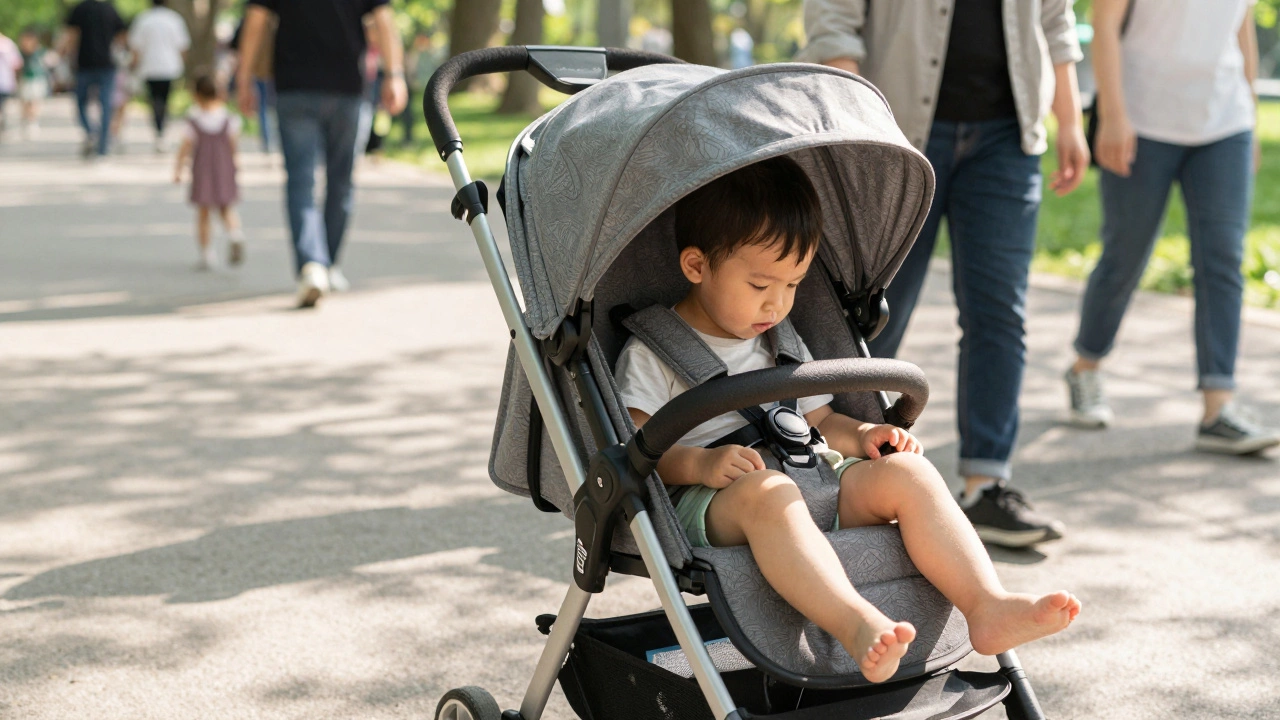
Stroller Size Safety Calculator
Check if your child is within safe stroller limits. Most standard strollers have weight limits of 30-50 lbs and height limits of 38-40 inches.
There’s no single age when every child outgrows a stroller - but most parents start thinking about it when their kid hits 3 years old. That’s not because of a rule written in stone, but because of how strollers are built, how kids grow, and what’s safe and practical on a daily basis.
Stroller Weight Limits Are the Real Rule
Most standard strollers have a weight limit between 30 and 50 pounds. That’s the number you’ll find on the manufacturer’s label, usually near the frame or under the seat. If your child weighs more than that, the stroller’s frame, wheels, or brakes aren’t designed to handle it safely. A 40-pound toddler might still fit in the seat, but if they’re pushing against the harness or bouncing hard on bumpy sidewalks, the stroller could break, tip, or fail to stop in time.
For example, the UPPAbaby Vista V2 holds up to 50 pounds, while the Baby Jogger City Mini GT2 tops out at 45 pounds. If your child is 3 years old and weighs 42 pounds, you’re already near the edge. By age 4, many kids hit 45+ pounds - that’s when you start risking damage to the stroller or injury to your child.
Height and Fit Matter Too
Weight isn’t the only factor. Kids grow tall fast. Most stroller seats have a maximum height limit of about 38 to 40 inches. If your child’s head is brushing the top of the canopy or their legs are dangling awkwardly with knees bent past 90 degrees, they’re too big. That’s not just uncomfortable - it’s unsafe. Poor posture can affect hip development, and if they’re too tall, they can’t sit properly in the harness, increasing the risk of slipping out.
I’ve seen parents struggle with a 3-year-old who’s 41 inches tall and still in a stroller. They’re not heavy, but they’re too tall to sit comfortably. The harness straps dig into their neck, their feet don’t reach the footrest, and they’re constantly trying to stand up. That’s a sign it’s time to move on.
When Do Kids Usually Outgrow Strollers?
On average, most children stop needing strollers between ages 3 and 4. But it varies. Some kids are small and stay in strollers until 5. Others hit 40 pounds by age 2 and need a different solution. It’s not about being lazy - it’s about matching the tool to the child’s size and needs.
Here’s what most parents see:
- Ages 0-12 months: Full recline strollers or bassinet attachments are ideal. Baby can’t sit up yet.
- Ages 1-2: Most kids can sit upright. Standard strollers work fine. They nap in them, snack in them, and still need the support.
- Ages 2-3: Kids are walking more, but still get tired. Many parents still use strollers for long outings, shopping trips, or theme parks.
- Ages 3-4: This is the transition zone. If your child is under 40 pounds and under 40 inches, you’re probably fine. If they’re taller or heavier, it’s time to consider alternatives.
- Age 5 and up: Very few kids need strollers unless they have mobility challenges. Most can walk for miles, or use a ride-on wagon or backpack carrier for occasional help.
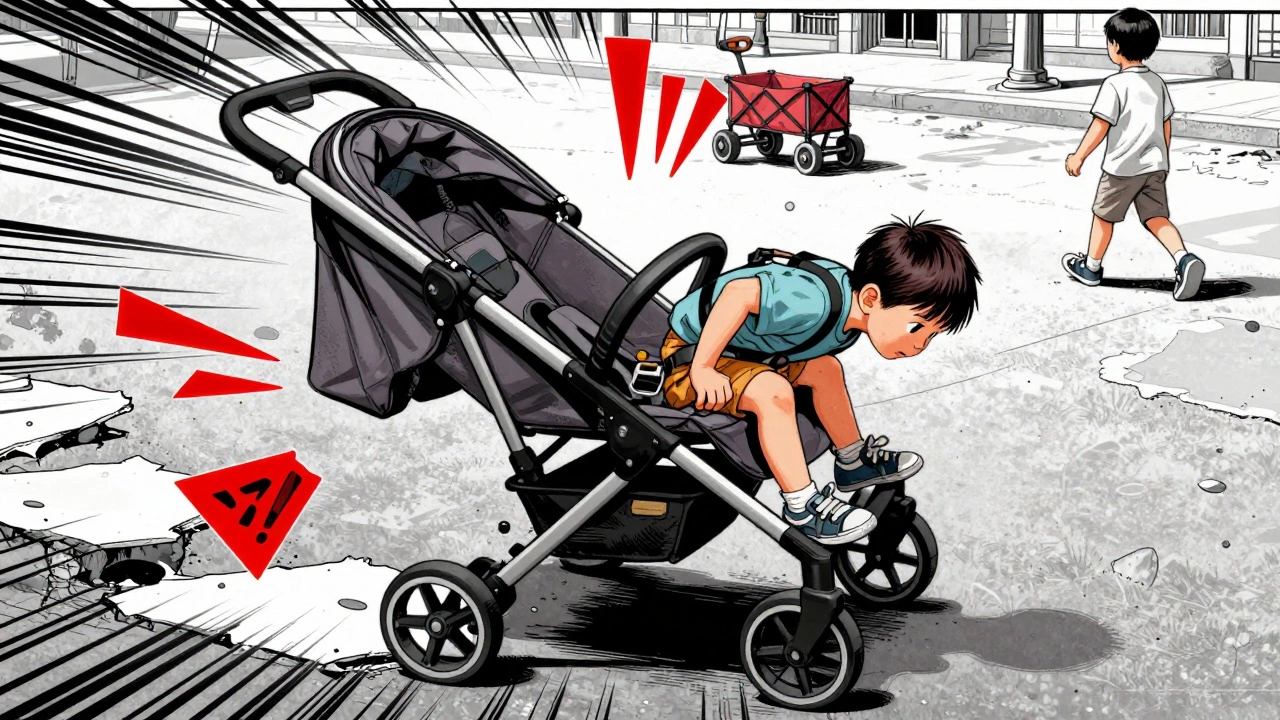
What Happens If You Keep Using a Stroller Past the Limit?
It’s not just about breaking the stroller. There are safety risks:
- Harness failure: Straps stretch, buckles strain. A child who’s too big can slip out during a sudden stop.
- Frame stress: Overloaded frames can bend or snap, especially on uneven ground or stairs.
- Brake failure: Heavier loads make brakes work harder. They can overheat or lose grip.
- Tip-over risk: Tall, heavy kids shift weight easily. A sudden turn or bump can flip the stroller.
A 2023 study from the Australian Paediatric Surveillance Unit found that 18% of stroller-related injuries in children over age 3 were linked to overloading - not accidents, but structural failure because the stroller was used beyond its design limits.
Alternatives When Your Child Outgrows the Stroller
You don’t have to stop carrying things when your child outgrows the stroller. Here are better options:
- Backpack carriers: Great for short trips. Look for ones rated for 40+ pounds. The Ergobaby Omni 360 supports up to 45 pounds.
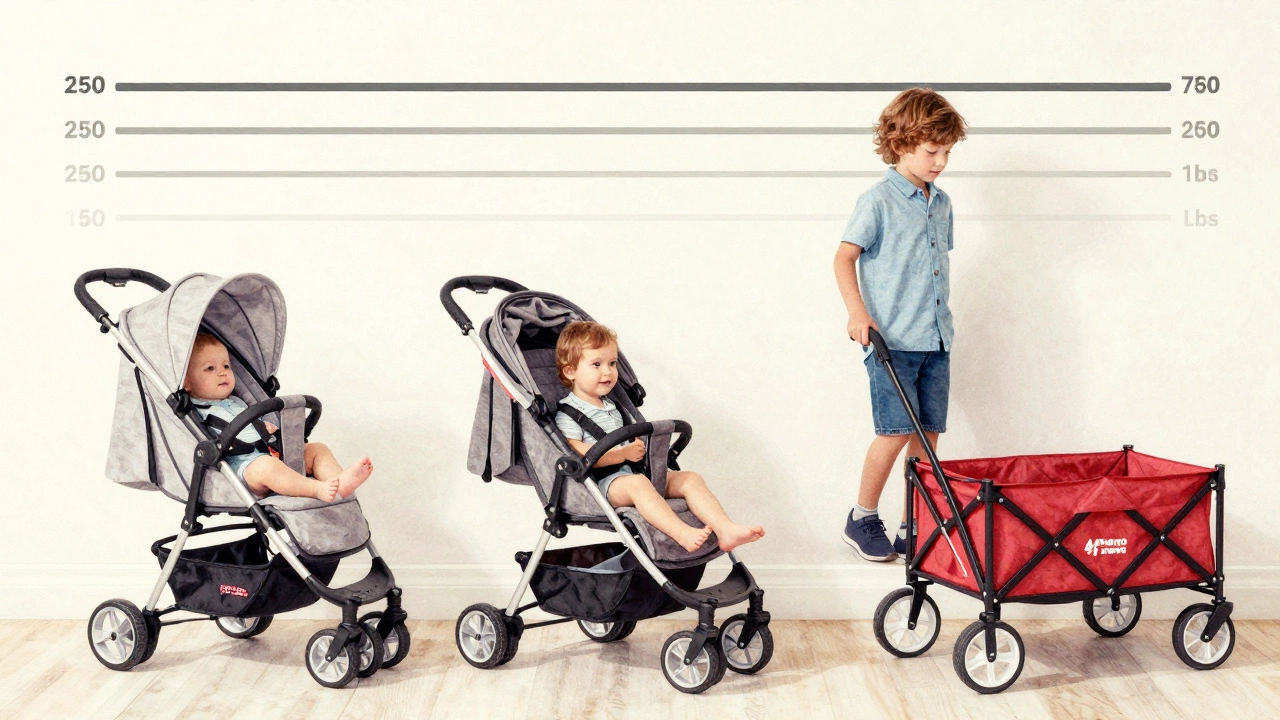
- Ride-on wagons: Perfect for parks, zoos, or shopping. The Radio Flyer My First Wagon holds up to 75 pounds and has a safety bar.
- Stroller wagons: Hybrid options like the Joovy Zoom 360 or Graco Click Connect 4-in-1 let you switch between stroller and wagon mode. They’re heavier but handle bigger kids better.
- Walking breaks: Teach kids to walk for 15 minutes, then rest for 5. Use timers or apps to make it a game.
Many parents find that once they switch to a wagon, their child is happier - they get to sit up, see more, and feel more in control. And you get your arms back.
Special Cases: Kids With Mobility Needs
If your child has a medical condition, developmental delay, or physical disability, stroller use may extend beyond age 4. That’s completely normal and okay. Specialized strollers like the TheraTogs WalkAide or the Special Tomato Sitter are designed for kids up to age 10 or more, with custom supports and higher weight limits.
These aren’t regular strollers - they’re medical mobility aids. If you’re in this situation, talk to your pediatrician or occupational therapist. They can help you get insurance coverage or government assistance for the right equipment.
How to Decide When to Stop
Ask yourself these three questions:
- Is my child within the weight and height limits? Check the label. If you’re over, it’s time.
- Is my child uncomfortable or unsafe in it? Are they slouching, squirming, or trying to climb out? That’s a sign.
- Can they walk for short distances? If they can walk 10 minutes without crying, they’re ready to try walking more.
There’s no shame in using a stroller longer. But if you’re doing it because you’re tired, not because your child needs it, you might be making things harder for both of you.
Pro Tip: Get a Stroller With Room to Grow
If you’re buying a new stroller and have a toddler on the way, look for models with higher limits. The UPPAbaby Vista (50 lbs), the Baby Jogger City Select (50 lbs), and the Nuna RAVA (50 lbs) all let you use them longer. Some even convert to double strollers or include a ride-on board for older kids.
It’s not about buying the most expensive one - it’s about buying one that fits your child’s growth, not just their current size.