Diaper Bag & Stroller Carry-On Checker
Enter your bag and stroller details to see how each item is classified, whether it fits under the seat, and any likely fees.
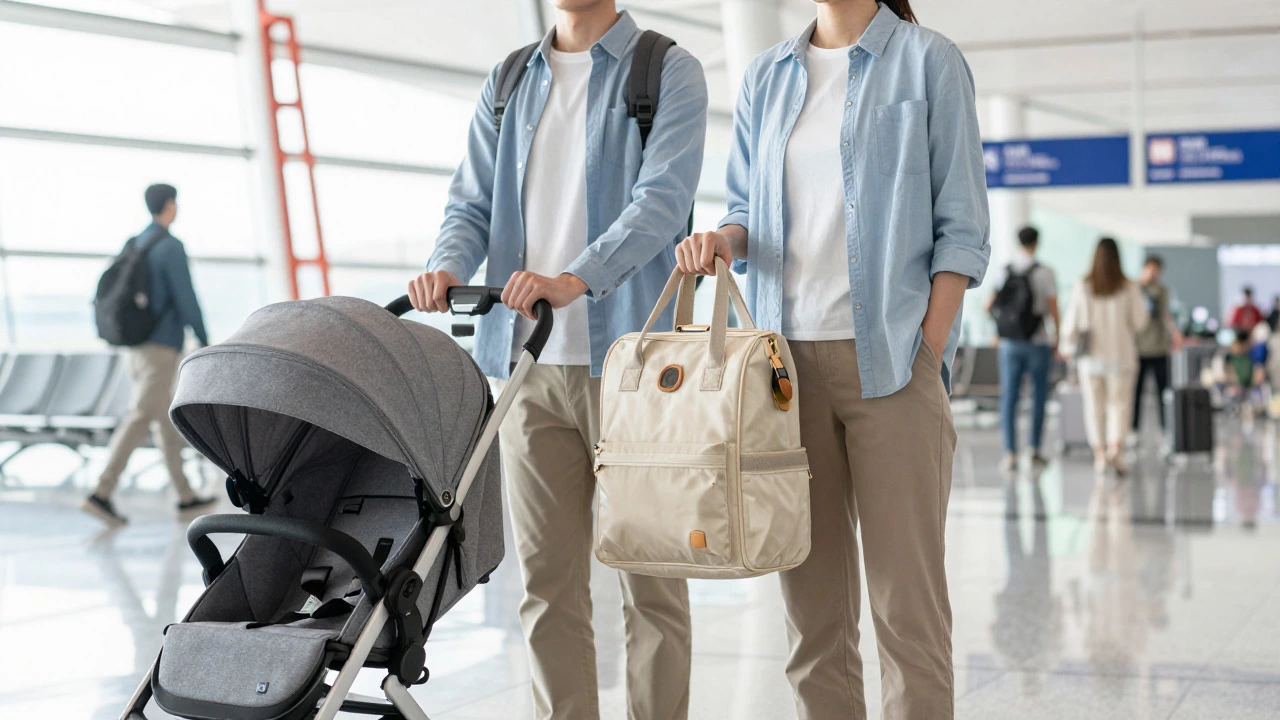
You’re standing at the gate, holding a full diaper bag and a folded baby stroller, wondering if you’ll have to pay extra fees or get your gear stuck in the overhead bin. The short answer is yes, a diaper bag counts as a carry-on, but it usually fits under the "personal item" category rather than the main cabin baggage slot. This distinction saves you money and hassle, provided you know which airline policies apply to your specific flight.
The Difference Between Personal Items and Carry-Ons
To understand where your bag fits, you need to grasp how airlines classify luggage. Most major carriers allow two pieces of free baggage for domestic flights: one standard carry-on and one personal item. A standard carry-on is typically sized around 22 x 14 x 9 inches (56 x 36 x 23 cm). In contrast, a personal item must fit under the seat in front of you. Since most diaper bags are designed to be compact and accessible, they almost always qualify as personal items. This means you can bring both a standard backpack or tote (your carry-on) and your diaper bag (your personal item) without paying a cent extra.
If you only bring the diaper bag and no other large bag, you are well within the limit. However, if you pack a large duffel or suitcase as your primary bag, ensure it meets the standard carry-on dimensions. The diaper bag then serves as your secondary item. This setup is crucial for parents who need quick access to wipes, diapers, and snacks during the flight without digging through a larger piece of luggage.
Stroller Rules: Gate Check vs. Checked Baggage
While the diaper bag stays with you, the stroller has its own set of rules. You generally have two options: checking it at the ticket counter or gate-checking it. Gate checking is often preferred because it allows you to keep the stroller until you reach the jet bridge or deplane. Airlines like Delta, United, and American Airlines typically allow one stroller and one car seat to be checked for free on domestic flights. International flights may vary, so it’s worth confirming before you fly.
When gate checking, tag your stroller clearly with your name and contact information. Some parents use zip ties to secure loose parts, preventing them from falling off during handling. If you choose to check at the counter, the stroller will arrive on the baggage carousel, which can take longer. Gate checking ensures you have mobility immediately upon landing, a significant advantage when traveling with an infant or toddler.
TSA Security: What They Look For
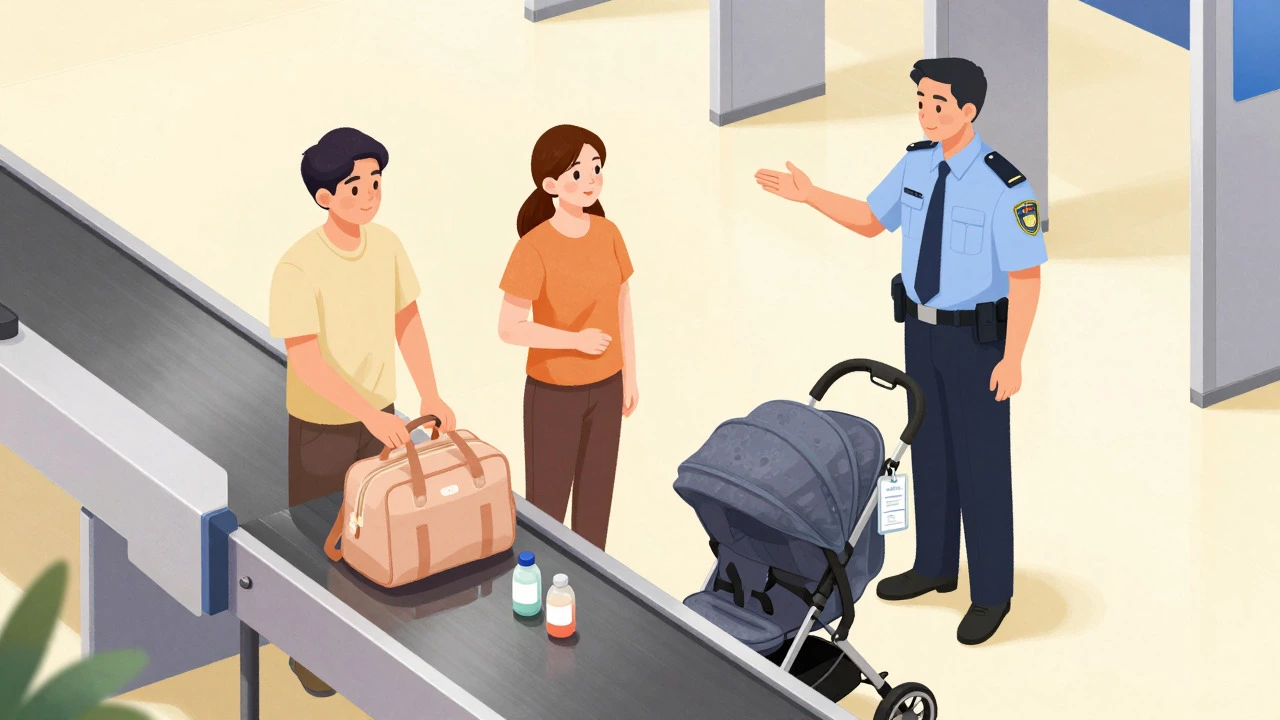
Passing through security with baby gear can feel intimidating, but the Transportation Security Administration (TSA) has streamlined processes for families. You do not need to remove bottles or breast milk from your diaper bag. Liquid restrictions that apply to regular passengers (the 3-1-1 rule) do not strictly apply to reasonable quantities of baby formula, breast milk, or juice needed for the flight. You just need to declare these liquids to the officer at the checkpoint.
Here is what you should expect during screening:
- Solids: Wipes, diapers, and clothes can stay in the bag.
- Liquids: Declare formula or milk; they may ask you to separate them for X-ray inspection.
- Electronics: Small devices like phone chargers or tablets should be removed if requested, similar to laptops.
- Strollers: Usually not screened if gate-checked, but if checked at the counter, wheels and frames might need inspection.
Pro tip: Keep frequently used items like a change of clothes and a bottle in the top layer of your diaper bag. This speeds up the process if an officer asks you to open the bag, avoiding delays for you and the line behind you.
Airline-Specific Policies and Size Limits
While most US domestic airlines follow similar guidelines, international carriers may have stricter size limits for personal items. Always check the specific baggage policy for your route. Below is a comparison of common policies for major US carriers regarding baby gear.
| Airline | Personal Item Limit | Stroller Policy (Domestic) | Car Seat Policy |
|---|---|---|---|
| Delta Air Lines | Fits under seat (approx. 18x14x8 in) | Free gate check or counter check | Free gate check or counter check |
| United Airlines | Fits under seat (approx. 17x10x9 in) | Free gate check recommended | Free gate check recommended |
| American Airlines | Fits under seat (approx. 18x14x8 in) | Free gate check or counter check | Free gate check or counter check |
| Southwest Airlines | One personal item + one carry-on | Free gate check | Free gate check |
Note that budget carriers or international flights may charge for additional items or have smaller personal item dimensions. If you are flying internationally, verify whether your diaper bag counts toward your total allowance or if it is exempt as essential baby gear.
Packing Strategies for Travel-Friendly Diaper Bags
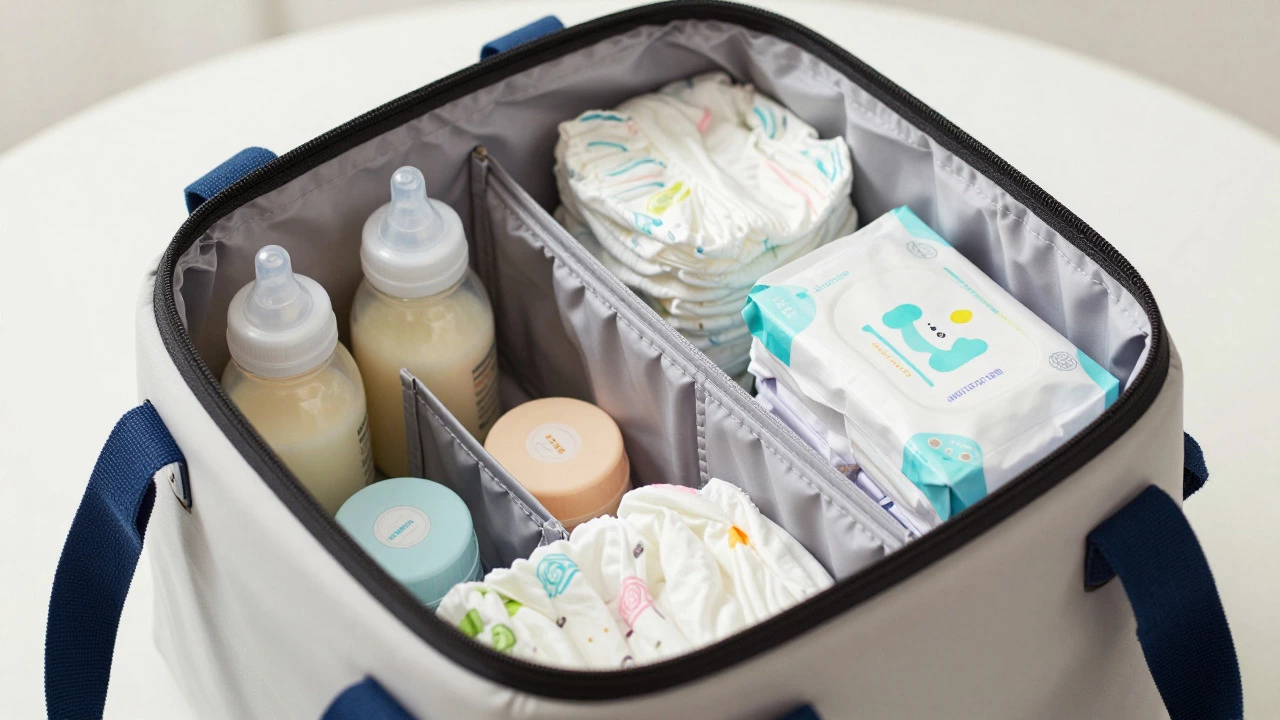
Even though the diaper bag is allowed as a personal item, space is still limited. Overpacking can make the bag bulky, potentially causing it to exceed size limits or become difficult to maneuver through tight airplane aisles. Focus on essentials. Instead of bringing a full week’s supply of diapers, calculate exactly how many you need based on flight duration and layovers. For a four-hour flight, three to five diapers are usually sufficient, plus a backup pair for emergencies.
Use compression cubes or ziplock bags to organize contents. Grouping items by type-such as feeding supplies, hygiene items, and comfort objects-makes retrieval faster. Consider using a lightweight, water-resistant bag with multiple compartments. A dedicated bottle pocket keeps liquids separated from electronics, preventing leaks from damaging your phone or tablet. Additionally, include a small first-aid kit with band-aids, fever reducer, and any necessary medications. Having these items easily accessible reduces stress if your child gets sick or injured during travel.
Common Mistakes to Avoid
Many new parents make simple errors that lead to delays or extra costs. One frequent mistake is assuming all strollers are treated the same. Jogging strollers or heavy double strollers might require counter checking instead of gate checking due to their weight or bulk. Confirm with the agent before reaching the gate. Another error is forgetting to remove valuables from the stroller before checking it. Keys, wallets, and toys left in the basket can go missing during handling.
Also, don’t ignore the weight limit for carry-ons. While personal items rarely have strict weight caps, if your diaper bag is excessively heavy, a gate agent might question it. Keep your bag under 10 pounds if possible. Finally, always arrive early. Flying with a baby takes longer to board and deplane. Arriving 90 minutes before a domestic flight gives you buffer time for security lines and any unexpected issues with your gear.
Frequently Asked Questions
Can I bring a large diaper bag as my main carry-on?
Yes, if it fits within the standard carry-on dimensions (usually 22 x 14 x 9 inches). However, most diaper bags are smaller and qualify as personal items, allowing you to bring another bag as well.
Do I need to pay to check a stroller?
On most US domestic flights, one stroller and one car seat are checked for free. International flights may vary, so check your specific airline’s policy for long-haul routes.
How much liquid can I bring in a diaper bag?
You can bring a reasonable amount of formula, breast milk, or juice for the flight. These are exempt from the standard 3-1-1 liquid rule, but you must declare them to TSA officers at the checkpoint.
Is a gate check better than a counter check for strollers?
Gate checking is generally better because you keep the stroller until boarding. It also reduces the risk of damage since the stroller spends less time in the cargo hold compared to counter-checked items.
What if my diaper bag doesn't fit under the seat?
If it’s too big for the personal item space, it may count as your standard carry-on. In this case, you won’t be able to bring another large bag. To avoid issues, measure your bag against the airline’s specific dimension limits before packing.