Suit Value & Cost-Per-Wear Calculator
Configuration
Budget
$150
Polyester / Fused
- ✖ Glued lining (bubbles)
- ✖ Non-functional buttons
- ⚠ Lasts ~1-2 years
Mid-Range
$400
Wool / Half-Canvas
- ✔ Breathable natural fiber
- ✔ Functional buttonholes
- ✔ Lasts ~5-10 years
Premium
$900+
Super Wool / Full Canvas
- ✔ Superior drape & fit
- ✔ Hand-stitched details
- ✔ Lasts 15+ years
Investment Analysis
Based on 10 wears over the lifespan.
Verdict
Walk into any department store or browse online, and you’ll see men’s suits priced anywhere from $150 to $3,000. It’s confusing. You might wonder if spending $400 on a suit is a rip-off or a steal. The short answer? No, $400 is not too much. In fact, it’s often the sweet spot where quality actually starts to matter.
If you buy a suit for less than $200, you’re usually paying for fabric that pills after one wash and stitching that unravels by the second event. But jump to $800+ without knowing what you’re buying, and you might be paying for a brand name rather than better tailoring. That $400 range is where you start getting real wool, functional buttonholes, and a cut that doesn’t look like a potato sack.
The Reality of Cheap Suits: Why Under $200 Fails
Let’s talk about the budget end first. When you see a suit tagged at $99 or $150, here is what you are actually buying. These suits are almost always made from synthetic blends-polyester, acetate, or rayon. They look shiny under fluorescent lights because they reflect light differently than natural fibers. They don’t breathe. If you wear one in summer, you will sweat through it within an hour.
More importantly, cheap suits use fused construction. This means the inner lining is glued to the outer fabric with heat-activated adhesive. Over time, especially with dry cleaning or body heat, that glue breaks down. The jacket starts to bubble. You get those weird lumps around the lapels and chest. It looks worn out even if you’ve only worn it twice.
- Fabric: Usually 100% polyester or high-synthetic blends.
- Construction: Fully fused (glued).
- Lifespan: One to two years with moderate wear.
- Fit: Boxy, unstructured, requires significant alterations.
For a one-time wedding guest appearance where you won’t care about comfort, maybe it works. But if you plan to wear this suit more than three times, you’re throwing money away.
What You Get for $400: The Entry-Level Quality Tier
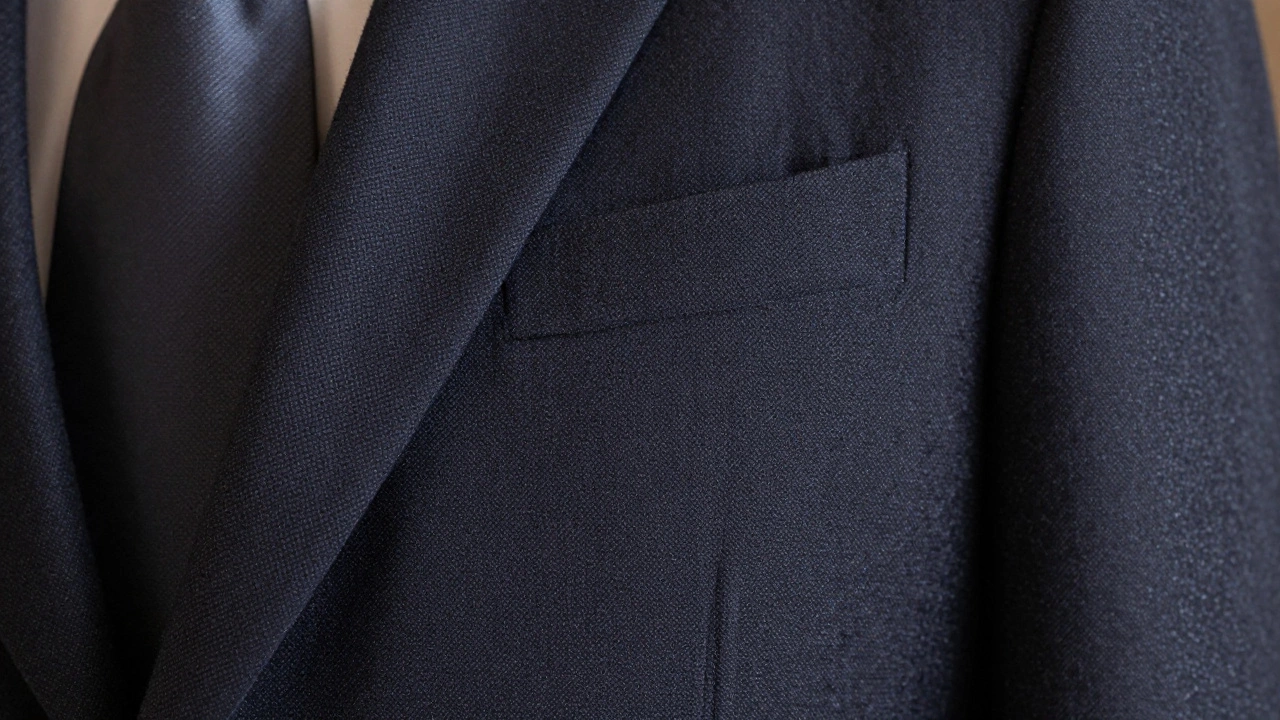
At the $400 mark, things change. You aren’t buying luxury yet, but you are buying durability. Most reputable brands in this range offer suits made from 100% wool or high-quality wool blends. Wool is breathable, resists wrinkles better than synthetics, and molds to your body over time.
Here is the key difference in construction: half-canvassed jackets. Instead of gluing the entire front, these suits have a canvas layer (usually horsehair or synthetic hair) in the chest area. This allows the lapels to roll naturally instead of lying flat and stiff against your chest. It looks sharper. It moves better. And crucially, it doesn’t bubble.
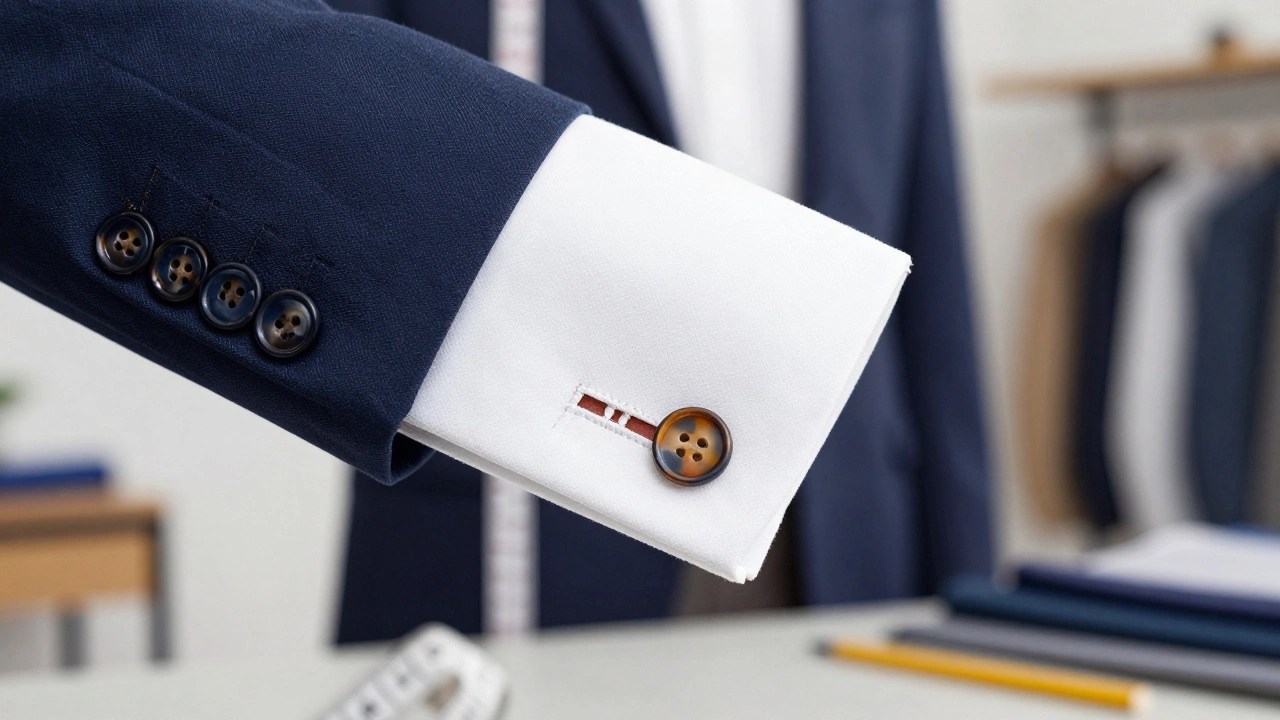
You also start seeing functional buttonholes on the sleeve cuffs. On cheap suits, those buttons are sewn on for show; you can’t take them off. On a $400 suit, the holes are stitched open, meaning you can actually fasten the cuff. It’s a small detail, but it signals that the manufacturer cares about tradition and fit.
| Feature | Budget ($100-$200) | Mid-Range ($350-$600) | Premium ($800+) |
|---|---|---|---|
| Fabric Content | 100% Polyester/Synthetics | 100% Wool or High-Wool Blends | Super 120s+ Virgin Wool, Cashmere |
| Construction | Fused (Glued) | Half-Canvas | Full Canvas |
| Sleeve Buttons | Decorative (Sewn Shut) | Functional (Stitched Open) | Functional Hand-Stitched |
| Fit Options | Standard/Boxy | Slim/Modern Cuts Available | Customizable/Made-to-Measure |
| Longevity | 1-2 Years | 5-10 Years | 10-20+ Years |
Off-the-Rack vs. Made-to-Measure: Where Does $400 Fit?
This is where people get tripped up. You might hear that "off-the-rack" suits are bad and you need "made-to-measure" (MTM). MTM suits usually start around $600 and go up to $1,500+. They are built based on your specific measurements. They fit better right out of the box.
But here is the secret: a $400 off-the-rack suit with professional alterations can look better than a $700 MTM suit with poor fabric. Tailoring is magic. If you buy a $400 suit that fits your shoulders perfectly (you can’t alter shoulders easily), you can spend $50-$100 at a local tailor to taper the waist, shorten the sleeves, and hem the trousers. Suddenly, you have a custom-looking fit for a total cost of $500.
So, is $400 too much? Only if you expect it to fit you perfectly without any tweaks. If you view the $400 as the base price for the garment and budget an extra $100 for alterations, you are making a smart investment.
Brand Matters Less Than Construction
In the $400 range, brand names vary wildly in value. Some big retail brands charge $400 for a fused polyester suit just because their logo is on the tag. Others, like Suitsupply, Indochino (higher tier), or Brooks Brothers (sale items), offer genuine wool and half-canvas construction at this price point.
Don’t buy the label; buy the specs. Look for these keywords on the hangtag or product description:
- 100% Wool: Avoid "Wool Blend" if possible, unless it specifies a high wool content (e.g., 90% wool).
- Half-Canvas: If it doesn’t say, ask. Many stores won’t tell you unless you push.
- Functional Buttonholes: Check the sleeve cuffs.
- Weight: For Melbourne weather or similar climates, look for 230g-280g wool. Lighter wools (below 200g) tear easily; heavier wools (above 300g) are too hot for most events.
Brands like J.Crew, Banana Republic, and Calvin Klein often run sales where their mid-tier suits drop to the $300-$400 range. These are solid choices if you check the construction details. Conversely, some fast-fashion retailers might price a suit at $399 but deliver poor quality. Always inspect the inside of the jacket. If you see thick, rough glue holding the lining, walk away.
When Is $400 Actually Too Much?
There are scenarios where spending $400 on a single suit is a bad financial move. Context matters.
If you work in a creative industry or a casual office, you might never wear a suit again after one interview or wedding. In that case, renting a suit for $100-$150 is smarter. Or buying a $200 suit that you’ll discard after five wears is acceptable.
However, if you are a groom, a new professional entering corporate law or finance, or someone who attends weddings regularly, $400 is the minimum entry fee for looking credible. Looking sloppy costs you more in lost opportunities than the price of the suit. A well-fitted, quality suit projects competence. It tells people you pay attention to detail.
How to Stretch Your 0 Budget
You don’t have to spend $400 upfront if cash flow is tight. Here is how to maximize value:
- Buy Off-Season: Suits go on sale heavily in January and July. You can often find $600 suits for $350.
- Check Outlet Stores: Brands like Ralph Lauren and Hugo Boss have outlets where previous season’s styles are discounted. The quality remains the same; only the style date changes.
- Alterations First: Never buy a suit that doesn’t fit your shoulders. If the shoulders are right, everything else can be fixed. If the shoulders are wrong, no amount of money will fix it.
- Mix and Match: Buy the jacket and trousers separately if needed. Sometimes pants are cheaper, or you can find a better fit elsewhere.
Remember, shoes and shirts also matter. Don’t spend $400 on a suit and $50 on shoes. The shoes should complement the suit’s quality level. A pair of decent leather derbies or oxfords for $100-$150 completes the look.
Final Verdict: Invest in Longevity
Is $400 too much for a suit? Absolutely not. It is the threshold where you stop buying disposable clothing and start investing in wardrobe staples. A $400 suit, properly tailored and cared for, will last you five to ten years. That breaks down to less than $10 per wear if you use it regularly.
A $150 suit will fall apart in two years, costing you $75 per year in replacements plus the hassle of shopping repeatedly. Plus, you’ll feel uncomfortable and look less polished. For important moments in life-job interviews, weddings, client meetings-your appearance is part of your toolkit. Spending $400 ensures that tool works reliably.
Can I get a good suit for under $300?
Yes, but you need to shop during sales. Brands like H&M Premium Quality, Uniqlo U, and Zara occasionally offer wool-blend suits in the $250-$300 range. However, these are often fully fused and may not last as long as a $400 half-canvas suit. Inspect the lining carefully for glue bubbles before buying.
Should I rent or buy a $400 suit?
Rent if you will wear the suit only once or twice in your lifetime. Buying makes sense if you anticipate wearing formal attire at least 3-4 times a year. Consider the cost-per-wear: a $400 suit worn 20 times costs $20 per wear, which is cheaper than many rental fees when you factor in insurance and damage risks.
What is the difference between half-canvas and full-canvas?
Half-canvas suits have canvas reinforcement in the chest and lapel area, providing a natural roll and better drape. Full-canvas suits extend this reinforcement across the entire front panel. Full-canvas offers superior longevity and shape retention but typically costs $800+. For a $400 budget, half-canvas is the best construction method available.
How do I know if a suit fits my shoulders correctly?
The seam where the sleeve attaches to the jacket should sit exactly at the edge of your shoulder bone. It should not extend past your shoulder onto your arm (too big) nor pull inward toward your neck (too small). There should be no divots or bunching of fabric. Shoulder fit is the hardest to alter, so prioritize it above all other measurements.
Is wool necessary for a $400 suit?
Highly recommended. Wool breathes, resists odors, and hides wrinkles better than synthetic fabrics. At the $400 price point, you should expect 100% wool. If a suit at this price is polyester, it is overpriced. Wool also drapes better, creating a cleaner silhouette that looks more expensive than it is.