Newborn Baby Carrier Safety Checker
Check off each condition below to ensure your newborn's carrier setup is safe. This tool helps prevent hip dysplasia and positional asphyxia.
Newborn head must be supported until they have full control (approx. 3-4 months).
Thighs supported knee-to-knee. Prevents hip dysplasia.
You should be able to slide two fingers between chin and chest.
If you have to lean over far, the angle is too low.
Snug is safe. Loose straps stress the spine.
Never face a newborn outward.
Feel chest/neck. Remove layers if sweaty.
Limit continuous wear to allow spine rest.
No frayed straps or broken buckles.
Safety Status
You just brought your tiny human home. They fit in the crook of your arm, smell like milk and sleep, and you are terrified to put them down. Enter the baby carrier, a device that promises freedom for your hands and closeness for your baby. But a nagging question keeps popping up: is it actually safe for those fragile, wobbly newborn necks and hips?
The short answer is yes, but with major caveats. It’s not about whether you *can* use one; it’s about using the right type, in the right position, for the right amount of time. A poorly fitted carrier can do more harm than good, leading to hip dysplasia or breathing issues. Let’s break down exactly what you need to know to keep your newborn safe while keeping them close.
Understanding the Risks: Hips and Airway
Newborn bodies are different from older babies. Their joints are still developing, and their airways are narrow. The two biggest risks when babywearing a newborn are hip dysplasia and positional asphyxia.
Hip dysplasia happens when the hip joint doesn’t form correctly because the legs are forced into an extended, straight-down position (like standing). For a newborn, the natural position is frog-like: knees higher than the bottom, thighs supported all the way to the knee. If a carrier forces their legs straight down, it puts stress on the hip socket. This is why dangling leg carriers are often discouraged for very young infants unless they have specific inserts or settings.
Positional asphyxia is less common but more urgent. Newborns have large heads relative to their bodies and weak neck muscles. If their chin drops onto their chest, it can pinch their airway. You might think they’re just napping peacefully, but if their face is pressed against fabric or your body without enough space, they could struggle to breathe. The golden rule here is "Kissable Kiss." You should always be able to kiss the top of their head easily. If you have to lean over far, the angle is too low.
The M-Shape Position: Why It Matters
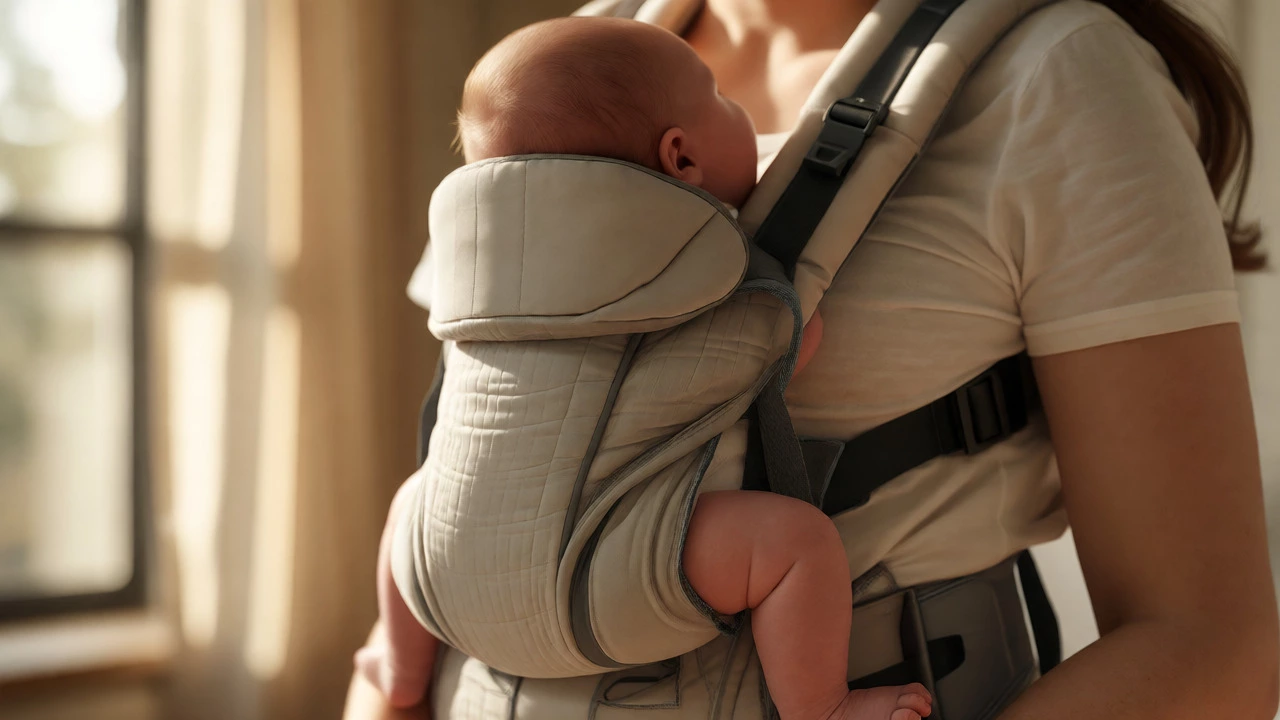
If you remember one thing from this article, let it be the M-shape position. This is the gold standard for newborn ergonomics. Imagine looking at your baby from the side. Their back should curve naturally (not flat), and their legs should form an "M" shape. The knees are higher than the bum, and the fabric supports the thighs from knee to knee.
This position mimics how babies hold themselves in the womb. It protects the developing hip joints by keeping the femur (thigh bone) seated securely in the hip socket. Carriers that don’t support this shape-often called "dangling" carriers-are risky for newborns. Always check the manufacturer’s guidelines. Many structured carriers require a specific newborn insert or a convertible setting to achieve this M-shape before the baby has full head control.
Choosing the Right Carrier Type
Not all carriers are created equal. Some are designed specifically for the fourth trimester, while others are meant for toddlers who can sit up independently. Here’s how the main types stack up for newborns.
| Carrier Type | Safety Rating for Newborns | Best For | Key Consideration |
|---|---|---|---|
| Soft Structured Carrier (SSC) | High (if adjustable) | Parents who want structure and ease | Must have newborn insert or high seat width adjustment |
| Wrap | Very High | Preemies and very small newborns | Steep learning curve; requires tight, even tension |
| Ring Sling | High | Quick ups and downs, breastfeeding | Requires careful tailoring to avoid uneven weight distribution |
| Buckle Carrier (Toddler) | Low/Medium | Older babies (4+ months) | Often lacks necessary height/width adjustments for newborns |
Wraps are often considered the safest option for the first few weeks because they mold perfectly to the baby’s body. However, they can be tricky to tie correctly. If you’re exhausted and sleep-deprived, a Soft Structured Carrier (SSC) with a dedicated newborn mode might be safer simply because it’s harder to mess up. Just ensure the seat is narrow enough so the baby isn’t sitting on their scrotum or vulva, and wide enough to support the thighs.

Head and Neck Support: The Critical Factor
Newborns lack the muscle tone to hold their heads up. In a carrier, their head must be supported until they have sufficient control, usually around 3-4 months. Most modern carriers have a roll-down panel or a separate headrest that snaps or buttons into place.
Check the head support regularly. As your baby grows, you’ll need to adjust it. If the support is too high, it might push their chin to their chest. If it’s too low, their head will bob around. The goal is neutral alignment: ears, shoulders, and hips in a vertical line. Never carry a newborn facing outwards. Outward-facing positions expose the spine to unnatural curvature and offer no head support. Keep them facing inward, toward your chest. This allows you to monitor their breathing and gives them a sense of security.
Duration and Frequency: How Long Is Too Long?
Babies need breaks from being upright, even if they love it. Pediatricians often suggest limiting continuous babywearing sessions to 1-2 hours for newborns. After that, take them out and let them lie flat on their back for tummy time or rest. This relieves pressure on the spine and hips.
Watch for signs of overheating. Newborns regulate temperature poorly. Since you are generating heat and the carrier traps warmth, your baby can get hot quickly. Feel their chest or neck (not hands or feet, which are naturally cooler). If they feel sweaty or damp, remove a layer of clothing or take a break. Dress them in light layers and consider skipping the hat indoors.

Common Mistakes to Avoid
- Tightening too much: You should be able to slide two fingers between your baby’s chin and chest. If you can only fit one finger, it’s too tight and restricts breathing.
- Loose straps: If the carrier sags, the baby’s weight pulls downward, stressing your back and their spine. Snug is safe.
- Ignoring the crotch depth: If the fabric ends under the butt rather than supporting the thigh, the baby is dangling. Adjust the seat width immediately.
- Using old or second-hand carriers: Check for frayed straps, broken buckles, or faded elastic. Safety standards change, and wear and tear compromise integrity.
When to Consult a Professional
If your baby was born prematurely, has a heart condition, or has been diagnosed with hip dysplasia, talk to your pediatrician before starting babywearing. They might recommend a specific type of wrap or advise against certain positions. Also, if you notice your baby consistently arching their back away from you or crying when placed in the carrier, stop and reassess the fit. Sometimes, a simple adjustment makes all the difference.
Babywearing is a beautiful tool for bonding and convenience. By respecting the physiology of your newborn-supporting their hips, protecting their airway, and monitoring their comfort-you can enjoy the closeness without worry. Start slow, check the fit every time, and trust your instincts. If something feels off, it probably is.
Can I use a regular toddler carrier for a newborn?
Generally, no. Toddler carriers often lack the necessary head support and seat width adjustments for newborns. Using one can force the baby's legs into a dangerous extended position or fail to support their head adequately. Always look for a carrier labeled "newborn friendly" or one that comes with a specific newborn insert.
How long can I keep my newborn in a baby carrier?
It is recommended to limit continuous wearing time to 1-2 hours. After this period, take the baby out to allow their spine and hips to rest in a neutral position. Monitor for signs of overheating or discomfort, and adjust the duration based on your baby's individual needs and your pediatrician's advice.
Is it safe for a newborn to sleep in a baby carrier?
Yes, but with caution. Ensure their airway is clear, their head is supported, and their chin is off their chest. If they fall asleep, check on them frequently. If you plan to nap yourself, it is safer to transfer the sleeping baby to a firm, flat mattress to reduce the risk of positional asphyxia.
What is the T.I.C.K.S. rule?
T.I.C.K.S. stands for Tight, In view at all times, Close enough to kiss, Keep chin off the chest, and Supported back. These are five key principles for safe babywearing established by the UK-based charity Lullaby Trust to prevent suffocation and injury.
Do I need a special insert for my carrier?
Many structured carriers require a newborn insert to raise the seat height and narrow the width, ensuring the baby is in the ergonomic M-position. Without it, the baby may sit too low, causing them to dangle. Check your specific carrier's manual to see if an insert is included or sold separately.