
Baby Carrier Safety & Suitability Checker
Baby Details
Enter your baby's details to see if the carrier is safe and suitable.
Safety Checklist Before Use:
You’ve just bought that beautiful, highly-rated baby carrier is a wearable device designed to carry an infant or toddler on the body of a caregiver. It looks sturdy. The reviews are glowing. But before you clip your newborn into it and head out for a stroll, there’s one critical question hanging over your shoulder: Is your baby actually old enough?
The short answer? It depends entirely on the type of carrier you have. Using the wrong carrier at the wrong developmental stage isn’t just uncomfortable-it can be dangerous. We’re talking about airway obstruction risks for newborns and long-term hip development issues for older infants. Getting this right means understanding the difference between a soft wrap and a structured frame, and knowing exactly what your baby’s body can handle.
Newborns (0-3 Months): The "M" Position is Non-Negotiable
If your baby is brand new to the world, their spine is essentially a C-shape. They have zero neck control and very little head support. This makes them uniquely vulnerable in any carrying situation. Not all carriers are created equal for this delicate stage.
For babies under three months, you generally need a carrier that supports the fetal position, where the baby's knees are higher than their bottom and legs form an M-shape. This is crucial for two reasons:
- Hip Health: The International Hip Dysplasia Institute (IHDI) recommends this "M" position to ensure the femoral heads sit correctly in the hip sockets. Straightening their legs out puts stress on developing joints.
- Airway Safety: Newborns need their chin off their chest to breathe freely. If they slump forward, their airway can collapse. A proper newborn insert or a stretchy fabric wrap keeps their head upright and close to your chest, allowing you to monitor their breathing easily.
Structured carriers with rigid plastic frames often lack the necessary flexibility for a newborn unless they come with a specific newborn insert is an additional padding module that provides extra leg support and spinal curvature for infants too small for standard carriers. Without it, their legs may dangle straight down, which is bad for their hips. Soft wraps, like the popular Moby Wrap or Solly Baby Wrap, are naturally excellent for newborns because the fabric molds perfectly to their tiny frame, supporting the head and keeping them snug against your body.
Infants (4-6 Months): Gaining Strength, Losing Inserts
As your baby hits the four-month mark, things change dramatically. They start lifting their heads voluntarily, tracking objects with their eyes, and perhaps even smiling at strangers. Their neck muscles are stronger, but their core is still developing.
This is usually the sweet spot where you can ditch the bulky newborn insert in structured carriers. However, the "M" position remains vital. You might notice your baby trying to kick their legs out-this is normal exploration, not a sign they’re ready for a standing position. Keep their knees above their bottom.
At this stage, many parents transition to hip seats is a semi-structured carrier that attaches to the wearer's waist, providing a stable platform for babies who can hold their own head up. These are great for quick trips around the house or grocery stores, but remember: your baby still needs full torso support. Don’t let them slide down into a sitting position unsupported; keep them high on your chest or stomach so their weight is distributed evenly across your body.
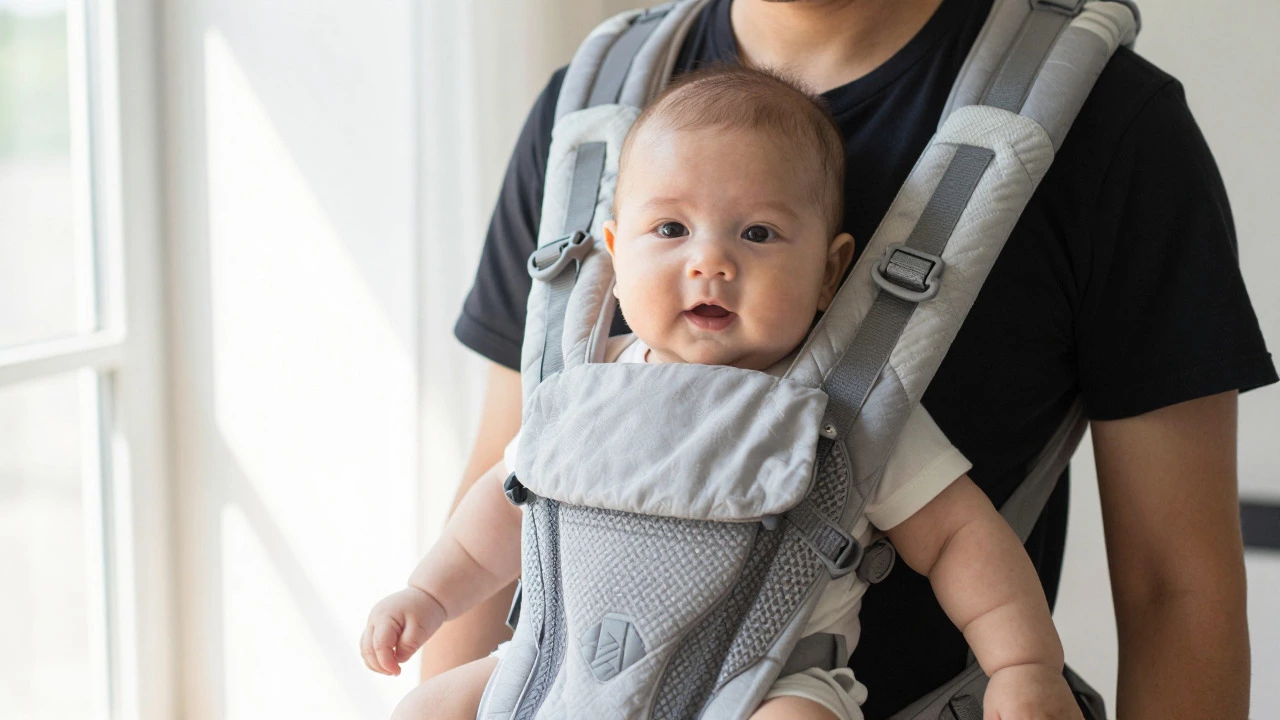
Toddlers (7-18+ Months): Back Carrying and Weight Distribution
Once your baby can sit up unassisted and has good head control (usually around 6 months), the world opens up. You can now consider back-carrying. This is a game-changer for hiking, traveling, or simply getting chores done when your little one is heavy.
However, back-carrying requires significant strength from the caregiver. Most manufacturers recommend starting back carries only after six months, but realistically, many parents wait until nine or ten months when the child weighs more than 15 pounds. Why? Because wrapping a 12-pound baby on your back is manageable; wrapping a 25-pound toddler is a workout.
For toddlers, look for carriers with robust lumbar support and wide shoulder straps. Brands like Ergobaby, Tula, and Osprey offer models specifically designed for heavier loads. At this age, your child will likely want to look around, so ensure the carrier allows for visibility without compromising safety. Always use the crotch strap to prevent falling, and double-check that the buckle is secure every time.
| Carrier Type | Minimum Age | Key Requirement | Best For |
|---|---|---|---|
| Soft Stretchy Wrap | Birth | Learning curve for tying | Newborns, ergonomic fit |
| Structured Carrier w/ Insert | Birth | Must include newborn insert | Easy on/off, hands-free |
| Structured Carrier (No Insert) | 4-6 Months | Good head control | Active infants, travel |
| Hip Seat | 4-6 Months | Head control required | Quick errands, bonding |
| Backpack Style Carrier | 6 Months+ | Sitting independently | Hiking, long walks |

Safety Red Flags: When to Stop Immediately
Even if your baby is the "right" age, certain conditions mean you should pause baby-wearing. Here are the non-negotiable safety checks:
- The Chin Test: Look at your baby’s face. Can you see their chin? If their chin is pressed against their chest, their airway is compromised. Adjust the fabric or straps immediately to lift their head.
- The Kiss Test: You should be able to kiss the top of your baby’s head without bending your neck excessively. If you’re craning your neck to check on them, they’re too far away.
- Temperature Regulation: Babies overheat quickly in carriers. In Melbourne’s summer heat, opt for breathable mesh fabrics. If you feel hot, your baby is likely hotter. Take breaks frequently.
- Hip Dysplasia Warning Signs: If your pediatrician has flagged concerns about hip stability, consult them before using any structured carrier. Stick to wraps that allow natural leg positioning until cleared.
Choosing the Right Carrier for Your Lifestyle
It’s not just about age; it’s about how you live. Do you commute on public transport? Do you hike in the Dandenong Ranges? Are you sensitive to back pain?
If you’re active and outdoorsy, a backpack-style carrier with a rain cover and sun hood is essential. These distribute weight evenly across your hips and shoulders, reducing strain during long treks. If you’re urban-based and value convenience, a structured carrier with buckles offers quick adjustments. For those who prioritize comfort and don’t mind a learning curve, a woven wrap provides unparalleled customization and support for both parent and child.
Don’t forget to try before you buy. Many baby stores in Australia offer demo sessions. Wear the carrier with a weighted doll first to simulate the real experience. Pay attention to how the weight sits on your body. Does it dig into your shoulders? Does it pull your lower back out of alignment? Your comfort directly impacts your ability to care for your baby safely.
Can I use a baby carrier immediately after birth?
Yes, but only if the carrier is designed for newborns. Soft wraps and structured carriers with a dedicated newborn insert are safe from day one. Ensure the baby’s airway is clear and their hips are in the "M" position. Avoid carriers that force the baby into a spread-eagle or seated position.
How long can a newborn stay in a carrier?
There’s no strict time limit, but frequent breaks are recommended. Monitor your baby for signs of overheating or discomfort. For newborns, shorter sessions of 30-60 minutes are ideal, gradually increasing as they grow. Always take them out for tummy time and floor play to promote motor development.
Is it safe to sleep in a baby carrier?
While many babies fall asleep in carriers, experts recommend waking them up periodically to check their airway. The American Academy of Pediatrics advises against unsupervised sleeping in carriers due to positional asphyxia risks. If your baby falls asleep, ensure their head is upright and their chin is off their chest. Consider transferring them to a flat, firm sleep surface for extended naps.
Do baby carriers cause hip dysplasia?
Not if used correctly. Hip dysplasia risk increases when a baby’s legs are held straight down or spread wide apart. Proper carriers keep the knees higher than the bottom in an "M" shape, which supports healthy hip development. Look for IHDI-approved carriers to ensure they meet these ergonomic standards.
When should I switch from front-in to back carry?
You can start practicing back carries once your baby can sit up independently, usually around 6 months. However, most parents find it easier to transition to back carrying when the baby is closer to 9-12 months and weighs more than 15 pounds. Start with short periods indoors to get comfortable with the technique before heading out.