
Suit & Shirt Color Matcher
Select your suit color and skin tone to get personalized shirt recommendations.
You stand in front of your closet, holding a crisp white shirt in one hand and a pale blue one in the other. Your navy suit hangs on the door. Which one wins? It’s not just about what you like; it’s about context, skin tone, and the message you want to send. The wrong choice can make you look washed out or overly casual, while the right one makes you look sharp without saying a word.
The truth is, there is no single "best" color for every situation. However, there are clear rules that separate a polished look from a fashion faux pas. This guide breaks down exactly which dress shirt colors work with different suits, how your skin tone changes the equation, and when to break the rules entirely.
The Foundation: Why White Isn't Always Right
Let’s get the obvious out of the way. White is the universal donor of men’s fashion. It pairs with everything. If you’re attending a black-tie event, wearing a tuxedo, or going to a high-stakes job interview where conservatism is key, white is non-negotiable. It signals cleanliness, precision, and respect for tradition.
But here’s the catch: white can be harsh. If you have very fair skin and light hair, a stark white shirt under a dark suit can create too much contrast, making your face look pale. Conversely, if you have deep skin tones, white provides excellent contrast and looks fantastic. For most people, though, "white" isn't just one color. There’s optic white (bright, almost blue-toned) and cream or ivory (softer, yellow-toned). Optic white looks modern and sharp. Ivory feels warmer and more relaxed. Choosing between them depends on whether you want to look corporate or approachable.
Blue: The Versatile Powerhouse
If white is the safe harbor, light blue is the friendly neighbor. It is arguably the most versatile shirt color for daily business wear. Why? Because it lowers the visual barrier between you and others. Blue is psychologically associated with trust and calm. When you wear a light blue shirt with a grey or navy suit, you appear competent but not intimidating.
Here is a specific rule of thumb: match the intensity of your shirt to the occasion. A pale, icy blue works well in summer or creative industries. A medium sky blue is perfect for standard office environments. Avoid royal blue or electric blue shirts unless you are at a wedding or a social event. In a boardroom, those shades can look distracting or even childish. Stick to muted tones for professional settings.
Matching Shirt Colors to Suit Colors
The real magic happens when you pair the shirt with the jacket. You cannot choose a shirt color in a vacuum. The suit acts as the frame; the shirt is the canvas. Here is how they interact:
| Suit Color | Best Shirt Colors | Why It Works |
|---|---|---|
| Navy Blue | White, Light Blue, Pale Pink | Classic contrast. Navy anchors the look; lighter shirts brighten the face. |
| Charcoal Grey | White, Light Blue, Lavender | Neutral background allows shirt color to pop without clashing. |
| Light Grey | White, Light Blue, Soft Yellow | Avoid dark shirts. Light suits need light shirts to maintain balance. |
| Black | White only (for formal), Black (for evening) | High contrast. Colored shirts often look cheap against black suits. |
| Tan/Khaki | White, Light Blue, Sage Green | Earth tones pair well with soft, natural colors. |
Notice the pattern? With darker suits, you have more freedom. With lighter suits, you must stick to lighter shirts. Wearing a dark navy shirt with a beige suit creates a heavy block of color that cuts your body in half visually. It shortens your torso and looks unbalanced. Keep the top half light if the bottom half is light.
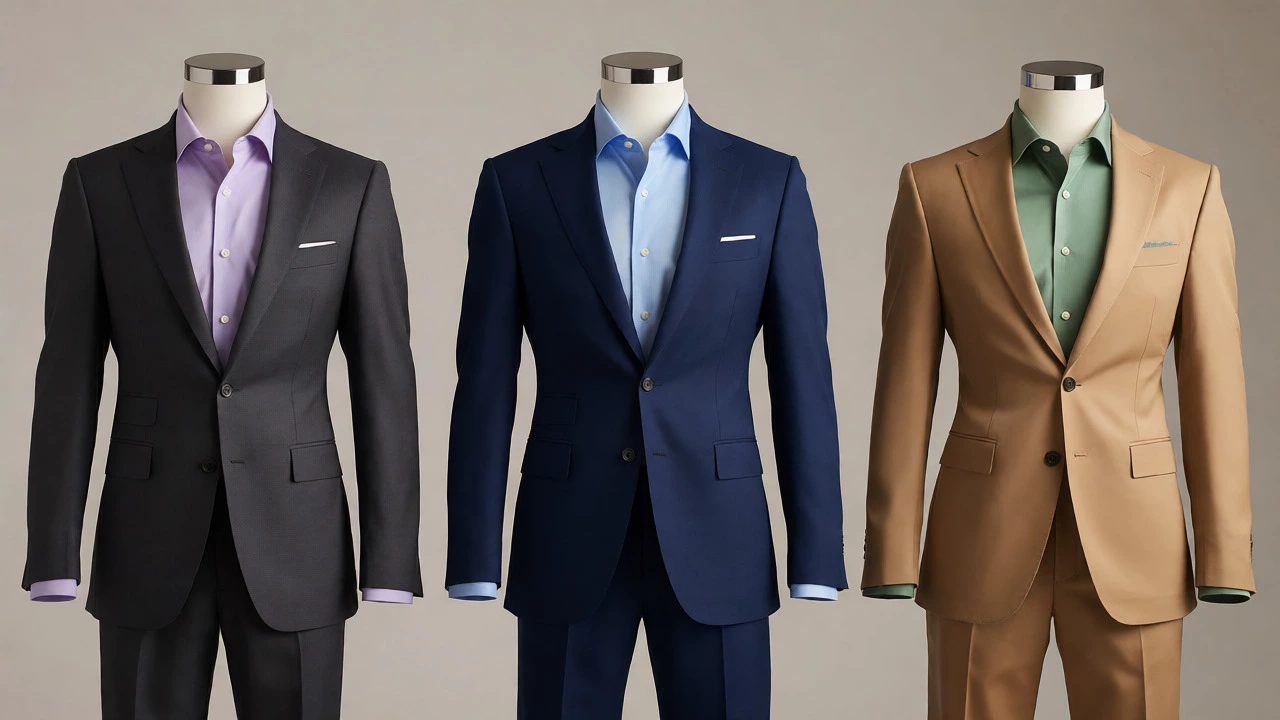
Playing with Pastels and Patterns
Once you master solids, you can introduce personality. Pastels like lavender, mint green, and pale pink are excellent for spring and summer. They show confidence without being loud. But there is a trap here: saturation. A neon pink shirt will scream for attention. A dusty rose or blush pink whispers it. Always aim for muted pastels.
Patterns add another layer. Stripes and checks are great for breaking up monotony. However, follow the scale rule: if your suit has a subtle texture (like a herringbone weave), wear a solid shirt. If your suit is smooth and solid, a fine stripe or small check adds interest. Never mix large patterns. A bold plaid shirt with a pinstripe suit looks like a visual fight club. Pick one statement piece per outfit.
How Skin Tone Changes Everything
This is the part most guides skip. Your complexion dictates which colors flatter you. Think about this: clothes reflect light onto your face. If the shirt reflects an unflattering hue, you’ll look tired or sickly.
- Cool Skin Tones: If your veins look blue and you burn easily, stick to cool whites, icy blues, and jewel tones. Avoid orange-based yellows or creams, which can make you look jaundiced.
- Warm Skin Tones: If your veins look green and you tan easily, opt for off-whites, creams, peach, and warm blues. Stark optic white might wash you out; try ivory instead.
- Neutral Skin Tones: You hit the jackpot. Most colors work. Experiment freely with both cool and warm palettes.
I’ve seen guys with warm undertones wear stark white and look incredible, while others look ghostly. Test it in natural daylight. Stand by a window. If the shirt makes your eyes sparkle, keep it. If it makes your skin look grayish, ditch it.

Context Matters: Where Are You Going?
Finally, consider the venue. A wedding guest dress code differs vastly from a tech startup meeting. For traditional weddings, white or light blue is respectful. For destination weddings in tropical locations, linen shirts in sage or coral are acceptable and stylish. In conservative finance or law firms, stick to white and light blue. Creative agencies allow for bolder choices like burgundy or deep purple shirts, provided the suit remains neutral.
Don’t forget ties. If you wear a patterned shirt, go with a solid tie. If you wear a solid shirt, you can play with patterned ties. The goal is harmony, not chaos. If you aren’t sure, keep it simple. A solid shirt with a textured tie is always a win.
Frequently Asked Questions
Is a black shirt appropriate with a grey suit?
Generally, no. A black shirt with a grey suit creates a stark, sometimes severe contrast that can look dated or overly casual depending on the fabric. It works better with black suits for evening wear. For day-to-day business, stick to lighter shirts with grey suits.
Can I wear a brown shirt with a navy suit?
Yes, but proceed with caution. Dark browns can look muddy against navy. Lighter, sandy browns or camel tones work better, especially in autumn. Ensure the fabrics complement each other-avoid shiny satin browns with matte wool navies.
What shirt color goes with a green suit?
For olive or forest green suits, white and light blue are safe bets. Cream or ivory also looks sophisticated. Avoid red shirts, as they can clash aggressively. Patterned shirts with subtle earth tones can also work well for a festive look.
Does shirt collar style matter for color choice?
Not really for color, but yes for formality. A spread collar looks best with white or light blue for a clean, professional look. Button-down collars are more casual and can handle bolder colors or patterns without looking overdressed.
Should my shirt match my pants if I'm wearing a blazer?
No. In fact, matching them can look like a uniform. Contrast is key. If your blazer is navy and your trousers are grey, your shirt should bridge the gap-white or light blue works perfectly. Don't try to match the shirt to the trousers specifically.