Shoe Leather Cost Calculator
In economics, "shoe leather costs" represent the resources wasted when inflation persuades people to hold less cash. Use this tool to estimate the financial value of the time you spend running to banks or ATMs to minimize losses.
Your Economic Inefficiency Report
| Total Time Wasted: | 0 hours |
| Trips Per Year: | 0 |
| Equivalent Value: | - |
This represents the "deadweight loss" to you personally. In a high-inflation economy, millions of people making these trips creates significant friction in the broader economy.
Have you ever heard someone complain about "wearing out their shoe leather" or an economist talk about "shoe leather costs" and wondered if they were talking about actual footwear? It’s a confusing phrase because it operates on two completely different levels. In everyday conversation, it’s a colorful idiom about physical effort. In the world of finance and economics, it’s a technical term for the hidden costs of inefficiency. If you’re trying to decode what people mean when they use this expression, you need to look at both the literal history of walking and the abstract mechanics of money.
The beauty of language is that it often borrows from our physical reality to explain complex ideas. "Shoe leather" is a perfect example. It connects the tangible wear-and-tear of your shoes to the intangible friction in economic systems. Whether you are a student studying macroeconomics, a writer looking for vivid imagery, or just curious about why we say certain things, understanding this dual meaning clears up a lot of confusion. Let’s break down exactly where this phrase comes from, how it is used today, and why it matters more than you might think.
The Literal Origin: Walking Until Your Shoes Wear Out
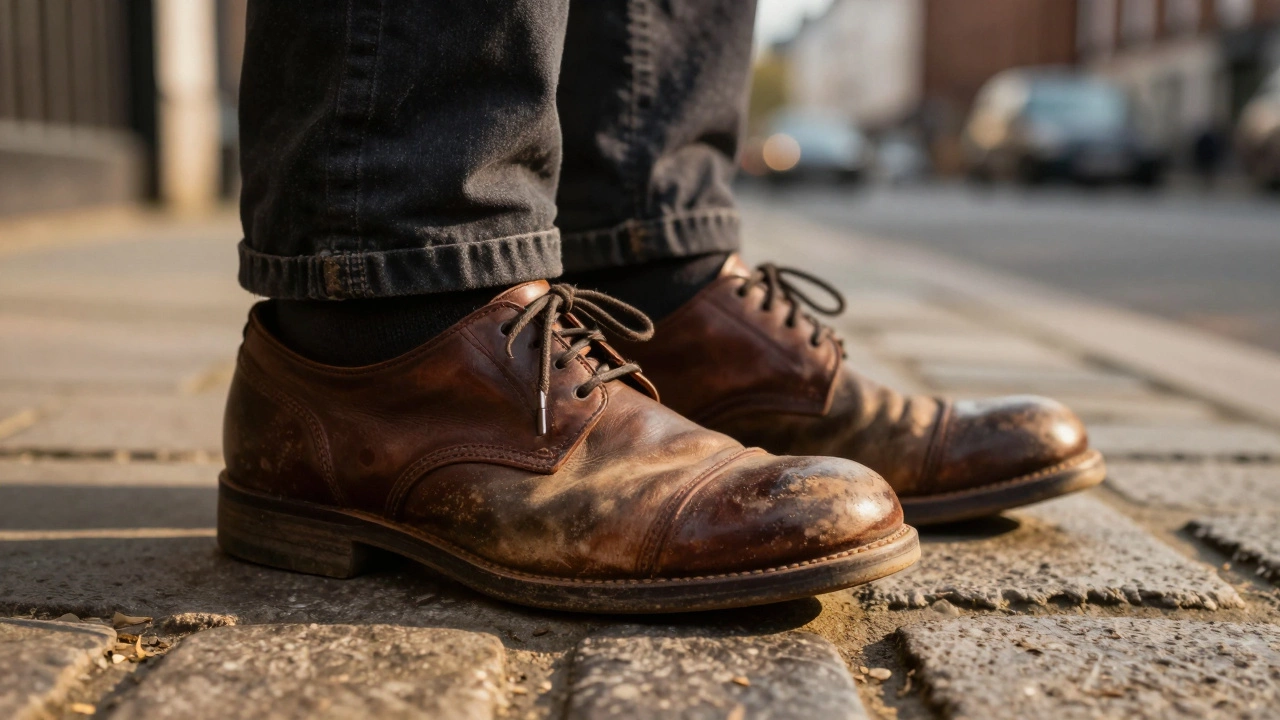
To understand the slang, you have to start with the material itself. Before synthetic rubbers and advanced polymers took over the footwear industry, shoes were made primarily of leather. This material was durable but not indestructible. The soles would thin out, and the heels would flatten based strictly on how much ground you covered. If you walked ten miles a day, your shoe leather wore out faster than if you sat at a desk all day.
This direct correlation between distance traveled and shoe degradation gave birth to the idiom. When someone says they are "burning shoe leather," they aren’t talking about fashion. They are talking about exertion. It implies that a person has put in significant physical effort, usually by traveling extensively or working hard on their feet. Think of a salesperson visiting fifty clients in a single day or a detective chasing leads across a city. They are literally wearing out their shoe leather to get the job done.
The phrase captures the essence of hustle. It suggests that success isn’t just about smart thinking; it’s about the willingness to move, to go places, and to endure the physical toll of labor. In a pre-digital age, information wasn’t instant. You had to physically go to the source. Therefore, "shoe leather" became a metaphor for the raw energy required to gather information or complete tasks manually.
Economic Shoe Leather Costs: The Hidden Price of Inflation
If the slang definition is about physical effort, the economic definition is about wasted time and resources. This is where things get interesting. In economics, shoe leather costs refer to the resources wasted when inflation persuades people to hold less cash. It sounds abstract, but the logic is surprisingly grounded in that same image of walking around.
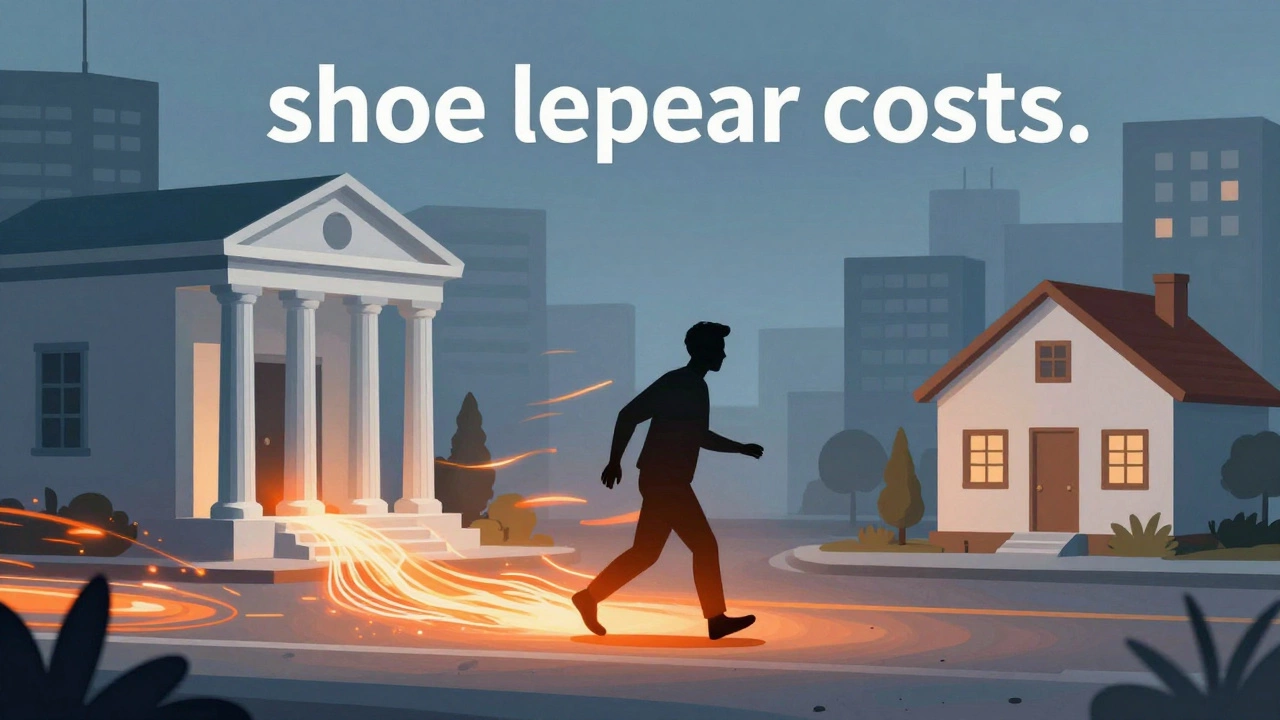
Imagine a scenario where inflation is extremely high. Prices change every hour. If you keep $100 in your wallet, its purchasing power drops significantly by the end of the day. To avoid losing value, you make frequent trips to the bank to withdraw only small amounts of cash as needed. You are constantly moving between your home, your workplace, and the bank. All those extra trips represent time spent, gasoline used, and yes, shoe leather worn out. These are the "shoe leather costs" of inflation.
This concept was popularized by economists like Milton Friedman and later refined by others who studied the micro-foundations of monetary policy. The key insight is that inflation isn’t just a number on a screen; it imposes real behavioral changes on individuals. People alter their habits to minimize losses. They spend more time managing their finances rather than producing value. The economy becomes less efficient because everyone is busy running around trying to stay ahead of rising prices.
In modern terms, while fewer people walk to banks due to ATMs and digital banking, the principle remains. The "cost" is still the friction caused by inefficient monetary conditions. It represents the deadweight loss to society-the total amount of human capital and resources diverted from productive activities to merely cope with economic instability.
Idiomatic Usage in Everyday Conversation
Outside of lecture halls, "shoe leather" lives on in casual speech. You will hear it most often in contexts involving travel, investigation, or manual labor. It carries a tone of respect for hard work, but also sometimes a hint of exhaustion.
- "I’ve worn out my shoe leather looking for that apartment." Here, the speaker emphasizes the extensive search process. They didn’t just click a few websites; they visited dozens of locations, climbed stairs, and waited in lines. The phrase validates their effort.
- "This project requires a lot of shoe leather." A manager might say this to indicate that the task cannot be solved remotely. It needs boots on the ground, face-to-face meetings, and physical presence. It signals that the work is hands-on and potentially grueling.
- "Don’t worry, I’ll burn some shoe leather to fix this." This is a promise of action. The speaker is committing to going above and beyond, implying they will personally visit necessary parties to resolve an issue quickly.
The phrase works well because it is visceral. Everyone knows what it feels like to have tired feet after a long day. By invoking "shoe leather," speakers tap into that shared physical experience to communicate the intensity of their efforts. It is far more evocative than saying "I worked hard" or "I traveled a lot."
Why We Use Metaphors for Abstract Concepts
You might wonder why we stick with such an old-fashioned phrase in a digital world. Why not say "data bandwidth" or "click fatigue"? The reason lies in cognitive psychology. Humans understand physical experiences better than abstract ones. Our brains are wired to process sensory input-sight, sound, touch-more readily than theoretical constructs.
When an economist talks about "shoe leather costs," they are using a concrete image to explain an invisible phenomenon. Inflation is a statistical trend. The pain it causes is felt through behavior. By linking the two via the image of worn-out shoes, the concept becomes relatable. Even if you don’t study economics, you can grasp that running around unnecessarily is wasteful and tiring.
This pattern is common in language. We talk about "breaking the ice," "ballpark figures," and "heavy lifting." These phrases anchor complex social or intellectual dynamics in physical reality. "Shoe leather" persists because it effectively bridges the gap between the physical act of movement and the conceptual idea of effort or cost. It reminds us that even in a digital age, many problems still require physical presence and genuine exertion to solve.
Distinguishing Between Slang and Technical Terms
It is crucial to distinguish between the colloquial use and the academic use to avoid misunderstandings. If a friend says they are burning shoe leather, they are likely bragging about their productivity or complaining about their commute. They are not discussing monetary policy. Conversely, if a financial analyst mentions shoe leather costs, they are analyzing the efficiency losses caused by inflation. They are not talking about their footwear budget.
Mixing these up can lead to awkward moments. Imagine telling your boss that the new software rollout has high "shoe leather costs" because you had to walk to IT support five times. While technically true in a poetic sense, your boss likely expects you to discuss implementation delays or training hours, not the wear on your sneakers. Context is king. Always gauge whether the conversation is about personal effort or systemic economic friction before deploying the phrase.
| Context | Meaning | Key Driver | Example Scenario |
|---|---|---|---|
| Colloquial/Slang | Physical effort, extensive travel, hard work | Personal ambition or necessity | A journalist visiting multiple crime scenes |
| Economic/Technical | Resources wasted due to holding less cash during inflation | Monetary policy and inflation rates | Citizens making frequent bank withdrawals to preserve value |
The Evolution of the Phrase in the Digital Age
As we move further into 2026, the relevance of "shoe leather" is shifting. With remote work becoming standard and digital payments ubiquitous, the literal act of walking to perform economic transactions has decreased. Fewer people carry large amounts of cash. Fewer businesses require daily physical site visits. So, is the phrase dying?
Not necessarily. Instead, it is evolving. In tech circles, "shoe leather" is sometimes used ironically to describe legacy processes that still require human intervention. "We automated everything except the vendor approval, which still requires shoe leather," might mean one person has to physically sign a paper document. It highlights the friction points in otherwise streamlined digital workflows.
Furthermore, the economic concept remains vital. As central banks navigate post-pandemic inflation trends, the discussion around opportunity costs and resource allocation continues. The term "shoe leather costs" serves as a reminder that monetary decisions have real-world consequences on individual behavior. Even if we swipe cards instead of carrying cash, the time and mental energy spent optimizing our finances in volatile markets constitute a similar type of waste.
Related Idioms and Expressions
Language is rich with metaphors for effort and cost. Understanding "shoe leather" opens the door to related expressions that convey similar themes. For instance, "boots on the ground" is a military term now used in business to denote physical presence. "Elbow grease" refers to physical effort in cleaning or mechanical work. "Sweat equity" describes the value added to an asset through personal labor rather than financial investment.
These phrases share a common thread: they value tangible, physical contribution. In an era of virtual interactions, there is a renewed appreciation for the irreplaceable nature of physical presence. "Shoe leather" fits neatly into this family of idioms, celebrating the grit and determination required to achieve results through direct action.
Is "shoe leather" considered rude or offensive?
No, "shoe leather" is not offensive. It is a neutral to positive idiom that acknowledges hard work and effort. However, using it incorrectly in a formal economic context might seem unprofessional if you confuse the slang with the technical term.
Who coined the term "shoe leather costs" in economics?
The concept is often attributed to Milton Friedman, who discussed the costs of inflation in his 1969 essay "The Optimal Quantity of Money." He described the inconvenience of holding less cash as a cost analogous to wearing out shoe leather. Later economists formalized the term.
Can I use "shoe leather" in professional writing?
Yes, but with caution. In creative writing or journalism, it adds color and clarity. In strict academic or legal documents, it may be too informal unless you are specifically discussing the economic concept of inflation costs. Always consider your audience.
Does "shoe leather" apply to driving or flying?
In slang, yes. If you drive hundreds of miles for a sale, you are "burning shoe leather" metaphorically. In economics, no. The term specifically relates to the friction of transaction costs, originally modeled on walking to banks, though the principle applies to any wasted effort.
Are there other economic terms derived from clothing?
Yes. "Pantsing" is not an economic term, but "suitcase diplomacy" refers to negotiations conducted while traveling. More directly, "collateral damage" is military, but in finance, terms like "long shorts" (from stock trading) relate to clothing. However, "shoe leather" is unique in its direct link to physical wear-and-tear representing economic inefficiency.