Find Your Perfect Relaxing Toy
What are you looking for?
Based on the article's science of play.
Top Pick:
Primary Benefit:
Why it works for you:
Alternative Option:
Picture this: it’s 6 PM. The day is done, but your brain is still racing. Or maybe you’re looking at a toddler who just had a meltdown because their socks felt "wrong." In both cases, the answer isn’t always a nap or a screen. Sometimes, the most effective tool for lowering cortisol levels is a simple object in your hands. But what is the most relaxing toy? It turns out, there isn’t one single winner. The best choice depends entirely on whether you need to ground yourself, soothe a nervous system, or simply kill time without scrolling through social media.
The Science Behind Play and Stress Relief
We often think of toys as things for children, but the mechanics of play are universal. When you engage with a tactile object-something you can squeeze, spin, or mold-you activate the parasympathetic nervous system. This is the body's "rest and digest" mode. For adults, this might look like kneading stress putty. For a child, it might be stacking wooden blocks. Both actions require focus, which interrupts the loop of anxious thoughts.
Research in occupational therapy suggests that repetitive, rhythmic movements help regulate sensory input. If your brain feels overwhelmed by noise or chaos, a predictable physical action provides a safe anchor. That’s why the "most relaxing toy" is rarely an electronic gadget with flashing lights. Instead, it’s usually something analog, tactile, and open-ended.
Top Contenders for Adult Relaxation
If you are an adult seeking calm, your needs differ from a child’s. You likely want discretion, durability, and a mechanism that engages your fine motor skills without demanding complex strategy. Here are the top categories that consistently rank highest for stress reduction.
| Toy Type | Primary Benefit | Best For | Noise Level |
|---|---|---|---|
| Kinetic Sand | Tactile grounding | Deep pressure seekers | Silent |
| Fidget Cubes | Fine motor distraction | Office workers, students | Low (clicks) |
| Magnetic Putty | Visual and tactile flow | Anxiety management | Silent |
| Infinity Putter | Rhythmic motion | Focus and meditation | Very Low |
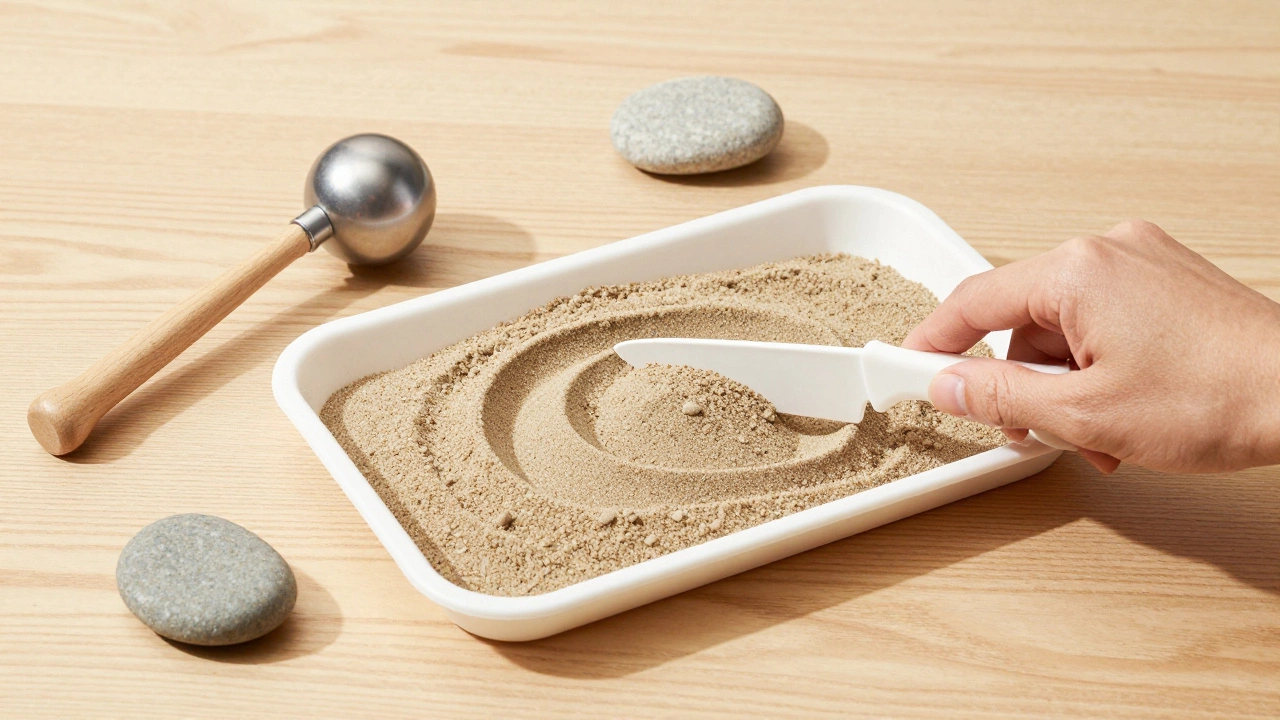
Kinetic Sand is a mixture of sand and polydimethylsiloxane that sticks to itself but not to skin. It offers deep pressure stimulation, which many find incredibly soothing. Unlike regular sand, it doesn’t make a mess. You can crush it, slice it, and let it slowly reform. This slow-motion destruction is cathartic. Many adults keep a small tray of kinetic sand on their desks to squeeze during stressful calls.
Magnetic Putty is a non-Newtonian fluid infused with magnetic particles. When you place a strong magnet near it, the putty slowly stretches and flows toward the metal. Watching this silent, mesmerizing movement can induce a state of flow similar to meditation. It requires zero effort from you, making it perfect when you are too tired to even fidget actively.
The Best Relaxing Toys for Children
For kids, relaxation often means regulation. A child who is overstimulated needs a way to discharge energy or ground themselves. The "most relaxing toy" for a child is one that matches their developmental stage and sensory preferences.
Weighted Blankets are bedding items filled with glass beads or plastic pellets to provide deep pressure therapy. While technically bedding, they function as a passive toy or comfort object. Studies suggest that weighted blankets can reduce anxiety in children with ADHD or autism by providing consistent proprioceptive input. However, weight matters. A general rule is that the blanket should be about 10% of the child’s body weight plus one pound.
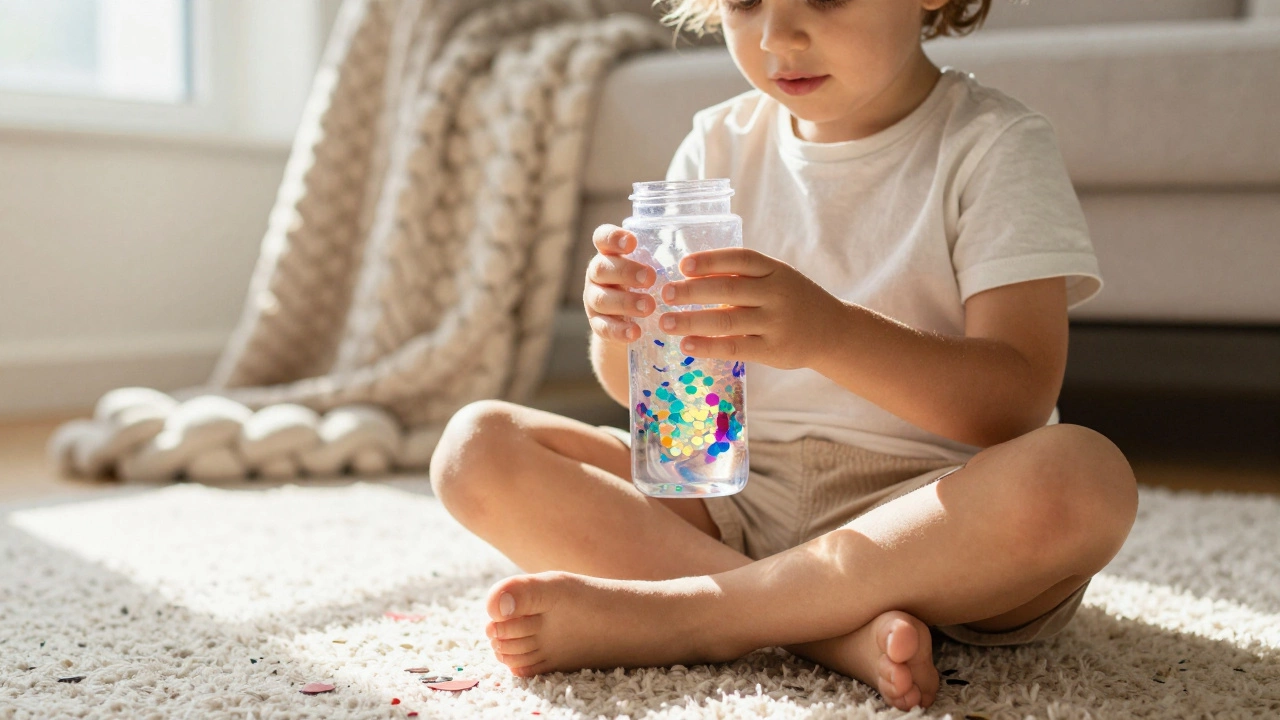
For younger toddlers, Sensory Bottles are sealed containers filled with water, glitter, oil, or confetti. These are cheap, durable, and highly effective. When a child shakes the bottle, they watch the glitter swirl and settle. This visual tracking helps calm their gaze and slows their breathing. You can make these at home using clear plastic bottles, glue, and food coloring. They are particularly useful during tantrums because they offer a safe outlet for agitation without breaking anything.
Older children often benefit from Building Blocks, such as LEGO or wooden bricks. Construction play requires planning, patience, and fine motor control. The act of snapping pieces together releases dopamine. Moreover, building gives a sense of accomplishment. If a child is feeling chaotic inside, creating order outside helps restore internal balance.
Fidget Tools: Distraction or Regulation?
You’ve seen them everywhere: pens with spinning tops, rings with rolling balls, cubes with switches. These are marketed as productivity tools, but do they actually relax you? It depends on how you use them.
Fidget Spinners are hand-held devices with a bearing in the center that allows the outer section to rotate. They peaked in popularity around 2017. While they provide vestibular stimulation, many users find them distracting rather than calming because the motion stops quickly. They require constant re-spinning, which can increase frustration if you are trying to focus.
In contrast, Infinity Putters are circular tracks with steel balls that roll endlessly due to gravity and magnets. Once you start the ball, it keeps going for minutes. This continuous, smooth motion is less intrusive than a spinner. It allows you to maintain eye contact during conversations while keeping your hand busy. For people with ADHD, this subtle movement can actually improve listening skills by occupying the part of the brain that wants to fidget.
Why Open-Ended Play Wins
The most relaxing toys share a common trait: they have no right or wrong way to use them. Electronic toys dictate the experience. You press a button, and a light flashes. There is no room for interpretation. This can feel controlling, especially when you are already stressed.
Open-ended toys, like clay, water beads, or rope puzzles, invite creativity. When you manipulate clay, you decide its shape. When you solve a puzzle, you set the pace. This autonomy is key to relaxation. You are in control. This sense of agency lowers stress hormones more effectively than passive entertainment like watching TV.
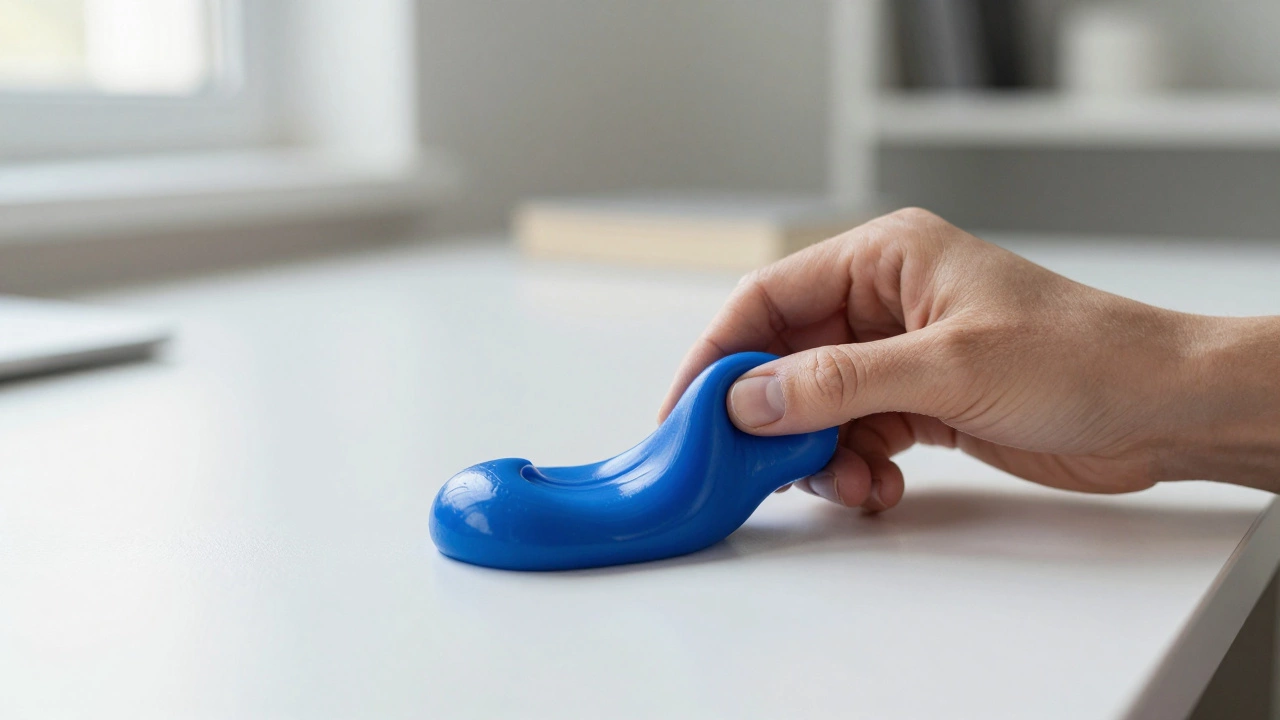
Consider Therapy Putty, which comes in various resistances. Soft putty is easy to stretch, while firm putty requires strength to compress. Choosing the right resistance allows you to tailor the sensory input to your mood. On a high-anxiety day, you might prefer firm putty to release tension. On a low-energy day, soft putty might be more comforting.
Choosing the Right Toy for Your Needs
Not every relaxing toy works for everyone. Sensory preferences vary widely. Some people hate the feeling of sticky substances on their hands. Others find clicking sounds irritating. To find your perfect match, ask yourself three questions:
- Do I need active or passive engagement? If you have energy to burn, choose a fidget cube or stress ball. If you are exhausted, choose a kinetic sand tray or a lava lamp.
- Am I sensitive to sound? If you work in a quiet office, avoid clicky fidgets. Opt for silent options like rubber bands or smooth stones.
- Do I need portability? If you travel often, a small infinity putter or a pocket-sized worry stone is ideal. Large sensory bins stay at home.
It’s also worth considering hygiene. Toys that go into mouths or touch dirty hands need to be washable. Silicone-based fidgets are easy to clean with soap and water. Porous materials like some clays can harbor bacteria if not stored properly.
Making Relaxation a Habit
Owning a relaxing toy is only half the battle. You need to integrate it into your routine. Keep a fidget tool in your bag, on your desk, or next to your bed. Use it intentionally. When you feel your heart rate rising, reach for the toy instead of your phone. Train your brain to associate the object with calm.
For parents, model this behavior. Let your children see you using a stress ball or playing with putty when you are frustrated. This teaches them that it’s okay to take breaks and that tools exist to help manage emotions. It normalizes self-regulation.
Remember, the goal isn’t to eliminate stress entirely. It’s to build resilience. A simple toy can be a powerful anchor in a chaotic world. Whether it’s the squish of putty, the slide of a marble, or the weight of a block, finding what works for you is a personal journey. Experiment, observe, and adjust. Your nervous system will thank you.
Is there a single best relaxing toy for everyone?
No, because sensory preferences vary greatly. What calms one person might irritate another. For example, some people find the texture of slime soothing, while others find it disgusting. It’s best to try different types, such as tactile, visual, or auditory tools, to see what resonates with your nervous system.
Are fidget toys effective for adults with anxiety?
Yes, many adults find fidget tools helpful for managing anxiety. They provide a physical outlet for nervous energy, which can prevent rumination. Studies suggest that repetitive motions can lower heart rate and improve focus. However, they work best when used mindfully, not as a distraction from necessary tasks.
What is the safest relaxing toy for toddlers?
Sensory bottles are among the safest options for toddlers because they are sealed and contain no small parts. Soft fabric books and large wooden blocks are also excellent choices. Avoid toys with small detachable pieces, long strings, or toxic materials. Always check for age recommendations and safety certifications.
Can playing with toys replace professional therapy?
No, toys are not a substitute for professional mental health care. They are complementary tools that can help manage mild stress or anxiety. If you or your child are experiencing severe emotional distress, please consult a licensed therapist or psychologist. Toys can support coping strategies but cannot treat underlying conditions.
How do I know if a toy is too stimulating?
If a toy causes you to feel more agitated, distracted, or overwhelmed, it is likely too stimulating. Signs include increased heart rate, inability to focus, or irritability after use. Switch to a quieter, simpler toy with fewer sensory inputs. For example, trade a loud, flashing electronic toy for a silent, textured stress ball.