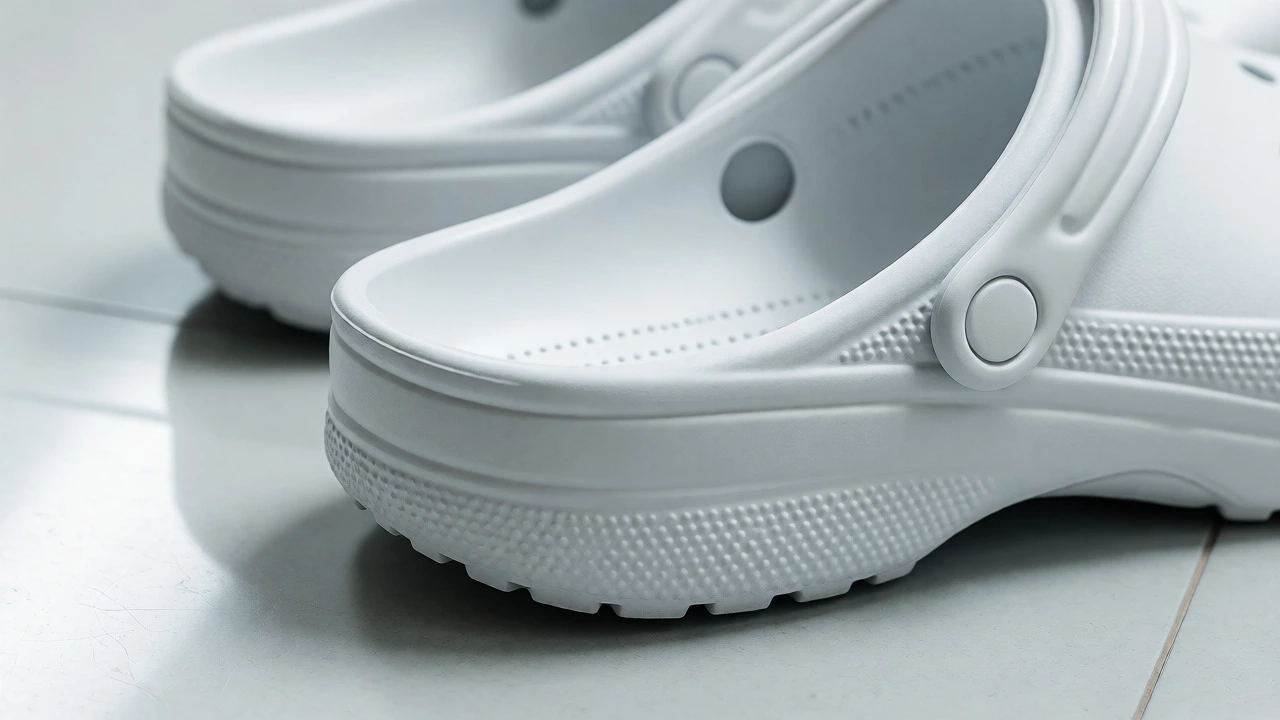
Crocs Foot Health Compatibility Checker
Select your primary foot condition or intended activity below to see if Crocs are recommended by podiatrists.
You’re standing in line at the grocery store or finishing a twelve-hour shift, and your feet feel like they’re on fire. You slip off your stiff dress shoes and slide into those chunky, rubbery Crocs that everyone seems to be wearing these days. Suddenly, there’s relief. But is that relief real, or just a placebo effect from giving up on style? The short answer is complicated: Crocs can be surprisingly good for specific foot conditions, but terrible if you wear them incorrectly or for the wrong activities.
Most people think of Crocs as either a fashion faux pas or a lazy choice. But podiatrists have studied the brand’s proprietary material, Croslite™, extensively. It’s not just foam; it’s a closed-cell resin that molds to your foot shape using body heat. This creates a custom fit that standard sneakers often lack. However, the very design that makes them comfortable also introduces risks like tendon strain if you aren’t careful. Let’s break down exactly when these clogs help your feet and when they hurt them.
The Science Behind Croslite Material
To understand why Crocs feel different, you have to look at what they are made of. Unlike traditional EVA foam used in many cheap sandals, Croslite is an antimicrobial, non-marking resin. According to data from the American Podiatric Medical Association (APMA), materials that provide cushioning without excessive compression are key for reducing impact stress. Croslite resists odor and bacteria, which is crucial if you sweat heavily or wear the shoes without socks.
The material’s density allows it to distribute weight evenly across the sole. This is particularly beneficial for people with flat feet or high arches who struggle with pressure points. When you stand on hard surfaces, the shoe absorbs shock rather than transmitting it directly to your heels and knees. Think of it as having a built-in gel insert that never breaks down, unlike the air bubbles in some running shoes that eventually pop or flatten.
When Crocs Are Actually Great for Foot Health
If you suffer from certain conditions, doctors often recommend Crocs over rigid leather shoes. Here is where they shine:
- Plantar Fasciitis: The deep heel cup in classic Crocs supports the arch, reducing tension on the plantar fascia band. Many users report less morning pain because the shoe maintains arch support even during low-activity periods.
- Bunions and Hammertoes: The wide toe box prevents squeezing. If you have bunions, narrow shoes cause friction and inflammation. Crocs allow toes to splay naturally, relieving pressure on sensitive joints.
- Swelling and Edema: For nurses, chefs, or anyone whose feet swell by midday, the adjustable strap and roomy fit accommodate volume changes. Rigid shoes become painful torture devices; Crocs expand slightly with warmth and don’t constrict.
- Diabetic Foot Care: While not a medical device per se, the seamless interior reduces friction blisters. Diabetics need to avoid any rubbing that could lead to ulcers. The soft lining of Crocs minimizes this risk compared to rough canvas or synthetic linings.
A study published in the Journal of Foot and Ankle Research noted that footwear with adequate cushioning and a rocker bottom profile can reduce peak plantar pressure. Classic Crocs possess a mild rocker effect, encouraging a smoother gait cycle. This means less force on the forefoot when you push off to take a step.
The Hidden Dangers: Why Doctors Sometimes Hate Them
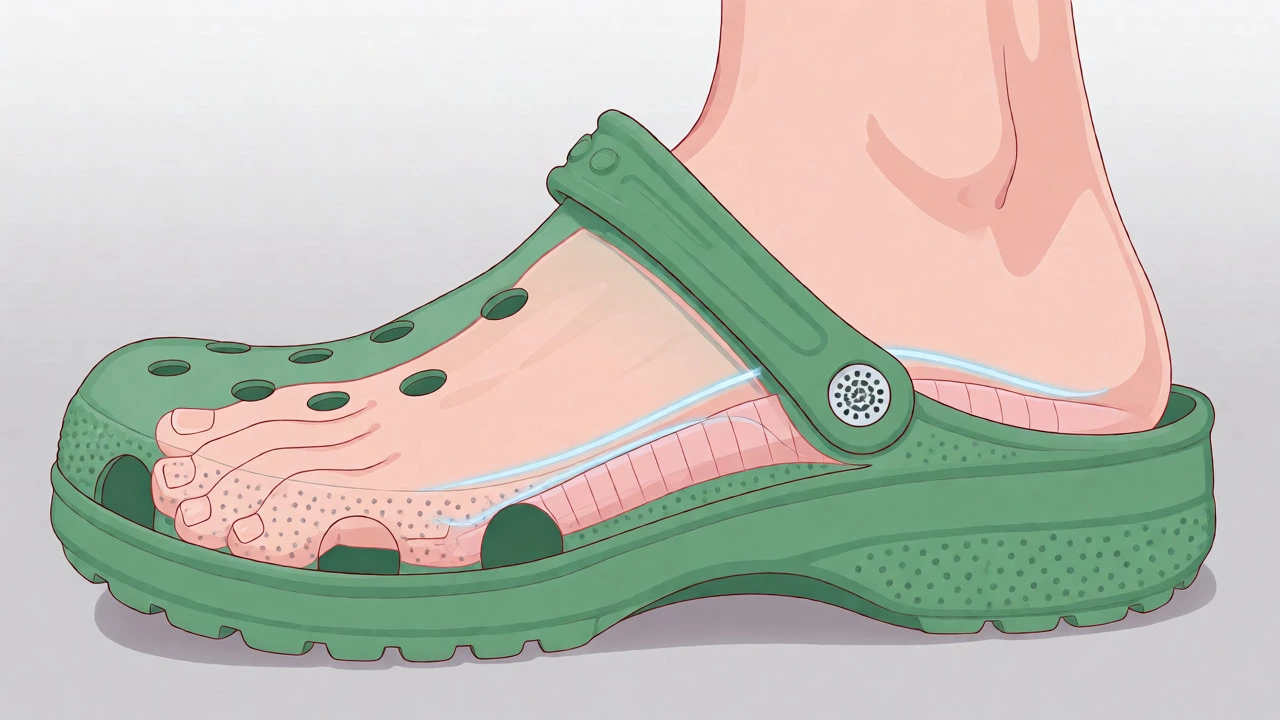
It isn’t all sunshine and arch support. The biggest complaint from biomechanics experts is the lack of secure fixation. A loose shoe forces your toes to grip the sole to keep the shoe on while walking. This constant clenching can lead to tendonitis, specifically in the flexor tendons of the toes. Over time, this gripping habit alters your natural gait, potentially causing knee and hip misalignment.
Furthermore, Crocs offer minimal lateral stability. If you walk on uneven terrain-like gravel paths, hiking trails, or slippery restaurant floors-the shoe can roll sideways easily. Ankle sprains are more likely in unsupportive footwear. The APMA has accepted some Crocs models for their comfort, but they explicitly warn against using them for vigorous exercise. Running in Crocs is a recipe for disaster because the material compresses too much under high impact, offering no rebound energy.
| Feature | Crocs Classic Clog | Leather Work Shoe | Running Sneaker |
|---|---|---|---|
| Arch Support | Moderate (Built-in) | Low to Moderate (Insert dependent) | High (Engineered) |
| Toe Box Width | Very Wide | Narrow to Medium | Medium |
| Stability | Low | High | High |
| Best Use Case | Standing, Casual Wear | Office, Light Labor | Running, Gym |
| Risk Factor | Tendon Strain | Friction/Blisters | Overuse Injuries |
How to Wear Crocs Without Hurting Yourself
You can mitigate the downsides if you change how you wear them. First, always use the heel strap when walking long distances. Wearing them "backless" might feel free, but it turns every step into a toe-gripping workout. The strap locks your heel in place, allowing your foot to move naturally without compensating for slippage.
Second, consider adding an orthotic insert. While the stock insole provides basic cushioning, it lacks the structural rigidity needed for prolonged standing. A firm arch support insert transforms a casual clog into a semi-orthopedic shoe. Look for inserts designed for wide toe boxes to ensure they fit without cramping your toes.
Third, limit your mileage. Crocs are excellent for errands, gardening, or standing still at work. They are poor choices for walking five miles through a theme park. Listen to your body. If you feel a twinge in your shins or the tops of your feet after an hour, switch to a more supportive sneaker. Variety is key. Rotating between Crocs, supportive sneakers, and sturdy boots gives different muscle groups a rest.
Specific Models That Matter
Not all Crocs are created equal. The brand has expanded its lineup, and some models are better for foot health than others.
- Classic Clog: The original. Best for general comfort and water resistance. Good for nurses and service workers.
- Lined Clogs: Feature fleece interiors. Excellent for cold weather but can trap moisture, leading to fungal issues if worn wet. Dry them thoroughly.
- Pollex Lite: Features a mesh upper for breathability. Better for hot climates where sweating is a concern. The ventilation helps prevent athlete’s foot.
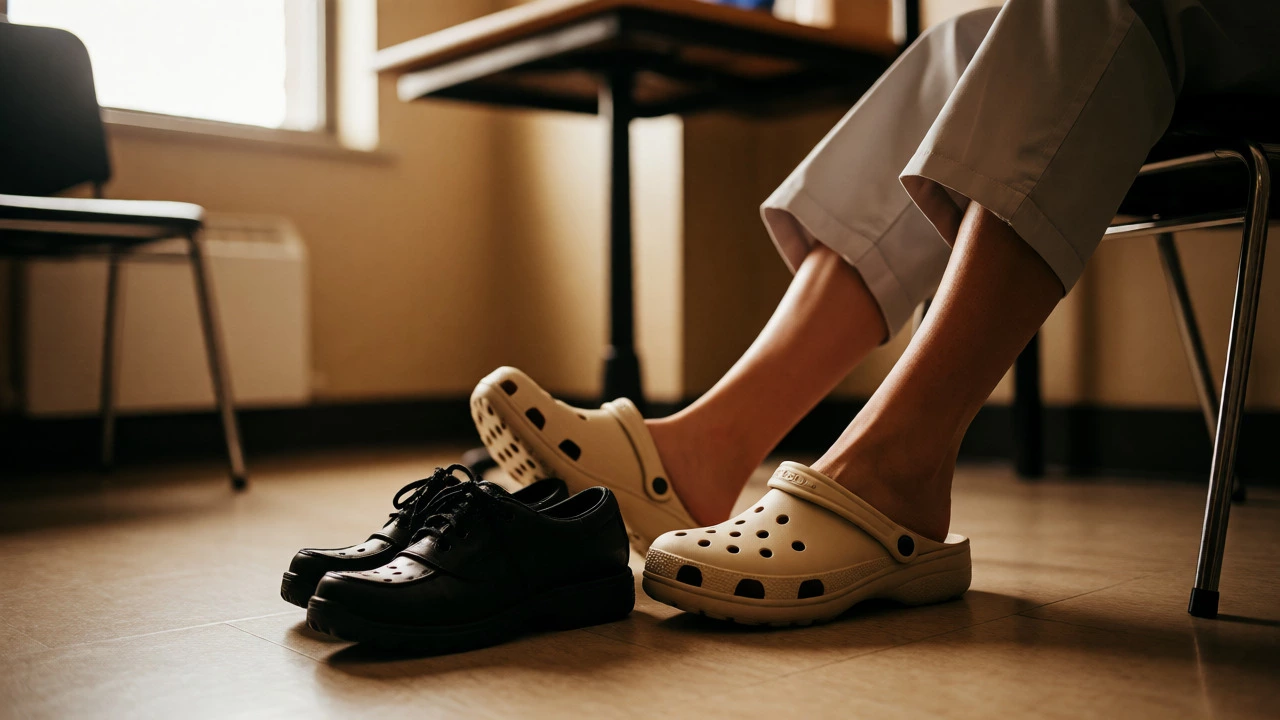
- On-the-Clock Pro: Designed specifically for healthcare workers. Includes slip-resistant soles and a more enclosed design for safety. This model addresses the stability issue somewhat by covering more of the foot.
Choosing the right model depends on your environment. If you work in a hospital, the On-the-Clock series is superior due to safety standards. If you are gardening, the Classic Clog is ideal because mud washes right off. Never wear lined Crocs in rain unless you plan to dry them immediately, as damp fleece breeds bacteria quickly.
Verdict: Should You Buy Them?
If you have bunions, wide feet, or plantar fasciitis, Crocs are likely a net positive for your daily life. They reduce pain and improve circulation by avoiding constriction. However, if you have normal feet and want a shoe for active movement, stick to athletic shoes with structured support. Crocs are a tool, not a universal solution. Use them strategically: wear them when resting or standing still, and switch to stable footwear when moving fast or navigating uneven ground. Your feet will thank you for the variety.
Can wearing Crocs cause flat feet?
No, Crocs do not cause flat feet. Flat feet are largely genetic or caused by other factors like injury or aging. However, wearing unsupportive shoes for extended periods can worsen symptoms associated with flat feet, such as fatigue and pain, because the arch muscles have to work harder to stabilize the foot.
Are Crocs good for plantar fasciitis?
Yes, many podiatrists recommend Crocs for plantar fasciitis relief. The thick cushioning absorbs shock, and the built-in arch support reduces strain on the plantar fascia ligament. Adding a custom orthotic inside the Croc can enhance this benefit significantly.
Do I need to wear socks with Crocs?
It is highly recommended. While Croslite is antimicrobial, sweat still accumulates. Socks absorb moisture, preventing blisters and reducing the risk of fungal infections like athlete's foot. No-show socks are a popular choice to maintain the aesthetic while gaining protection.
Can I run in Crocs?
You should avoid running in Crocs. They lack the necessary stability and energy return for high-impact activities. The loose fit increases the risk of tripping or ankle rolls, and the soft sole does not protect against sharp objects or uneven pavement effectively enough for jogging.
How long do Crocs last?
With regular use, Crocs typically last 1-2 years. The Croslite material compresses over time, losing its cushioning properties. If you notice the shoe feeling flatter or less responsive, it is time to replace them to maintain proper foot support.