School Uniform Cost Estimator
Enter your details below to estimate your annual spending on school uniforms compared to a non-uniform policy.
Your Situation
Estimated Results
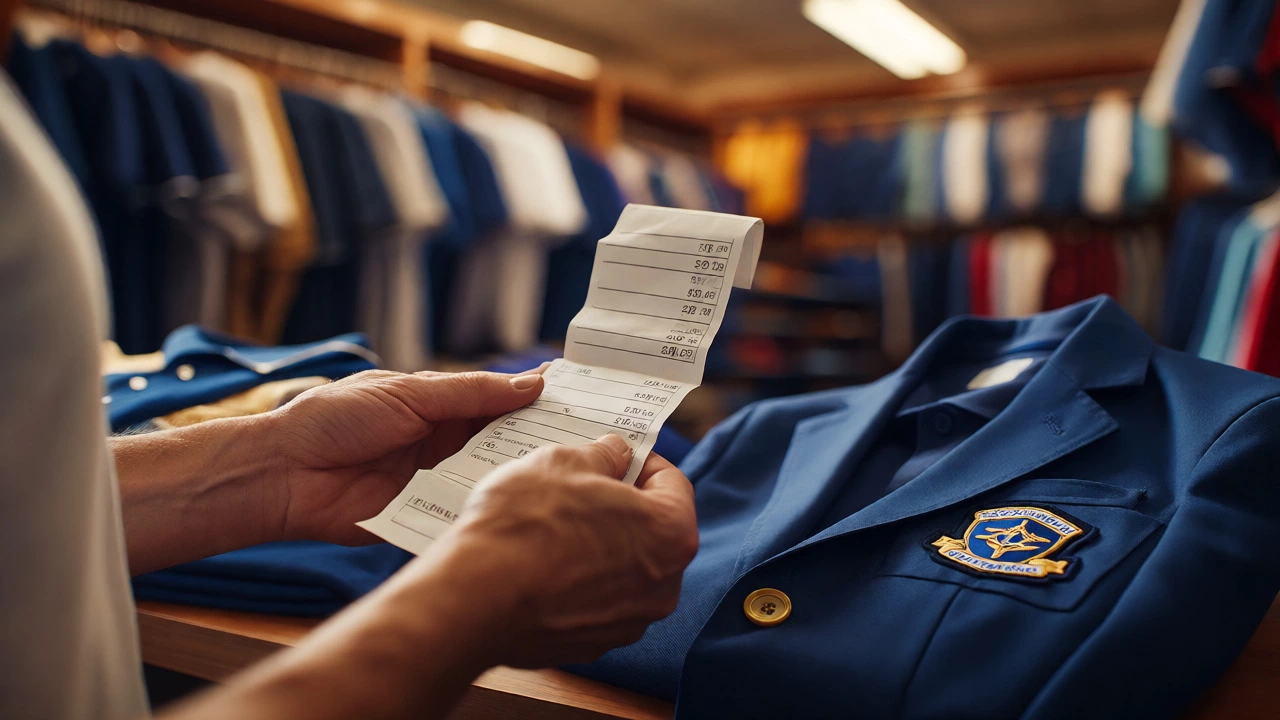
It’s October in Melbourne, and the back-to-school rush is long over, but the receipts are still burning holes in parents' pockets. You might be looking at a pile of blazers, pleated skirts, and branded polo shirts wondering: are school uniforms expensive? It feels like they are, especially when you see a single blazer costing more than your weekly grocery run. But the answer isn't a simple yes or no. It depends entirely on how you look at the numbers, where you shop, and what your child actually needs versus what the school suggests.
The sticker shock is real. When you walk into an authorized uniform supplier, the prices can seem inflated compared to buying regular clothes from a department store. A standard blazer might hit $150-$200 AUD, while a pair of tailored trousers sits around $60-$80. Multiply that by two or three sets, add shoes, socks, and sports kits, and you’re looking at a significant upfront investment. However, comparing this to non-uniform clothing requires a different lens. Regular clothes wear out faster because kids play harder in them, and you end up replacing items multiple times a year. With uniforms, you buy less frequently, but each item costs more. Is it worth it? Let’s break down the actual economics of dressing your kid for school without breaking the bank.
The Hidden Costs Behind the Price Tag
Why does a plain navy blazer cost double what a similar one costs at a discount retailer? It comes down to supply chain and exclusivity. Most schools contract with specific suppliers who hold the rights to produce the logoed gear. This monopoly limits competition, keeping prices steady rather than letting them drop during sales seasons. Furthermore, these suppliers often operate on lower volume orders compared to mass-market brands, which drives up unit costs.
There’s also the durability factor. Uniform fabrics are designed to withstand industrial washing and rough playground use. They aren’t just aesthetic; they are functional armor against grass stains, ink spills, and the general chaos of childhood. While a fast-fashion shirt might lose its shape after ten washes, a quality uniform shirt should last through the entire academic year, if not longer. If you calculate the cost-per-wear, the high upfront price often balances out. For example, a $40 uniform shirt worn 180 days a year costs about 22 cents per day. A $15 casual shirt worn twice a week costs significantly more per wear due to higher replacement frequency.
Breaking Down the Average Australian Uniform Bill
To understand if uniforms are expensive, we need concrete numbers. In Australia, public school uniform costs vary wildly depending on the state and the specific institution. According to recent data from consumer advocacy groups, the average annual cost for a primary school student’s uniform ranges from $300 to $500 AUD. For high school students, this jumps to $600-$900 AUD, largely due to mandatory blazers, ties, and formal shoes.
But here is the catch: those figures assume you buy everything new every year. Most savvy parents don’t do that. They buy the core items-blazer, formal shoes, PE kit-and then source the rest second-hand or from generic retailers. If you stick strictly to the official supplier for every single item, including socks and underwear, you will pay a premium. However, many schools allow "generic" items, such as white polo shirts or black track pants, as long as they match the color scheme. Buying these from major retailers like Kmart or Big W can cut your bill in half.
| Item Category | Official Supplier Price | Generic/Retailer Price | Second-Hand Price |
|---|---|---|---|
| Blazer/Suit Jacket | $150 - $220 | N/A (Logo required) | $50 - $80 |
| Polo Shirts (Pack of 3) | $60 - $90 | $25 - $40 | $10 - $20 |
| Trousers/Skirt | $70 - $100 | $30 - $50 | $15 - $25 |
| PE Kit | $80 - $120 | $40 - $60 | $20 - $40 |
| Total Estimated Spend | $500 - $800+ | $250 - $400 | $150 - $250 |
Public vs. Private: Who Pays More?
The debate over uniform costs often ignores the bigger picture: total education costs. Private schools generally have stricter dress codes and more expensive uniforms. They require branded blazers, specific ties, and sometimes even hats and scarves. A private school uniform package can easily exceed $1,000 AUD for a starting student. But remember, private school fees themselves are substantial, often ranging from $10,000 to $30,000+ per year. In this context, the uniform is a small percentage of the total financial burden.
Public schools, on the other hand, aim for equity. Many have moved toward "loose" uniform policies where only key items are branded. This reduces pressure on families to buy expensive, specialized gear. Some councils and state governments offer subsidies for low-income families, covering up to 100% of uniform costs. If you qualify, the question of whether uniforms are expensive becomes moot-they are effectively free. Always check your local state’s education department website for current subsidy thresholds. In Victoria, for instance, eligible students receive a voucher that covers most essential uniform items.
Strategies to Slash Your Uniform Bill
You don’t have to accept the high price tag. There are proven ways to reduce spending without violating school rules. First, embrace the second-hand market. School-run op-shops and online community groups are goldmines. Kids grow fast, and many uniforms are barely worn before being outgrown. Buying a gently used blazer for $40 instead of $180 saves you enough for several months of lunch money. Just ensure you check for repairs needed on zippers or buttons.
Second, buy off-season. Suppliers often clear stock in January or February, right after the new school year starts. Prices drop by 30-50%. Stock up on basics like white polos and grey trousers then. Third, negotiate the "must-haves." Ask the school explicitly which items must carry the logo and which can be generic. Often, parents buy branded versions of items that don’t need branding, simply because they assume they must. Clarifying this with the uniform coordinator can save hundreds.
- Check for bulk discounts: Some suppliers offer deals if you buy a full set at once.
- Label everything: Lost property auctions are common. Labeling ensures you get your own items back rather than rebuying.
- Size up strategically: Buy slightly larger sizes for growing children, especially for jackets and trousers, to extend their usable life.
Do Uniforms Actually Save Money Long-Term?
This is the million-dollar question. Proponents argue that uniforms eliminate the "clothing arms race," where students compete to wear the latest trends. Without uniforms, parents might spend $1,000+ annually on brand-name sneakers, designer jeans, and trendy tops. With uniforms, that discretionary spending disappears. Studies suggest that families with uniformed children spend roughly 30% less on overall wardrobe maintenance compared to those with non-uniformed children.
However, critics point out that the initial hurdle is steep. For families living paycheck to paycheck, coming up with $500 in February is harder than spreading $50 throughout the year for casual clothes. The psychological barrier of the upfront cost is real. To mitigate this, some schools now offer payment plans, allowing parents to spread the cost over several months. This transforms the expense from a sudden blow into a manageable monthly utility-like bill.
Beyond the Wallet: The Value Proposition
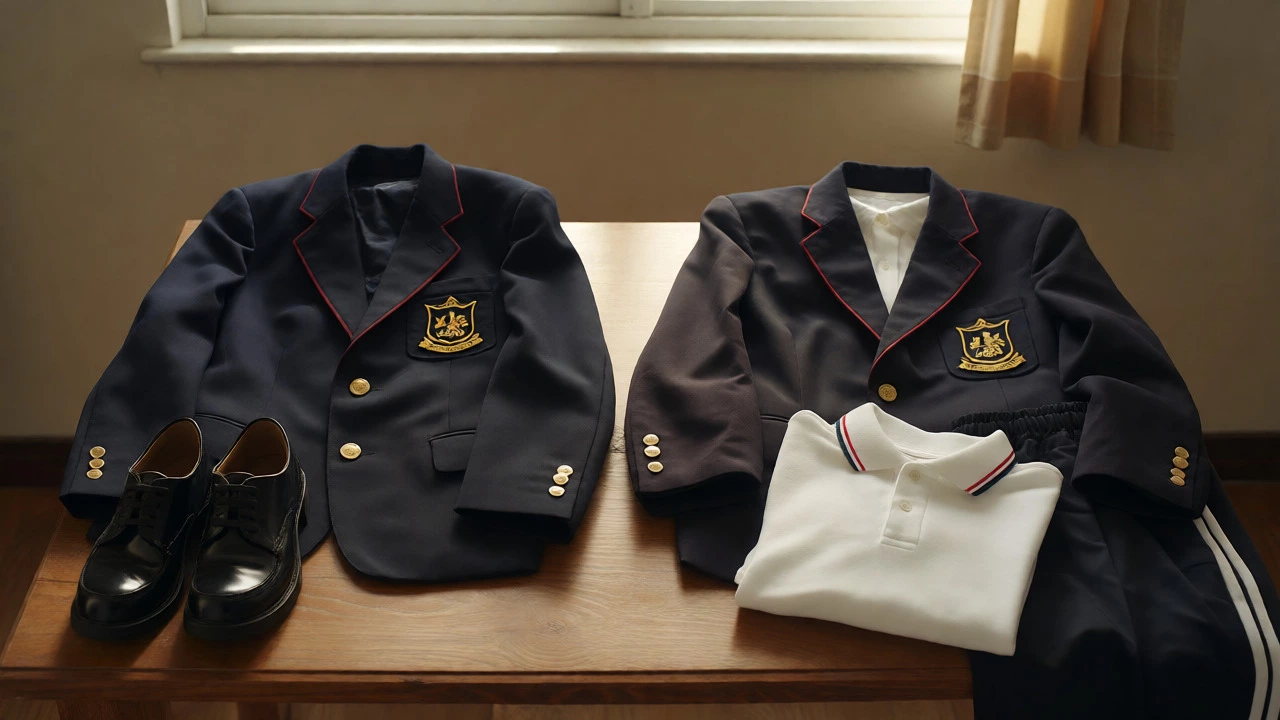
If we look beyond pure dollars, uniforms offer value that doesn’t show up on a receipt. Morning routines become faster. There’s no decision fatigue for the child or parent. "What do I wear today?" is eliminated. This saves time, which translates to sleep or breakfast time. Additionally, uniforms foster a sense of belonging and reduce socioeconomic visible markers. When everyone wears the same thing, the pressure to conform to peer fashion standards diminishes.
For parents working irregular hours, the convenience is undeniable. You don’t need to iron complex outfits or worry about matching colors. The simplicity has a tangible benefit: reduced stress. When calculating whether uniforms are expensive, include the "time tax" saved. If you save 15 minutes every morning, that’s nearly four hours a month. For hourly workers, that’s lost income potential; for busy professionals, it’s reclaimed leisure time.
Frequently Asked Questions
Are school uniforms cheaper than normal clothes?
In the short term, no. The upfront cost for uniforms is usually higher because you must buy specific branded items. However, over a year, they can be cheaper because you buy fewer items overall and avoid the constant replacement of trendy, fast-fashion clothing that wears out quickly. The savings depend on how much you would otherwise spend on casual wear.
Can I buy uniform items from any store?
It depends on the school's policy. Most schools require specific items like blazers, ties, and caps to be purchased from authorized suppliers to ensure the correct logo and color. Other items, such as white polo shirts, black trousers, or grey skirts, can often be bought from generic retailers like Kmart, Big W, or Uniqqlo, provided they match the required color and style guidelines.
How much do school uniforms cost in Australia?
Costs vary by state and school type. On average, public school uniforms cost between $300 and $500 AUD per year for primary students and $600 to $900 AUD for high school students. Private school uniforms can cost $1,000 AUD or more due to stricter branding requirements. Subsidies are available for eligible families in most states.
Is it worth buying second-hand school uniforms?
Yes, absolutely. Second-hand uniforms are often in excellent condition because children grow out of them quickly. Buying used can save you 50% to 70% compared to new retail prices. Check school-run op-shops, local Facebook marketplace groups, or dedicated uniform recycling websites. Just inspect for damage like broken zippers or fading logos before purchasing.
Do uniforms help with bullying?
Many educators and parents believe so. By removing visible economic differences in clothing, uniforms can reduce social pressure and teasing related to fashion choices. While bullying exists regardless of attire, uniforms create a baseline of equality that can make the school environment feel more inclusive for students from diverse socioeconomic backgrounds.
Final Thoughts on Managing Uniform Expenses
So, are school uniforms expensive? Yes, if you view them as isolated purchases without considering the broader context of clothing consumption. No, if you leverage second-hand markets, generic alternatives, and government subsidies. The key is strategic shopping. Don’t let the authorized supplier dictate your entire budget. Know your school’s exact rules, hunt for deals off-season, and consider the long-term durability of the fabric. With a little planning, you can navigate the uniform requirement without feeling financially squeezed, ensuring your child looks smart and ready for the classroom without compromising your household budget.