Suit Quality Inspector
Input the specifications of the suit you are inspecting to receive an immediate quality assessment.
Craftsmanship Check
Excellent Quality
This suit demonstrates high-level craftsmanship suitable for long-term investment.
Walking into a menswear store can feel like entering a maze of identical-looking jackets and trousers. One suit might cost $200, while another looks nearly the same but tags for $1,500. The difference isn't just in the brand name; it's in the details you can see and feel right in front of you. Knowing how to spot suit quality saves you from expensive mistakes and ensures your wardrobe holds up over time.
You don't need to be a tailor to assess a garment. You just need to know where to look. From the weight of the fabric to the way the buttons are attached, every element tells a story about the craftsmanship. Here is how to decode those signals so you can buy with confidence.
Quick Summary / Key Takeaways
- Fabric Weight & Fiber: Look for wool blends or pure wool weighing between 230g and 300g. Avoid cheap polyester mixes that trap heat.
- Construction Type: Half-canvas or full-canvas construction offers better drape and longevity than fused (glued) interiors.
- Stitching Details: Check for consistent, straight stitching. Hand-stitched buttonholes and pick stitching on lapels indicate higher quality.
- Hardware: Horn, shell, or high-quality metal buttons outlast plastic ones. Functional vents and pockets add value.
- Fit & Drape: The suit should move with you, not against you. Excess fabric at the elbows or tight pulling across the chest indicates poor pattern grading.
The Fabric: Your First Line of Defense
The foundation of any good suit is the cloth. Before you even look at the cut, run your hand over the material. High-quality suiting fabrics are typically made from wool, often blended with small percentages of silk, cashmere, or linen for specific properties. Wool is the gold standard because it breathes, resists wrinkles, and has natural elasticity.
When inspecting the label, look for the fiber content. Pure wool is ideal, but a blend like 98% wool and 2% elastane can offer stretch without sacrificing durability. Be wary of "poly-wool" blends if you live in a warm climate like Melbourne. Polyester tends to hold onto moisture and odor, making the suit less comfortable during long days.
Weight matters too. Suits are measured in grams per square meter (GSM). For year-round wear, aim for a weight between 240g and 280g. Lighter weights (under 200g) are great for summer but may wrinkle easily, while heavier weights (over 300g) are perfect for winter but can feel stifling in humidity. A simple test: hold a piece of the fabric up to the light. High-quality wool has a tight, consistent weave that doesn't show large gaps or irregularities.
| Fiber Type | Best For | Durability | Breathability | Price Range |
|---|---|---|---|---|
| Pure Wool | All seasons, formal events | High | Excellent | Medium to High |
| Wool-Poly Blend | Travel, budget options | Moderate | Poor | Low to Medium |
| Linen | Summer, casual settings | Low (wrinkles easily) | Superb | Medium |
| Cashmere Blend | Winter, luxury feel | Moderate (prone to pilling) | Good | High |
Construction Methods: Inside the Jacket
This is where most buyers get tricked. Two suits can look identical on the outside, but their internal structure determines how they age. There are three main types of construction: fused, half-canvas, and full-canvas.
Fused Construction is a method where a synthetic interlining is glued to the jacket's face fabric using heat and pressure. It is the cheapest and fastest method to produce. While it works fine for occasional wear, the glue can break down over time, causing the chest area to bubble or peel. This is common in fast-fashion suits under $300.
Half-Canvas Construction is a hybrid method where canvas is stitched only to the upper chest and lapel areas, while the lower part is fused. This is the sweet spot for most professional wardrobes. It provides shape retention where it matters most (the chest) while keeping costs reasonable. Most mid-range suits ($500-$1,000) use this technique.
Full-Canvas Construction is a traditional method where a layer of horsehair canvas is hand-stitched throughout the entire front of the jacket. This allows the jacket to mold to your body over time, creating a unique drape. It is the hallmark of bespoke and high-end ready-to-wear suits. If you plan to keep a suit for 10+ years, this is the construction to look for.
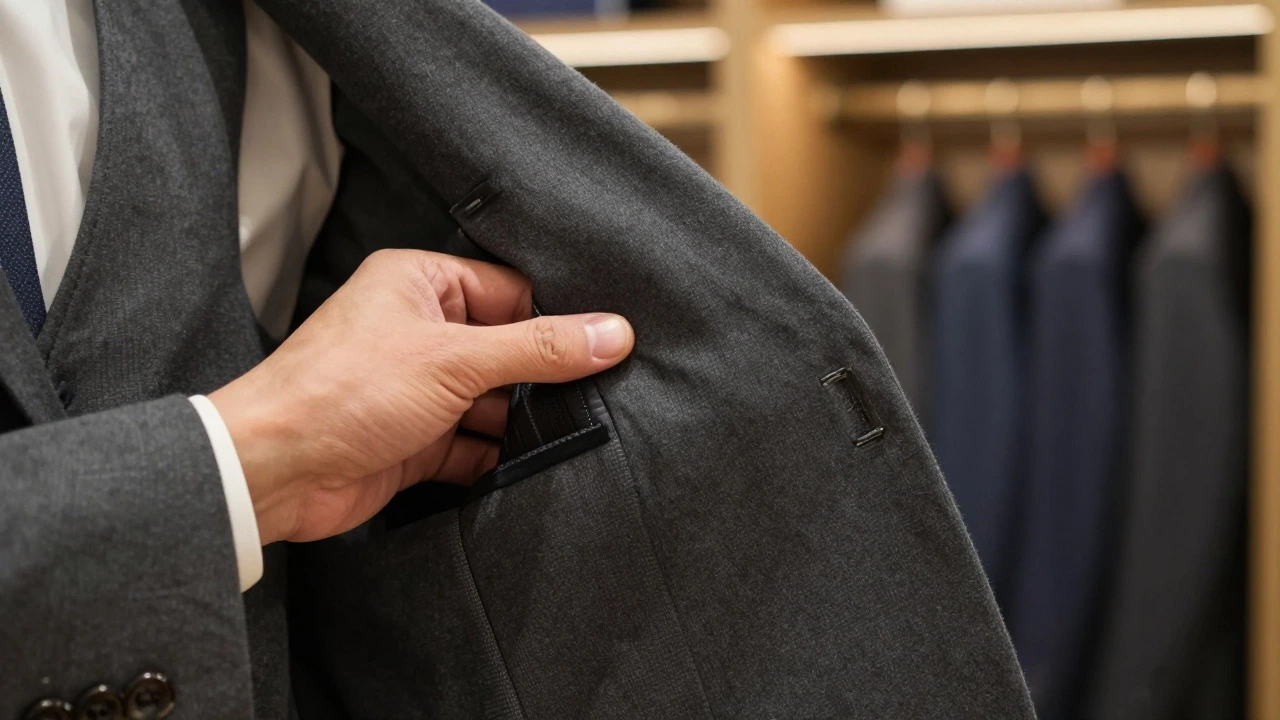
How do you tell which one you're holding? Open the jacket and look at the inside lining near the chest. If you see a mesh-like fabric glued directly to the outer shell, it's likely fused. If you feel a separate, stiffer layer that is stitched (not glued) to the front, it's canvas. Full-canvas jackets often have visible hand stitches along the inner edge of the lapel, known as pick stitching.
Stitching and Hardware: The Fine Details
Zoom in on the seams. Machine stitching should be perfectly straight and consistent in tension. If you see skipped stitches, uneven spacing, or frayed threads, walk away. These are signs of rushed production or poor quality control.
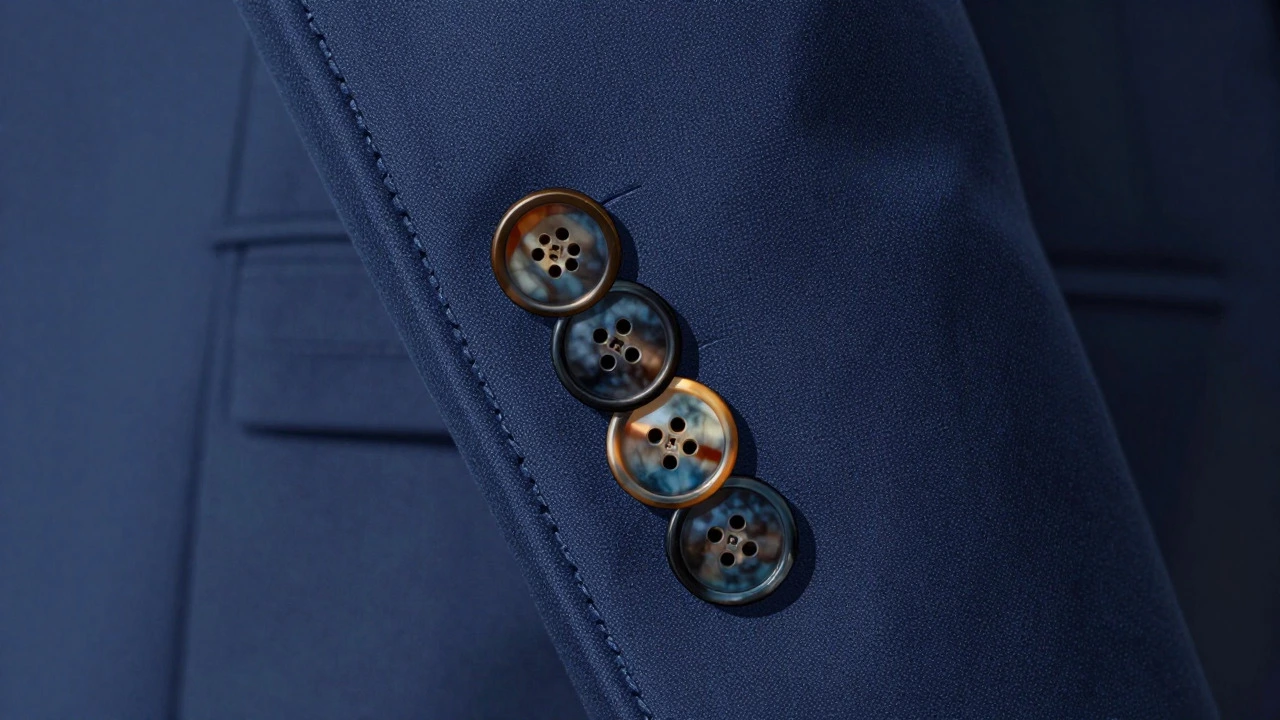
Pay close attention to the buttonholes. In high-quality suits, buttonholes are often hand-stitched. They appear slightly irregular and textured compared to the smooth, uniform look of machine-made holes. Hand-stitched buttonholes are more durable and allow for easier repair if a button falls off.
Then there are the buttons themselves. Cheap suits use lightweight plastic buttons that snap easily under stress. Better suits use corozo nut, horn, or shell buttons. These materials are denser and more resistant to cracking. Even in mid-range suits, look for buttons that are securely attached with strong thread, not just loosely looped.
Check the vents on the back of the jacket. A single vent is standard, but double vents are more functional for sitting and walking. Ensure the vents are lined properly and don't gape open when you sit down. Also, inspect the pockets. Functional welt pockets are a sign of utility and quality. Jetted pockets (slit openings) are sleeker but offer less storage. Make sure the pocket edges are reinforced and not stretching out of shape.
Fit and Drape: How It Moves on You
A good suit fits well, but an excellent suit moves with you. When you raise your arms, the shoulder seam shouldn't shift significantly. If the sleeve pulls tightly when you lift your arm, the shoulder width is too narrow. Conversely, if there is excess fabric bunching at the elbow when your arms are down, the sleeves are too long or the shoulder is too wide.
Look at the lapels. They should lie flat against your chest without curling up or flaring out. Curling lapels usually indicate a mismatch between the fabric weight and the internal canvas structure. If the lapel curls, it suggests the canvas is too heavy for the cloth, or vice versa.
Button stance is critical. When you button the top button, there should be no strain or 'X' shape forming above the button. This indicates the jacket is too tight in the torso. The bottom button should never be worn, and the gap between the two buttons should be minimal when unbuttoned.
Finally, check the trousers. They should hang straight without excessive bagging at the knee. Baggy knees suggest the rise is too low or the thigh measurement is too generous. A clean, tapered line from the hip to the ankle is the modern standard for quality tailoring.

Common Red Flags to Avoid
- Sheen that's too shiny: While some luster is desirable in worsted wool, an overly glossy finish often indicates high polyester content or cheap finishing treatments.
- Visible seams on the outside: Seams should be hidden within the fabric layers. If you see raw edges or exposed stitching on the exterior, the construction is sloppy.
- Loose linings: The lining should glide smoothly. If it sticks to the fabric or feels rough, it may be poorly attached or made of low-quality viscose.
- Inconsistent color: Hold the jacket up to the light. The color should be uniform. Mottled patterns or inconsistent dye lots suggest batch errors.
Frequently Asked Questions
What is the minimum weight for a good quality suit?
For year-round wear, a suit weighing between 240g and 280g per square meter is ideal. Anything lighter than 200g may lack structure and wrinkle easily, while anything heavier than 300g can be uncomfortable in warmer weather.
Is fused construction ever acceptable?
Yes, for suits intended for occasional wear or travel. Fused suits are lighter and less prone to wrinkling, making them practical for short-term use. However, for daily office wear, half-canvas or full-canvas is recommended for longevity and better drape.
How can I tell if a suit is made of real wool?
Check the care label for fiber content. Additionally, perform a burn test on a loose thread if possible: wool burns slowly, smells like burning hair, and leaves a crumbly ash. Synthetic fibers melt and smell like chemicals. Visually, wool has a matte or subtle sheen, whereas polyester often has a harsh, plastic-like shine.
Are hand-stitched buttonholes really better?
Hand-stitched buttonholes are generally more durable and flexible than machine-made ones. They distribute stress more evenly and are easier to repair. While machine-made holes are sufficient for lower-cost suits, hand-finishing is a key indicator of higher craftsmanship levels.
Does the price always reflect quality?
Not necessarily. Brand names can inflate prices without adding proportional value in construction or fabric. A $600 suit from a lesser-known maker with full-canvas construction and high-grade wool can outperform a $1,500 designer suit with fused construction and synthetic blends. Always inspect the physical attributes rather than relying solely on the tag.