Suit Value Calculator
Is that expensive suit really worth it? Enter your details below to see the true cost per wear.
Enter your suit details to see the breakdown.
You walk into a department store and see a suit for $500. It looks sharp on the hanger. Then you walk into a high-end boutique or visit a tailor in Melbourne’s CBD, and they quote you $5,000 for something that, at first glance, looks almost identical. So, what gives? Are you paying for the brand name, or is there actual substance behind that ten-fold price jump?
The short answer: yes, there is substance. But it’s not just about looking richer. The difference between a $500 and a $5,000 suit lies in three specific areas: the raw materials (fabric), the construction method (how it’s put together), and the fit (how it interacts with your body). If you’re trying to decide where to spend your money, understanding these mechanics saves you from buying a cheap suit that falls apart after two wears, or overpaying for a luxury label when a mid-range option would have done the job.
The Fabric Factor: Wool Quality and Origin
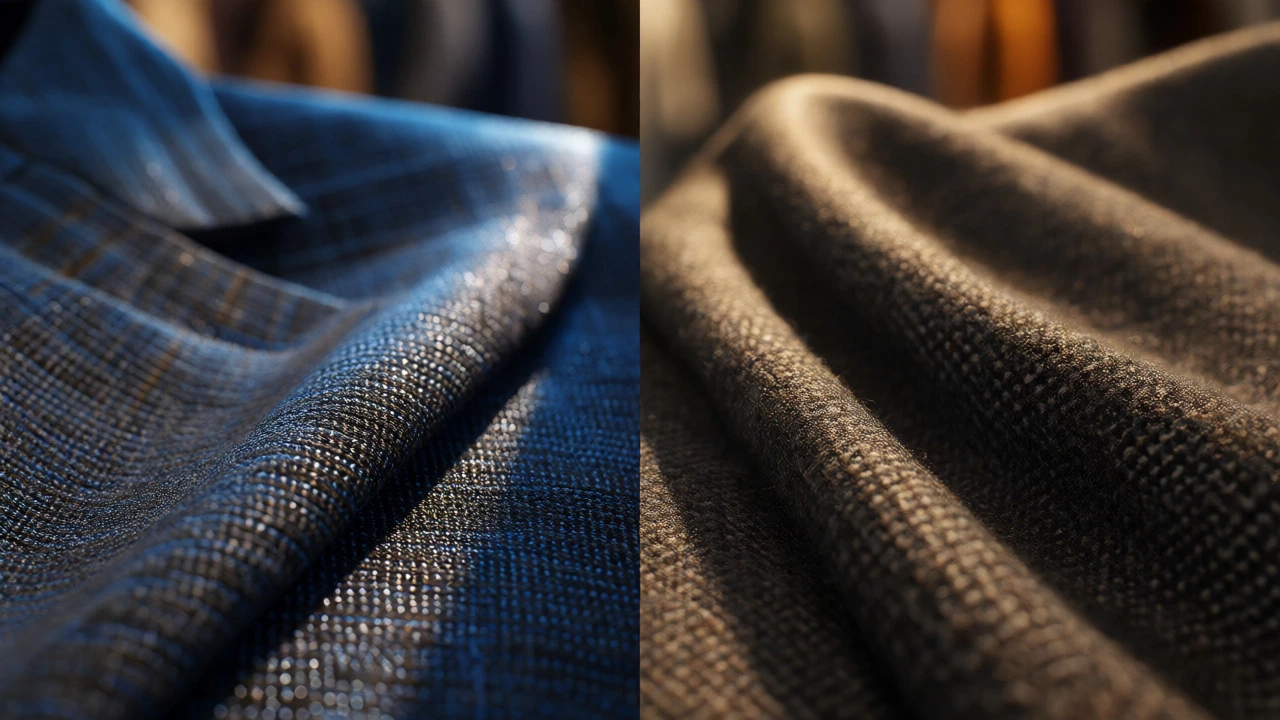
Let’s start with the most tangible difference: the cloth. A $500 suit usually uses mass-produced wool blends or lower-grade pure wools. You might see labels saying "Super 100s" or "Wool Blend." In reality, many $500 suits use polyester-viscose mixes to cut costs. These fabrics feel smoother initially but trap heat, wrinkle easily, and lack that natural drape that makes a suit look expensive even when you’re standing still.
A $5,000 suit typically features high-twist, long-staple Merino wool from specific regions like Australia or New Zealand. We are talking about mills like Loro Piana, Scabal, or Dormeuil. These fabrics are measured in microns-the thinner the micron count, the finer the fiber. High-end suits often use Super 120s to Super 180s wools. But here’s the catch: higher numbers don’t always mean better durability. A Super 200s fabric is incredibly soft but fragile. For daily wear, a well-made Super 110s or 120s is actually superior because it resists creasing and lasts longer.
The dyeing process also differs. Cheap suits often piece-dye the yarn after weaving, which can lead to color inconsistency if the fabric stretches. Expensive suits piece-dye the yarn before weaving (top-dye) or use vat-dyed processes, ensuring the color penetrates every fiber. This means a $5,000 suit won’t fade unevenly at the elbows or knees after six months of commuting.
| Attribute | $500 Suit | $5,000 Suit |
|---|---|---|
| Material Composition | Polyester blend or low-grade wool | 100% High-twist Merino Wool |
| Origin | Mass-market mills (China, India) | Premium mills (Italy, UK, Australia) |
| Drape | Stiff, holds shape artificially | Fluid, follows body contours naturally |
| Breathability | Low, traps sweat | High, regulates temperature |
Construction Methods: Fused vs. Full Canvas
This is the biggest hidden differentiator. You can’t see it from the outside, but it determines how the suit ages. Most $500 suits are "fused." This means the inner lining (the canvas) is glued to the outer fabric using heat-activated adhesive. It’s fast, cheap, and makes the jacket stiff. Over time, especially if you dry clean it frequently or sweat in it, the glue breaks down. This causes bubbling-those ugly wrinkles that appear under the lapels or near the chest pocket. Once a fused suit bubbles, it’s dead. You can’t fix it.
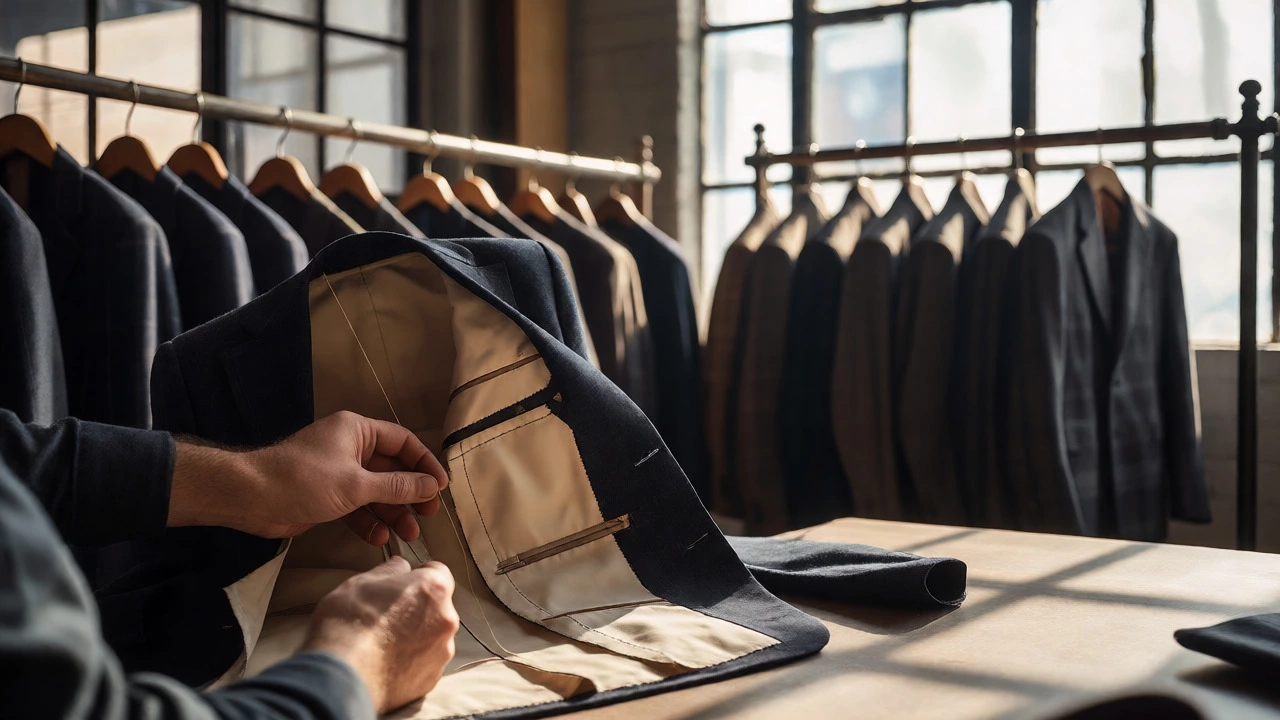
A $5,000 suit is almost certainly "full canvas." Here, a layer of horsehair canvas is hand-stitched between the outer fabric and the lining. No glue involved. This structure allows the jacket to mold to your shoulders and chest over time, creating a custom fit that improves with wear. Because it’s stitched, not glued, it breathes better and moves with you. If you raise your arms, a full-canvas jacket moves with your body; a fused one feels like wearing cardboard.
There is also the "half-canvas" middle ground, found in suits ranging from $800 to $1,500. This uses fusing in the lower parts and canvas in the chest. It’s a decent compromise for budget-conscious buyers who want some longevity without the full price tag. But if you’re comparing $500 to $5,000, you’re comparing glue to stitching.
The Fit: Off-the-Rack vs. Made-to-Measure
A $500 suit is sold off-the-rack (OTR). It’s made in standard sizes (38R, 40L, etc.) based on average body measurements. If your shoulders are slightly wider than average, or your torso is shorter, the suit will never fit perfectly. You’ll get pull lines across the back or sleeves that bunch up. Tailoring an OTR suit has limits-you can take in the waist, shorten sleeves, and taper pants, but you can’t change the shoulder slope or the armhole height without compromising the jacket’s structure.
A $5,000 suit is rarely just bought off the rack. That price point usually includes a consultation with a tailor or a brand offering made-to-measure (MTM) or bespoke services. Even if you buy a ready-to-wear designer suit for $5,000, the expectation is that you will pay extra for significant alterations, or the cut itself is designed for a more athletic, tapered silhouette that assumes a specific body type. Bespoke suits go further: they are cut specifically for your posture, asymmetries, and movement patterns. If you have one shoulder higher than the other, a bespoke cutter adjusts the pattern so no one notices.
In Melbourne, local tailors emphasize this personalization. They measure your posture while walking, not just standing still. A $5,000 suit isn’t just clothing; it’s engineered armor for your specific frame.
Labor and Craftsmanship: Time Equals Money
How much human labor goes into each suit? A $500 suit is assembled in a factory, likely in Southeast Asia or China, using assembly-line techniques. One worker sews the sleeves, another attaches buttons, another does the lining. Speed is key. A single worker might complete multiple jackets per day.
A $5,000 suit involves hours of skilled handwork. Key components like the buttonholes, the collar attachment, and the padding in the shoulders are often done by hand. Hand-sewn buttonholes look organic and irregular in a charming way; machine ones are perfect but sterile. The pick-stitching along the lapel edge-a tiny, nearly invisible stitch-is a hallmark of luxury. On a $500 suit, this is printed or machine-done. On a $5,000 suit, a craftsman spends minutes doing this by eye. This attention to detail reduces bulk and creates a softer roll to the lapel, known as the "lapel roll," which flat lapels on cheap suits lack.
Longevity and Cost Per Wear
Here is the math that justifies the expense. A $500 suit might last two years if worn weekly. After that, the fabric shines, the seams strain, and the fusion bubbles. If you wear it 100 times a year, that’s $2.50 per wear. But once it looks tired, you replace it.
A $5,000 full-canvas suit, properly cared for, can last 10 to 15 years. The fabric recovers its shape overnight on a wooden hanger. The stitching doesn’t degrade. If you wear it 50 times a year, that’s $100 per wear initially, but over a decade, the cost drops significantly. More importantly, it maintains its appearance. You don’t look like you’re wearing a costume; you look like you belong in the room. In professional settings, particularly in industries like law or finance in cities like Sydney or London, perception matters. A shabby suit signals carelessness; a crisp, well-fitted suit signals competence.

When Should You Spend More?
Do you need a $5,000 suit? Not necessarily. Here’s a quick decision tree:
- Buy the $500 suit if: You are attending occasional weddings, job interviews, or formal events. You are growing or changing weight rapidly. You need a backup suit for travel.
- Buy the $5,000 suit if: You work in a conservative corporate environment where you wear a suit daily. You have a non-standard body type that off-the-rack clothes fight against. You value heritage craftsmanship and want an heirloom piece.
- The Sweet Spot ($1,000-$2,500): For most professionals, this range offers half-canvas construction, decent Italian wool, and enough tailoring allowance to get a good fit. Brands like Suitsupply, Spier & Mackay, or local Australian makers offer excellent value here.
Remember, a $500 suit tailored well looks better than a $5,000 suit that fits poorly. Fit is king. Always allocate budget for a good tailor. Spending $500 on the suit and $150 on alterations is smarter than spending $650 on a suit with no alterations.
Care and Maintenance Differences
Maintaining these suits differs too. A fused $500 suit hates dry cleaning. The chemicals break down the glue faster. You should spot-clean and air it out instead. A full-canvas $5,000 suit needs brushing after every wear to remove dust and restore the nap. It requires rotation-never wear the same suit two days in a row. The moisture from your body needs 24-48 hours to evaporate. Skipping this step kills any suit, regardless of price, but it ruins cheaper ones faster because the fibers are weaker.
Storage matters. Plastic bags suffocate wool. Wooden hangers support the shoulders. A $5,000 suit comes with instructions; a $500 suit comes with a plastic bag. Follow the instructions, and your investment pays dividends.
Frequently Asked Questions
Is a $5,000 suit worth it for everyday wear?
It depends on your profession and frequency of wear. If you wear a suit five days a week, a $5,000 full-canvas suit offers superior comfort, breathability, and longevity compared to cheaper alternatives. However, for occasional wear, a $1,000-$1,500 half-canvas suit provides 90% of the benefit at 30% of the cost.
Can I tell a fused suit from a full-canvas suit instantly?
Not always instantly, but you can test it. Pinch the fabric between the outer layer and the lining near the bottom hem. If you feel a distinct third layer that moves independently, it’s likely canvas. If it feels like one thick, stiff sheet, it’s probably fused. Also, check the lapel: if it rolls softly rather than lying flat, it’s likely canvas.
Does higher Super number mean better quality?
No. Super numbers indicate fiber fineness, not overall quality. A Super 180s fabric is softer but more delicate than a Super 110s. For durability and daily wear, Super 110s to 130s is often the practical sweet spot. Higher numbers are better for special occasions where fragility is acceptable.
Why do cheap suits bubble?
Bubbling occurs when the adhesive bonding the interlining to the outer fabric degrades due to heat, moisture, or dry cleaning chemicals. Since fused suits rely on glue rather than stitching, separation creates visible air pockets and wrinkles that cannot be repaired.
Should I buy off-the-rack or bespoke for my first luxury suit?
Start with high-quality off-the-rack or made-to-measure. Bespoke is ideal if you have difficult fit issues or want maximum customization. For most men, a well-tailored MTM suit from a reputable brand offers the best balance of fit, cost, and convenience.