Leather Quality & Use Case Matcher
Not sure which leather is right for you? Answer these three questions to get a personalized recommendation on grain, tanning method, and top suppliers.
You’ve probably heard the phrase "buy nice or buy twice" when it comes to leather shoes. But what actually makes one pair of boots last twenty years while another cracks after two winters? It’s not just the stitching or the sole. It’s the skin itself. Not all cowhides are created equal. In fact, the difference between a $100 boot and a $500 boot often comes down to which specific tannery processed the hide and how they did it.
If you’re trying to figure out who makes the highest quality leather, you need to look past the brand name on the tongue of the shoe. The real magic happens in the tanneries. Let’s break down exactly where the best material comes from, why certain regions dominate the market, and how you can spot genuine top-tier quality without being an industry insider.
The Big Three: Where the World’s Best Hides Come From
When experts talk about premium leather, three countries consistently rise to the top: Italy, France, and the United States. Each has a distinct reputation based on their local cattle breeds, climate, and centuries-old processing techniques.
Italy is widely considered the gold standard for luxury fashion leather. Regions like Tuscany (specifically Santa Croce sull’Arno) have been tanning hides since the Middle Ages. Italian tanneries excel at finishing. They produce leathers that are incredibly soft, supple, and visually stunning. Brands like Gucci, Prada, and Loro Piana source heavily here. If you want a dress shoe that feels like butter and looks glossy, you’re likely looking at Italian leather.
France, particularly the Annonay region, holds the crown for exotic skins and high-end calfskin. French tanners are masters of color consistency and texture. If you see a bag with a perfectly uniform grain or a watch strap with deep, rich hues, it likely came from a French tannery. They prioritize aesthetic perfection above all else.
The United States takes a different approach. American leather, particularly from Horween Leather Company in Chicago, is built for durability. While Europe focuses on beauty, the US focuses on toughness. Horween Chromexcel, for example, is famous for its pull-up effect-when you bend the leather, it lightens slightly because the oils shift inside the fibers. This isn’t a defect; it’s a feature that tells you the leather is alive and will age beautifully.
Tanning Methods Matter More Than Geography
Knowing the country helps, but the method used to turn a raw hide into usable leather matters even more. There are two main ways this happens, and they result in completely different products.
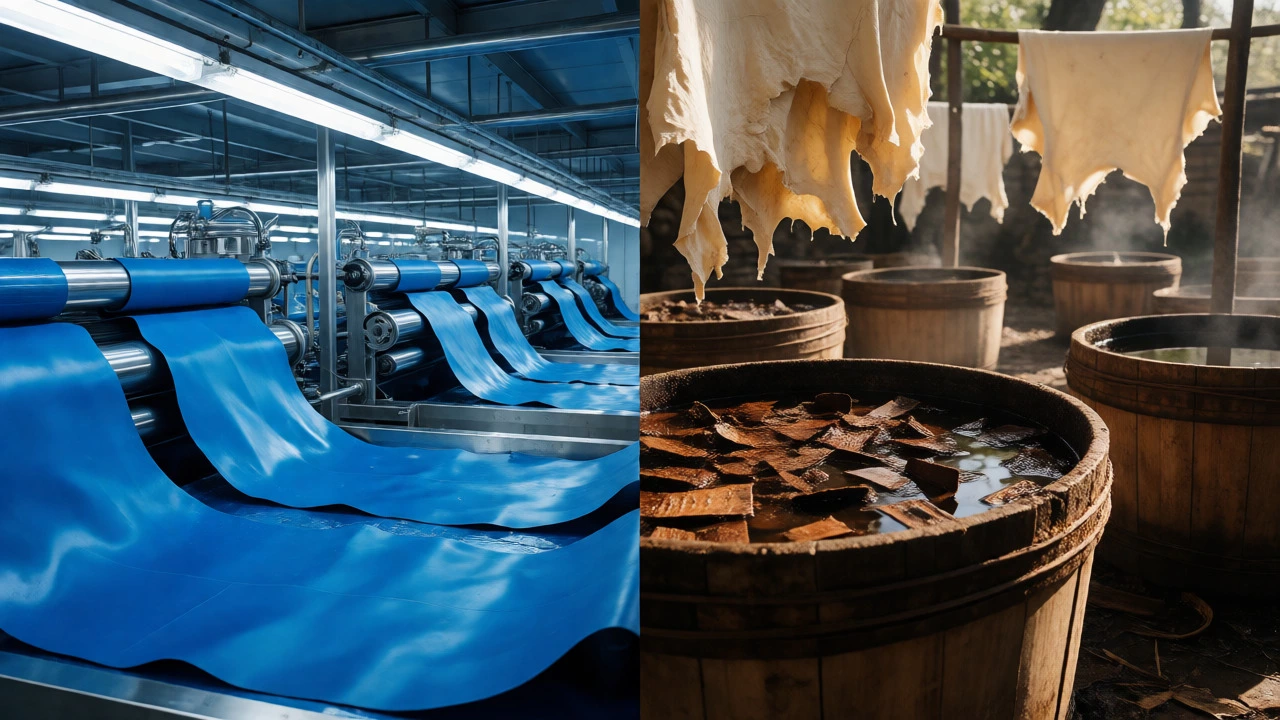
Vegetable Tanning uses natural tannins found in tree bark, leaves, and fruits. This process is slow-it can take weeks or months. Because it doesn’t use harsh chemicals, the leather retains its natural fiber structure. It starts off stiff and pale but darkens and softens over time, developing a unique patina. This is the preferred method for heritage work boots and high-end belts. If you want something that records your life history through scratches and sun exposure, go for veg-tan.
Chrome Tanning uses chromium salts and other chemicals. It’s fast (often done in a day) and produces leather that is water-resistant, flexible, and stable in shape. Most sneaker uppers and lightweight dress shoes use chrome-tanned leather. It’s easier to maintain and doesn’t require the same breaking-in period as veg-tan. However, it doesn’t develop a patina quite the same way. It tends to stay looking new until it eventually wears out.
How to Spot Top-Tier Quality: The Grain Test
Here is the most common mistake buyers make: assuming smooth, perfect-looking leather is the best quality. Often, the opposite is true. Cheap manufacturers sand down the surface of low-quality hides to remove scars and bugs, then spray on a thick plastic coating to make it look uniform. This is called "corrected grain." It’s durable, sure, but it’s not breathable, and it won’t age well.
True high-quality leather is Full Grain. This means the outer layer of the hide is left intact. You might see small scars, wrinkles, or insect bites. That’s good! Those marks prove the animal lived outdoors and wasn’t pumped full of steroids to grow too fast. Full grain leather is the strongest part of the hide. It breathes better and gets stronger as it ages.
Next down is Top Grain. This is sanded down to remove imperfections, making it smoother and thinner. It’s still decent quality, but it lacks the character and longevity of full grain. Avoid "Genuine Leather" if you can. Despite the name sounding premium, it’s often a marketing term for leftover layers glued together. It’s essentially the cardboard of the leather world.
Key Players in the Premium Leather Market
You don’t need to buy directly from a tannery, but knowing who supplies the brands you love gives you power. Here are a few names that signal quality regardless of the final product label.
| Supplier/Tannery | Location | Specialty | Best For |
|---|---|---|---|
| Horween Leather Co. | USA (Chicago) | Chromexcel, Shell Cordovan | Work boots, rugged jackets |
| Badalassi Carlo | Italy (Tuscany) | Minerva Veg-Tan | Dress shoes, belts |
| Ilcea | Italy | Box Calf, Nappa | Luxury handbags, loafers |
| Degermann | Germany | Kangaroo, Oiled Hide | Motorcycle gear, sneakers |
| Charles F. Stead | UK | English Bridle Leather | Equestrian, heavy-duty straps |
Notice how these suppliers specialize. You wouldn’t use delicate Italian Box Calf for a hiking boot, and you wouldn’t use rough American Chromexcel for a formal wedding shoe. Matching the leather type to the activity is half the battle.
Why Australian Leather Deserves Attention
Living in Melbourne, I see a lot of confusion about local materials. Australia is actually a massive producer of sheepskin and lamb nappa. If you’re buying UGG-style boots or a soft leather jacket, check if it’s Australian Merino wool lined or made from Australian sheepskin. The climate there produces dense, warm fibers. While we don’t have the same volume of large cattle herds as the US or Argentina, our small-scale tanneries are producing some incredible eco-friendly leathers using less water and fewer chemicals than traditional methods.
Practical Tips for Buying Leather Shoes
So, how do you apply this knowledge next time you’re shopping?
- Smell it: Real leather smells earthy and rich. Fake leather or heavily coated corrected grain smells like plastic or chemicals.
- Touch it: Run your finger across the surface. Does it feel cold and smooth? That’s likely a plastic coating. Does it feel warm and textured? That’s natural grain.
- Check the cross-section: Look at the edge of the shoe where the upper meets the sole. Is it solid? Or does it look like layers of plywood? Solid is good. Layered is cheap.
- Ask for the tannery: If a salesperson can’t tell you where the leather came from, be skeptical. High-end brands usually brag about their suppliers.
Remember, "highest quality" is subjective. If you live in a rainy city like London or Seattle, you might prefer chrome-tanned leather because it resists water better. If you live in a dry, sunny place, vegetable-tanned leather will age faster and look better. Choose based on your lifestyle, not just the price tag.
Is Italian leather always the best?
Not always. Italian leather is generally superior for fashion and dress shoes due to its softness and finish. However, for rugged work boots or outdoor gear, American or German leathers are often tougher and more resistant to abrasion. "Best" depends on the use case.
What is the difference between full grain and top grain?
Full grain includes the entire top layer of the hide with all natural markings intact, making it the strongest and most durable option. Top grain has been sanded down to remove imperfections, making it smoother and thinner but less durable and unable to develop a patina as effectively.
Does expensive leather mean higher quality?
Usually, but not guaranteed. Price often reflects brand markup rather than material cost. A $200 pair of shoes from a direct-to-consumer brand using Horween leather may offer better value than a $800 pair from a luxury designer using generic corrected grain. Always check the material specs, not just the logo.
How do I care for vegetable-tanned leather?
Vegetable-tanned leather needs regular conditioning. Use a beeswax-based cream every 3-6 months to keep the fibers hydrated. It is sensitive to water, so treat it with a protector spray before wearing it in rain. Expect it to darken over time; this is normal aging, not damage.
What is Shell Cordovan?
Shell Cordovan is not technically leather from a hide, but a membrane from the hindquarters of a horse. It is extremely dense, water-resistant, and wrinkle-free. It is rare and expensive, primarily produced by Horween in the USA and Shinki Hikaku in Japan. It lasts decades longer than standard cowhide.