
Baby Carrier Finder
Answer a few questions to find the best carrier type for your current situation.
Recommendation
You’re standing in the nursery, surrounded by boxes of fabric and buckles, wondering which one won’t leave your back screaming by noon. It’s a common panic. The wrong baby carrier isn’t just an inconvenience; it can cause hip dysplasia in infants or chronic lower back pain for parents. But here’s the truth: there is no single "best" carrier for everyone. The right choice depends entirely on your baby’s age, your body type, and how you plan to use it.
I’ve spent years testing gear in Melbourne’s hilly suburbs, from steep walks in Fitzroy Gardens to crowded trams. I’ve learned that a wrap feels like a hug but takes twenty minutes to master, while a structured carrier clicks into place in seconds but might feel bulky at first. This guide cuts through the marketing fluff. We’ll look at what actually works for newborns versus toddlers, how to spot poor design, and why comfort beats aesthetics every time.
The Newborn Phase: Safety First, Ease Second
When your baby is under four months old, their spine is still developing. They don’t have the muscle strength to hold their head up, and their hips are very flexible. At this stage, support is non-negotiable. You need a carrier that keeps their airway open and supports their natural "C-curve" spine.
Most parents start with a ring sling or a stretchy wrap. These are soft fabrics that mold to both your bodies. A stretchy wrap, like those made by brands such as Moby or Solly, is excellent for home use because it distributes weight evenly across your shoulders and back. However, they lack structure. If you drop your shoulder, the whole thing sags. Ring slings are faster to put on but require a bit of practice to get the tail tucked neatly so it doesn’t flap around.
| Carrier Type | Best For | Learning Curve | Weight Limit |
|---|---|---|---|
| Stretchy Wrap | Newborns (0-6 months) | Moderate | Up to 15kg (but less comfortable after 3 months) |
| Ring Sling | Quick trips, breastfeeding | Steep initially | Up to 15kg |
| Baby Cocoon/Sachet | Very young infants | Low | Up to 9kg |
A critical mistake many new parents make is buying a structured carrier too early. Those sturdy panels with buckles are great later, but for a tiny newborn, they often push the baby into a vertical position before their spine is ready. Unless the carrier has a specific infant insert, save the structured options until your baby can sit up unassisted or at least holds their head perfectly steady.
Toddler Transition: Structure and Support
Once your child hits six months, things change dramatically. They’re heavier, stronger, and want to see the world. Now, you need a carrier that transfers weight to your hips rather than just hanging off your shoulders. This is where structured carriers shine. Think Ergobaby, Tula, or local Australian favorites like Beco. These feature padded waistbands and adjustable straps that lock the load onto your core.
For toddlers weighing over 10kg, a simple sling becomes painful. The fabric digs into your shoulder blade. A structured carrier spreads that 12kg across your pelvis, which is much better for long days. Look for a wide seat that goes from knee to knee. If the panel ends mid-thigh, it forces the baby’s legs straight down, which can stress the hip joints. You want them in the "M-position," where their knees are higher than their bottom.
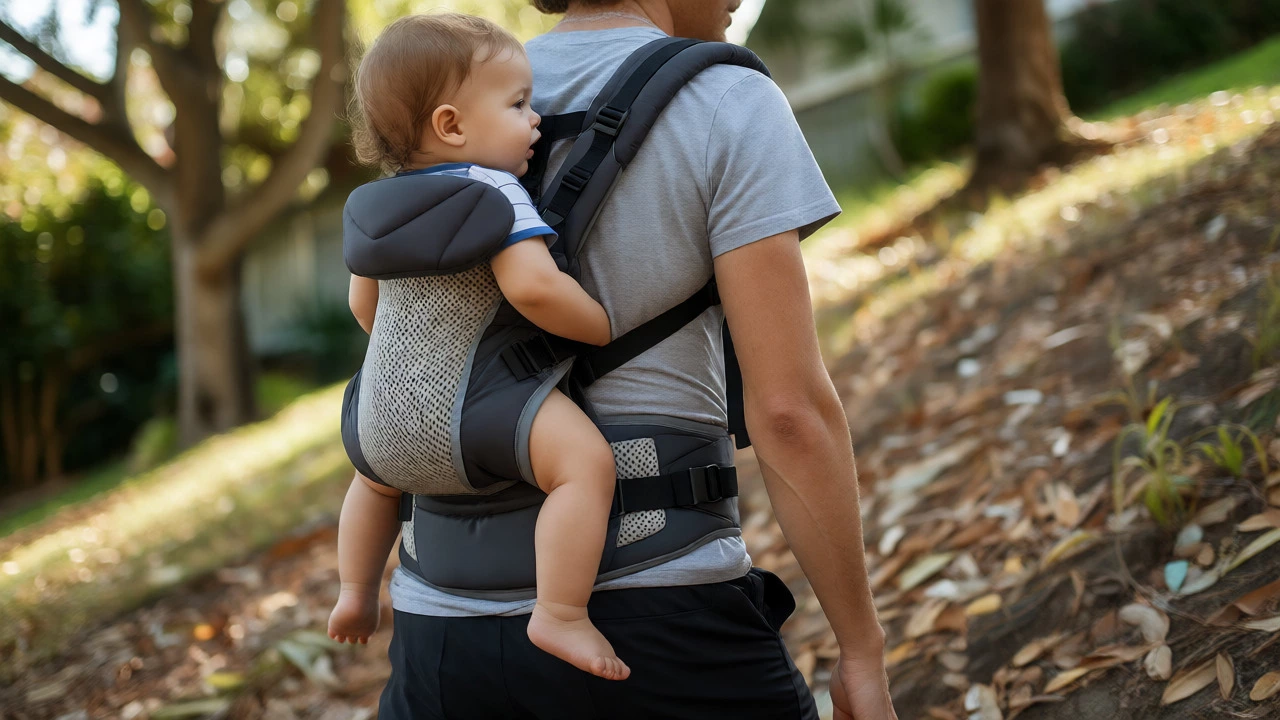
Don’t ignore the material. In warmer climates like parts of Australia, heavy canvas carriers can turn your chest into a sauna. Mesh panels help airflow, but ensure the mesh is breathable and not just a decorative netting. Some carriers offer convertible modes, allowing front, back, and hip carries. While versatile, these often compromise fit in each mode. A dedicated back carry might be more comfortable for hiking than a hybrid model.
Ergonomics: How to Spot a Bad Fit
How do you know if a carrier is actually good? Ignore the pretty prints. Look at the engineering. A high-quality carrier respects human anatomy. Here is what to check when trying one on in-store:
- Head Support: For babies under 4 months, the fabric must support the head without covering the nose. You should be able to kiss their forehead easily.
- Hip Position: Their thighs should be supported all the way to the knee bend. Their knees should be above their bum.
- Spinal Curvature: The baby’s back should remain rounded, not flat against your chest. Flat backs indicate insufficient support.
- Waistband Placement: On a structured carrier, the belt sits on your iliac crest (the top of your hip bones), not around your waist. If it slides down, it’s too loose or poorly designed.
If you feel sharp pressure points on your shoulders within five minutes, walk away. Good ergonomics distribute weight evenly. You shouldn’t feel like you’re carrying a sack of potatoes on one side. Adjustability is key. Your partner likely has a different torso length and shoulder width. A carrier with limited adjustment ranges will only fit one parent comfortably.
Lifestyle Match: Choosing Based on Usage
Your daily routine dictates the best tool. Are you mostly staying home? Do you commute via public transport? Or are you planning weekend hikes?
For Urban Commuters: Speed matters. You need something you can deploy in under two minutes while balancing a coffee and keys. A buckle-on structured carrier or a pre-tied ring sling is ideal. You don’t want to be fumbling with yards of fabric while waiting for a tram in the rain. Compactness also counts-can it fold into a small pouch for your bag?
For Hikers and Walkers: Comfort over distance is the priority. A soft structured carrier with a robust hip belt is essential. For older toddlers (over 18 months), consider a hiking frame carrier, similar to adult backpacking packs but scaled down. Brands like Deuter or Osprey make these. They keep the child’s center of gravity close to yours, preventing you from tipping over on uneven terrain.
For Breastfeeding Parents: Discretion and ease matter. Slings allow easy access for nursing without fully undressing. Structured carriers can work, but you need to loosen the top strap significantly. Some carriers have zippers or flaps specifically designed for this, but they often add bulk.

Common Pitfalls and Money-Saving Tips
One major error is buying based on size alone. Baby sizes vary wildly. A "small" baby might have long legs, requiring a wider seat. Always try before you buy if possible. Many local baby stores in cities like Melbourne offer rental programs. Renting a premium carrier for a month costs a fraction of the purchase price and lets you test it in real life. If you hate it, return it. If you love it, the rental fee often credits toward the purchase.
Another trap is ignoring the second-hand market. High-end carriers like Ergobaby or Beco hold their value well. Since babies outgrow carriers quickly, you can find gently used ones on Facebook Marketplace or local parenting groups for half the retail price. Just inspect the buckles for cracks and the fabric for thinning spots.
Finally, beware of "fashion" carriers that prioritize looks over function. Some trendy wraps lack proper padding or structural integrity. If it looks like a scarf but claims to hold 15kg, test it rigorously. If the fabric stretches too much, it will sag, pulling your shoulders forward and causing neck strain.
Final Decision Checklist
Before swiping your credit card, run through this quick audit:
- Age Check: Is your baby under 4 months? Stick to wraps or slings. Over 6 months? Look at structured carriers.
- Weight Check: Will you carry them for more than 30 minutes? Prioritize hip belts and padding.
- Partner Check: Does it adjust enough for your partner? Try it together.
- Care Check: Can you machine wash it? Babies spit up. Lots.
- Safety Check: Does it meet current safety standards (AS/NZS in Australia)?
There is no shame in owning multiple carriers. Many parents end up with a lightweight sling for quick errands and a sturdy structured carrier for long outings. Start with one that fits your primary need, then expand as your child grows. Your back will thank you.
Can I use a baby carrier for sleeping?
Yes, but with caution. Babies can nap in carriers, but you must monitor them closely. Ensure their face is visible and their chin is off their chest to prevent suffocation. Never sleep yourself while wearing a baby, especially if you are exhausted or under the influence of medication, as you might not notice positional asphyxia.
Are hip seats safe for babies?
Hip seats are generally recommended for children who can sit unassisted, usually around 6 months. They are not suitable for newborns because they do not provide adequate spinal support. Also, ensure the seat is deep enough to support the thighs; shallow seats can force the baby's legs into an extended position, which is bad for hip development.
Which carrier is best for hot weather?
Look for carriers made from breathable materials like cotton gauze, linen, or technical mesh. Avoid heavy canvas or polyester blends. Ring slings and woven wraps made from light fabrics tend to run cooler than thickly padded structured carriers. Wicking liners can also help absorb sweat.
Do I need an infant insert for my structured carrier?
It depends on the brand and your baby's size. Some carriers, like the Beco Toddler, have adjustable seats that grow with the baby, eliminating the need for inserts. Others, like certain Ergobaby models, require a separate infant insert for babies under 4 months to ensure proper leg positioning and head support. Always check the manufacturer's guidelines.
Is it okay to carry a baby on my back?
Back carrying is excellent for distributing weight, but most babies need to be at least 4-6 months old and have strong head control before starting. For younger babies, back carrying requires more skill and confidence. Use a carrier specifically designed for back carries, and always ensure the baby is high enough on your back that you can kiss their head.